Key facts
- Supreme Court unanimously ruled 9-0 to uphold SEC's disgorgement authority.
- SEC does not need to prove victims suffered economic harm to seek disgorgement.
- Justice Neil Gorsuch authored the opinion.
The U.S. Supreme Court unanimously ruled 9-0 to uphold the Securities and Exchange Commission's (SEC) authority to recover illegal profits through disgorgement, without requiring proof of economic harm to victims. Justice Neil Gorsuch authored the opinion, which rejected a challenge from defendant Ongkaruck Sripetch. The ruling reaffirms the SEC's potent enforcement tool.
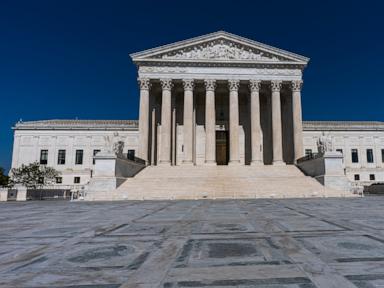
The U.S. Supreme Court has unanimously rejected a challenge to the Securities and Exchange Commission's (SEC) authority to recover illegal profits through a financial remedy known as disgorgement. In a 9-0 decision authored by Justice Neil Gorsuch, the Court upheld a lower court's decision that supported the SEC's broad use of this power. The case involved Ongkaruck Sripetch, who was ordered to repay over $3 million in ill-gotten gains and interest related to a financial fraud case. The core issue was whether the SEC must demonstrate that victims suffered economic harm before seeking disgorgement. The Court concluded that a showing of pecuniary loss is not required for an investor to be considered a victim entitled to compensation. The SEC's general power to pursue disgorgement has long been recognized and is enshrined in federal law. The Trump administration had defended the SEC's position in this case. In fiscal year 2025, the SEC obtained approximately $1.4 billion through disgorgement, excluding certain sums. In the prior year, under President Joe Biden, the SEC secured $6.1 billion via disgorgement. Sripetch had admitted to violating securities law, including a pump-and-dump scheme, and was sentenced to 21 months in prison. He challenged the disgorgement order, arguing the SEC failed to prove his actions financially harmed investors.
This ruling reaffirms the SEC's ability to recoup ill-gotten gains from securities law violators, strengthening its enforcement capabilities and potentially deterring future misconduct by ensuring that wrongdoers cannot profit from their illegal activities.