Key facts
- At least 12 tankers have transited the Strait of Hormuz following a US-Iran framework agreement.
- Saudi oil supertankers and an Iranian products tanker were among the vessels to pass through.
- A Qatari LNG tanker returned to the Persian Gulf, signaling preparations to ramp up exports.
- Commercial shipping traffic through the strait had fallen by over 90% amid the US/Israel-Iran war.
- Iran is expected to ensure safe passage for commercial vessels for 60 days under the agreement.
- The Netherlands is redirecting a frigate to the Strait of Hormuz for a potential international mission.
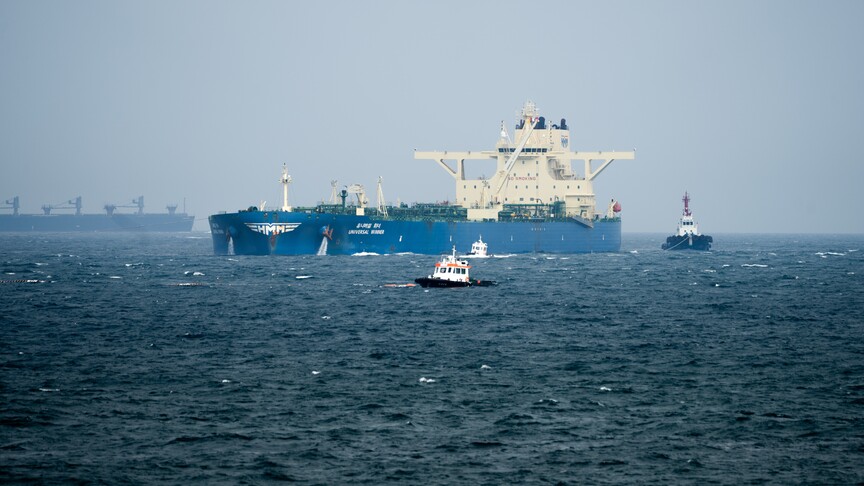
Commercial shipping traffic is gradually resuming through the Strait of Hormuz following a US-Iran framework agreement aimed at de-escalating tensions and ensuring safe passage. At least 12 named tankers have transited or exited the waterway in recent days, signaling a potential recovery in energy transport.
Among the vessels to reappear were three Saudi oil supertankers, Awtad, Jaham, and Shaden, which had been absent for two months. Awtad, carrying 2 million barrels of Saudi crude, passed through the strait en route to South Korea. The Iranian products tanker Viraj also transited the waterway, heading toward the United Arab Emirates with approximately 27,500 barrels of contaminated petroleum products.
Qatar has also brought an empty liquefied natural gas tanker, Al Hamla, back into the Persian Gulf through the Strait of Hormuz, marking the first such movement since the conflict began and signaling preparations to ramp up LNG exports. Other LNG tankers, Disha and Mraikh, also transited the strait. Several Iran-linked crude tankers, including Hero II and Diona, reappeared on ship-tracking systems after loading crude at Iran's Kharg Island.
Commercial shipping through the Strait of Hormuz had been sharply disrupted since February 28 amid the US/Israel-Iran war, with daily traffic falling by more than 90% from an average of 130 ships. Under the 14-point framework agreement, Iran is expected to make efforts to ensure commercial vessels can pass safely and free of charge for 60 days while negotiations continue.
Despite the recent tanker movements, shipping risks remain elevated due to complications such as mines and the lack of clear coordination among shipping companies. The Netherlands announced it is redirecting a frigate to the Strait of Hormuz for a potential international mission, while Germany is deploying two ships to the Red Sea.