The European Union's agri-food trade surplus saw a significant increase in February 2026, reaching €4.4 billion. This marks a 43% rise compared to January 2026 and is comparable to February 2025 levels, according to new data from Eurostat. Both exports and imports experienced slight year-on-year declines, but a larger decrease in import values contributed to the improved monthly trade balance. For the cumulative period of January to February 2026, the EU's agri-food trade surplus stood at €7.4 billion, remaining stable compared to the same period in the previous year.
Key export declines were observed in cocoa products, pigmeat, and olives and olive oil, while fruits, nuts, and non-edible products saw increased exports. Exports to the UK and the US experienced notable year-on-year decreases in January-February 2026, down 4% and 20% respectively. Pigmeat exports fell by 13% and preparations of fruit, nuts, and vegetables by 10%.
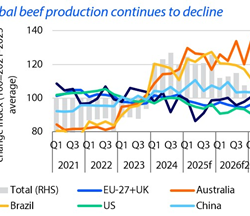
EU agri-food imports totalled €14.5 billion in February 2026, a 1% decrease month-on-month and a 5% decrease year-on-year. Total imports for January-February 2026 were €29.1 billion, a 7% decrease from 2025. Significant import declines were seen in cereals and oilseeds. However, imports of beef and veal increased by 28% (€130 million), primarily driven by higher volumes from Brazil, the UK, and Uruguay, attributed to short supply and high prices of EU beef. Cereal imports fell by 30%, largely due to reduced wheat and maize import volumes.