Key facts
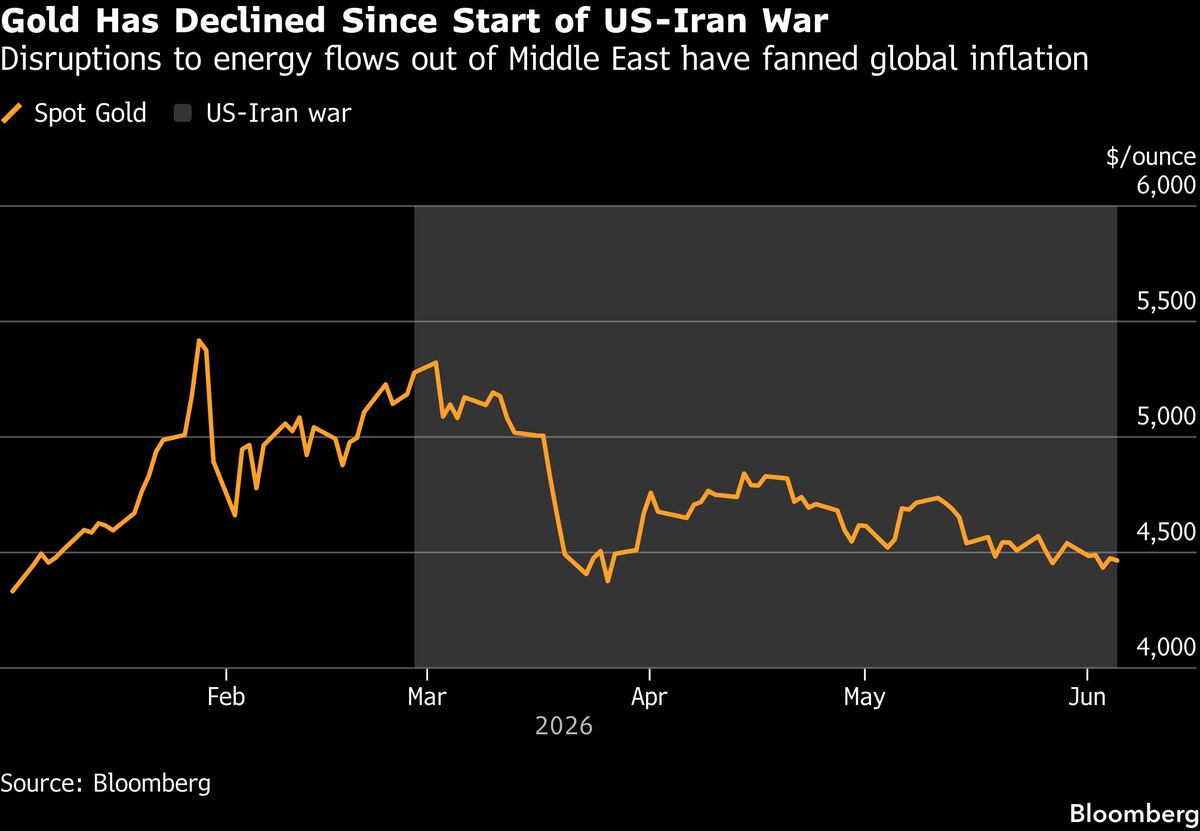
- Gold is heading for a weekly loss of about 1.6%, trading around $4,465 per ounce.
- The Strait of Hormuz has been closed since late February due to U.S.-Iran conflict, pushing oil prices higher.
- Federal Reserve is expected to hold rates steady through 2026, then raise them in early 2027.
- Hezbollah rejected a U.S.-brokered Israel-Lebanon ceasefire, complicating peace talks.
- Gold has fallen roughly 12% over the past three months despite being seen as a safe-haven asset.
Gold prices are declining this week, heading for a loss of about 1.6% over the past week and trading around $4,465 per ounce. This decline occurs despite ongoing Middle East tensions and elevated oil prices. The Strait of Hormuz has been closed since late February due to a U.S.-Iran conflict, disrupting global oil supply and pushing energy prices higher, which in turn fuels inflation fears. Analysts at Saxo Bank warned of potential fuel price shocks and extended periods of elevated energy prices. Central banks, including the Federal Reserve, are responding by keeping interest rates higher for longer. CME's FedWatch Tool indicates the Fed is expected to hold rates steady through the rest of 2026 and raise them in early 2027. This environment is unfavorable for gold, as it does not pay interest and becomes less attractive compared to interest-bearing assets when rates are high. Further dimming peace prospects, Hezbollah rejected a U.S.-brokered ceasefire between Israel and Lebanon, with Iran making a halt to fighting in Lebanon a key condition for its own peace negotiations with Washington. Gold has fallen roughly 12% over the past three months, with a stronger U.S. dollar also contributing to the pressure. The dollar has strengthened partly because the U.S. is seen as better insulated from the oil price spike. Investors are monitoring the upcoming U.S. jobs report for insights into the labor market's resilience.