Key facts
- Rep. Nikema Williams reintroduced a bill to expand mortgage credit access.
- The legislation requires lenders to consider alternative financial data like rental payments if authorized by the applicant.
Rep. Nikema Williams reintroduced legislation that would require mortgage lenders to consider alternative financial data, such as rental payment history, if requested by an applicant. The bill aims to help 'credit invisible' consumers access homeownership and narrow wealth disparities.
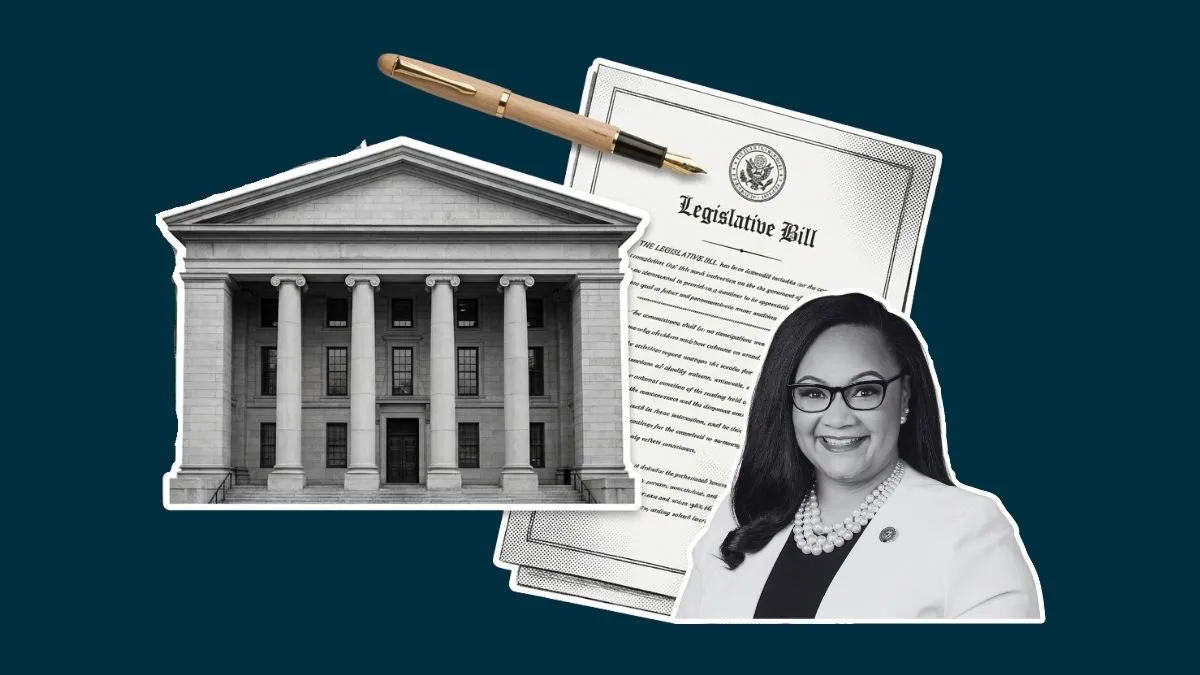
This legislation could significantly impact the housing market by potentially opening doors to homeownership for millions of Americans previously excluded due to limited traditional credit histories, thereby addressing wealth disparities.
Rep. Nikema Williams (D-Ga.) has reintroduced legislation aimed at broadening access to mortgage credit by compelling lenders to consider additional financial information beyond traditional credit scores, upon an applicant's request. The bill, titled the Expanding Access to Credit through Consumer-Permissioned Data Act, would amend the Equal Credit Opportunity Act (ECOA).
Under the proposed law, mortgage lenders would be mandated to evaluate alternative financial data, such as rental payment history and bank statement information, if a borrower provides authorization. This data is not typically included in standard credit reports. The legislation also stipulates that automated underwriting systems must integrate this consumer-permissioned data into their decision-making processes.
Williams, a member of the House Financial Services Committee, stated that the bill is designed to assist individuals who are considered 'credit invisible' despite consistently paying their bills on time. She highlighted her personal experience of being unbanked and facing financial system barriers, emphasizing her goal to enable more people to achieve homeownership, a key tool for building generational wealth and closing racial wealth gaps.
The bill's findings indicate that approximately 32 million Americans lack sufficient credit history for a score, disproportionately affecting low-income individuals, younger people, and people of color, according to prior research from the Consumer Financial Protection Bureau (CFPB). Supporters believe that incorporating alternative data will provide lenders with a more comprehensive view of an applicant's financial responsibility and expand credit access.
Furthermore, the legislation mandates that lenders inform applicants of their right to submit additional credit information and explain its potential benefits, with notices to be provided in the eight most commonly spoken languages among those with limited English proficiency. The CFPB is tasked with developing the necessary implementing regulations, with a 18-month timeframe before the requirements take effect. The bill is co-sponsored by Reps. Sylvia Garcia (D-Texas), Bonnie Watson Coleman (D-N.J.), Gwen Moore (D-Wis.), and Alma Adams (D-N.C.), and has received endorsements from the Consumer Federation of America and the National Consumer Law Center.