Key facts
- Several Chinese banks have raised dollar deposit rates in recent weeks.
- The move is seen by traders as an effort to slow the yuan's appreciation.
- At least five commercial banks adjusted their dollar deposit rates upward.
Several Chinese banks have raised dollar deposit rates, a move seen by traders as an effort to slow the yuan's appreciation. Some banks are offering rates at or above the U.S. Secured Overnight Financing Rate (SOFR). The yuan has gained over 3% against the dollar year-to-date.
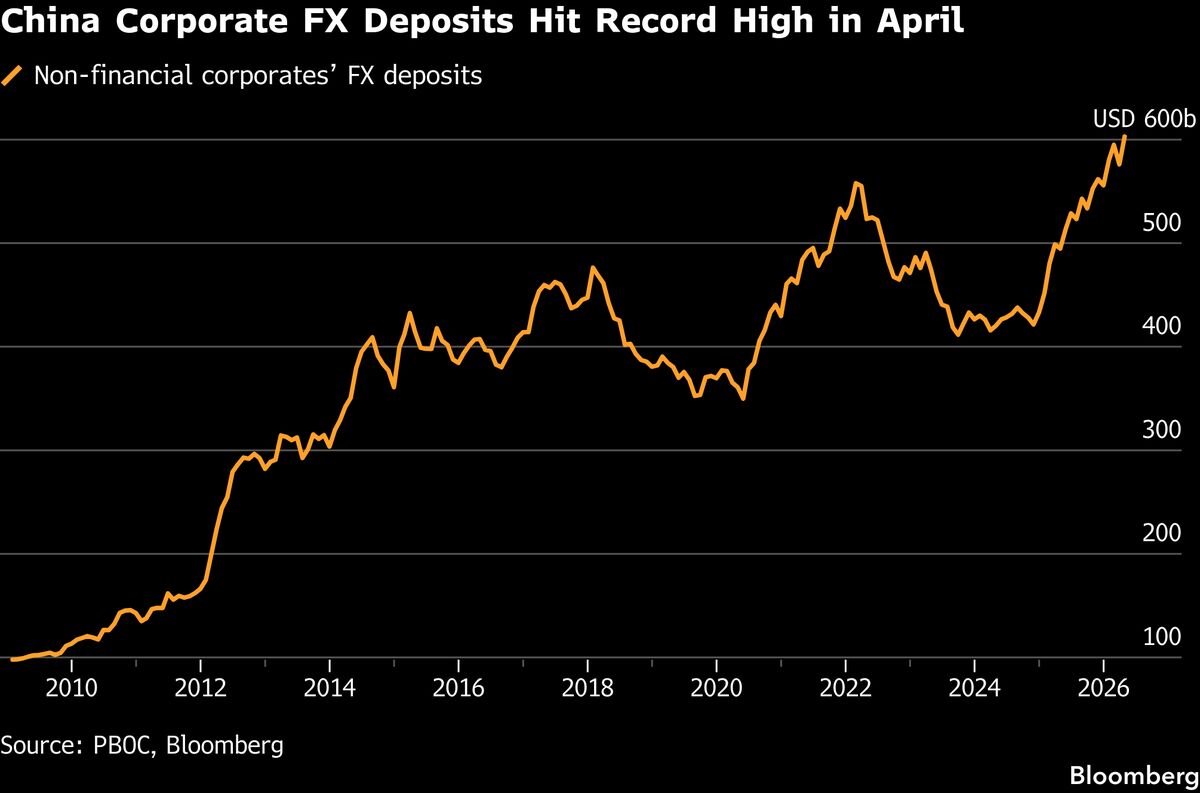
Several Chinese banks have recently increased their dollar deposit rates, a move that traders suggest is likely intended to moderate the pace of the yuan's appreciation. At least five commercial banks, including state-owned and smaller joint-stock lenders, have lifted the dollar deposit rates offered to clients. Some banks are now offering rates at or above the U.S. Secured Overnight Financing Rate (SOFR), which is currently 3.61%. The People's Bank of China (PBOC) has not immediately responded to requests for comment regarding informal guidance on these rate adjustments. The yuan has appreciated by more than 3% against the dollar year-to-date, and a stronger currency can impact export competitiveness. Foreign exchange deposits in China stood at $1.15 trillion at the end of April, up approximately 20% from the previous year. This adjustment marks a relaxation of a dollar deposit rate ceiling that was imposed in 2023 when the yuan was facing depreciation pressure. Gary Ng, senior economist for Asia Pacific at Natixis, noted that the rate adjustment reflects global increases in U.S. dollar funding costs and that significant differences in dollar deposit rates could lead to money flowing out of the banking sector.
This action by Chinese banks could influence the yuan's exchange rate, impacting China's export competitiveness and potentially signaling shifts in global dollar funding costs.