Key facts
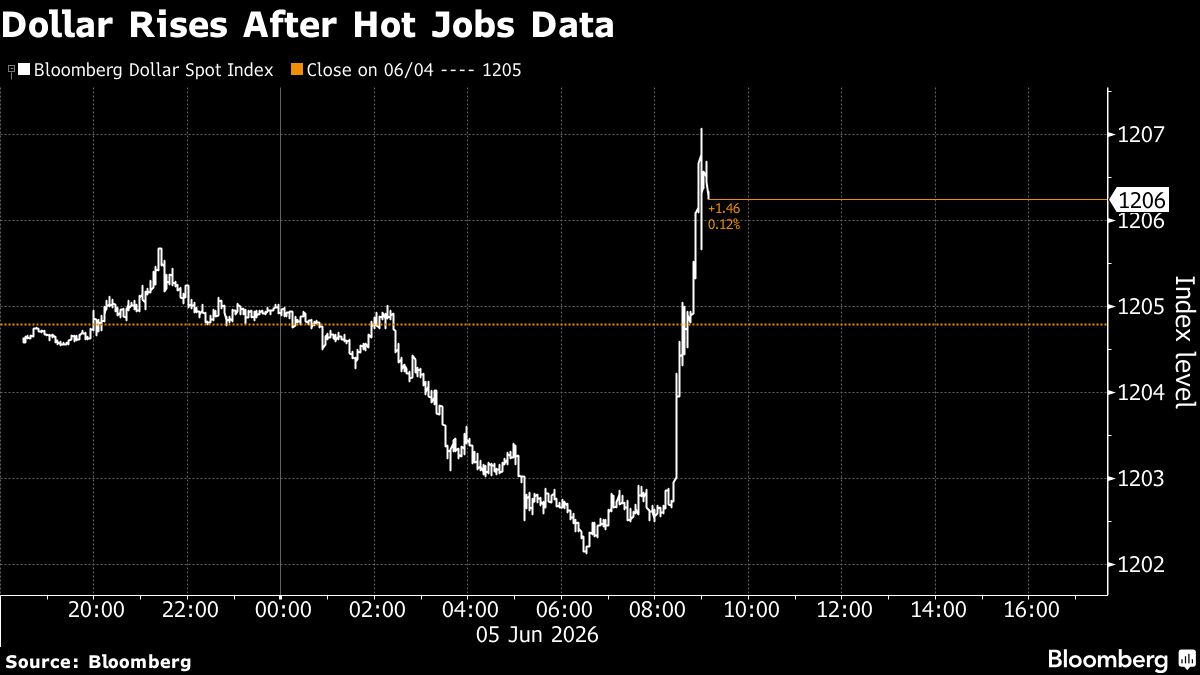
- US nonfarm payrolls increased by 172,000 jobs in May, exceeding expectations.
- The dollar rose sharply against the yen, reaching 160.115.
- Japanese officials issued warnings against excessive yen volatility.
- Stalled peace talks between the US and Iran supported dollar demand.
- Elevated oil prices above $90 a barrel also underpinned dollar strength.
- Bitcoin was set for a 15% weekly drop.
The US dollar strengthened on Friday following the release of a US employment report showing nonfarm payrolls increased by 172,000 jobs in May, exceeding the 85,000 forecast by Reuters-polled economists. This strong jobs data sent the dollar sharply higher against the yen, pushing it past the 160-per-dollar level, a mark that has previously triggered intervention. Japanese Finance Minister Satsuki Katayama stated Japan was ready to take decisive action against excessive volatility. The Bank of Japan is expected to raise interest rates this month due to rising energy import costs. The euro and pound also fell against the dollar. Stalled peace talks between the US and Iran, coupled with elevated oil prices above $90 a barrel due to Middle East tensions, underpinned safe-haven demand for the dollar. Bitcoin was on track for a significant weekly drop, falling 15% and trading at $61,211.
Analysts suggest the strong US jobs data makes it unlikely the Federal Reserve will change rates at its upcoming meeting, though some anticipate a hike by year-end. Concerns about elevated energy prices continue to weigh on the euro zone's economic activity. The dollar has seen broad strength this week, supported by robust US data, expectations of Fed rate hikes, and safe-haven flows amid geopolitical risks impacting importers like the euro zone, Japan, and China.