Key facts
- Germany and France propose allowing EU candidate countries earlier access to EU programs and the single market.
- The Western Balkans and Moldova are among the countries that could benefit from the proposed accelerated EU integration.
- German Chancellor Friedrich Merz stated the EU has not admitted new members in 13 years.
- German Chancellor Olaf Scholz met with Hungarian politician Peter Magyar in Berlin.
- Hungary plans to submit anti-corruption legislation next week to unlock suspended EU funding.
- The E3 group (Germany, France, UK) is attempting to restart peace talks with Russia over the Ukraine war.
- An EU summit in Montenegro was disrupted by allegations of foreign interference.
- Montenegro barred 87 Serbs from entering the country, citing national security risks.
- French President Emmanuel Macron, UK Labour leader Keir Starmer, and German CDU leader Friedrich Merz will meet Ukrainian President Volodymyr Zelenskiy in London on June 7.
- Hungarian Prime Minister Peter Magyar is threatening legal action to remove President Tamas Sulyok.
- Magyar's party aims to replace figures appointed by the previous administration.
European Union leaders are actively pursuing strategies to both expand the bloc and enhance its internal stability, with significant proposals emerging from Germany and France. These nations have put forward an initiative to allow EU candidate countries, encompassing those in the Western Balkans and Moldova, to participate in EU programs and gain access to the single market prior to achieving full membership. This move is intended to offer additional incentives and streamline the EU enlargement process, addressing the long-standing issue of stalled membership for Western Balkan nations. German Chancellor Friedrich Merz has publicly stated that the EU must be ready to enlarge, highlighting that the bloc has not admitted new members in 13 years and emphasizing the Western Balkans' rightful place within the EU's future.
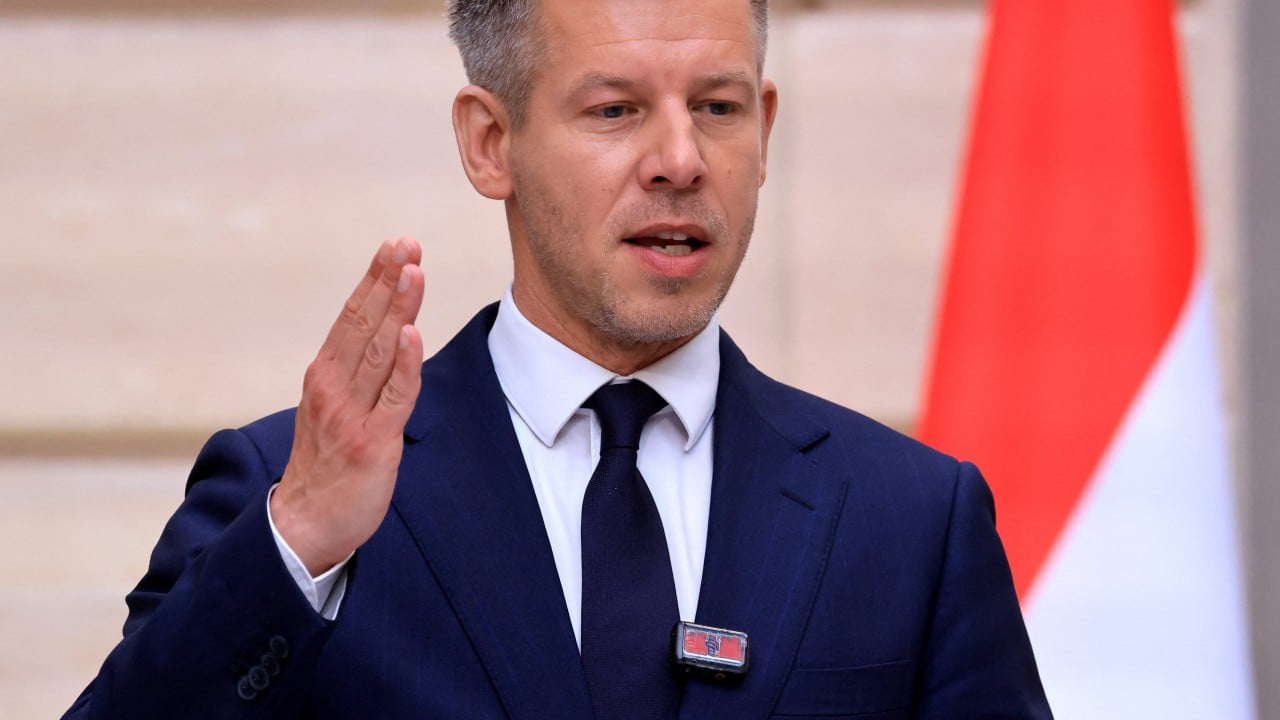
In parallel, diplomatic efforts are underway to manage relations with member states and address the conflict in Ukraine. German Chancellor Olaf Scholz met with Hungarian politician Peter Magyar in Berlin, a meeting announced via social media, signaling a potential new beginning for Hungary and its relationship with Europe. This follows discussions where Merz anticipated a positive reset in EU relations with Hungary, whose new Prime Minister Peter Magyar has indicated a partial shift in support for Ukraine. Hungary is also preparing to submit anti-corruption legislation to parliament next week, a move designed to unlock billions in suspended EU funding by improving transparency and strengthening the Integrity Authority.
Furthermore, the E3 group, comprising Germany, France, and the UK, is actively seeking to restart peace talks with Russia concerning the ongoing war in Ukraine. A German official suggested that a window for dialogue is opening, though likely months away, stressing the importance of coordination with the United States and agreement with Ukraine. Adding to the complex geopolitical landscape, an EU summit in Montenegro, focused on enlargement with Balkan leaders, has been marred by allegations of foreign interference. Montenegro barred 87 Serbs, citing national security concerns, with authorities claiming EU countries assisted in gathering intelligence on these individuals to orchestrate a demonstration.
Separately, a significant meeting is scheduled in London on June 7, where French President Emmanuel Macron, UK Labour leader Keir Starmer, and German CDU leader Friedrich Merz will convene with Ukrainian President Volodymyr Zelenskiy. The primary objective of this gathering is to coordinate continued support for Ukraine and to collectively increase pressure on Russia. Hungarian Prime Minister Peter Magyar is also threatening legal action to remove President Tamas Sulyok, who has refused to resign, as Magyar's party seeks to replace figures appointed by the previous administration.