Key facts
- Armenians are voting in a parliamentary election on June 7.
- The election tests Prime Minister Nikol Pashinyan's peace efforts with Azerbaijan.
- Pashinyan's party leads in opinion polls.
- Armenia faced a military defeat in Nagorno-Karabakh.
Armenians are voting in a parliamentary election on June 7 that will shape the nation's future, testing Prime Minister Nikol Pashinyan's peace efforts with Azerbaijan and his Western ties amid Russian pressure. Pashinyan's party leads polls, but faces domestic criticism following a military defeat in Nagorno-Karabakh. Ahead of the vote, six candidates from Armenia's main opposition bloc were detained, raising concerns about the fairness of the election. In a separate development, Annita Demetriou was re-elected as speaker of the Cypriot parliament, an election seen as an indicator for future presidential alliances.
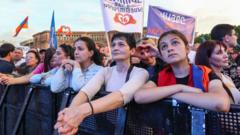
Armenians are participating in a parliamentary election on June 7, a vote seen as pivotal for the nation's future direction. The election tests Prime Minister Nikol Pashinyan's administration, particularly his peace initiatives with Azerbaijan and his government's Western alliances. Pashinyan's party is leading in opinion polls, but his government faces significant challenges, including pressure from Russia and domestic criticism stemming from a recent military defeat in Nagorno-Karabakh. The outcome of this election is expected to influence Armenia's geopolitical alignment and its approach to regional conflicts.
Adding to the pre-election tensions, six candidates belonging to Armenia's primary opposition bloc were detained shortly before the parliamentary vote. These detentions have sparked concerns regarding the fairness and democratic integrity of the electoral process. The opposition bloc has been critical of Pashinyan's policies and his handling of the Nagorno-Karabakh conflict.
Prime Minister Pashinyan is seeking a third term in office, campaigning on a platform that includes strengthening ties with the European Union and the United States, a stance that has garnered support from these Western entities. However, this pro-Western orientation is viewed with suspicion by Russia, a traditional security partner for Armenia. The election is thus taking place against a backdrop of complex geopolitical maneuvering and domestic political divisions.
In a separate electoral development, Annita Demetriou has been re-elected as the speaker of the Cypriot parliament. This re-election is being interpreted as a potential indicator of future political alliances and dynamics leading up to the 2028 presidential election in Cyprus.
Armenians are participating in a parliamentary election on June 7, a vote seen as pivotal for the nation's future direction. The election tests Prime Minister Nikol Pashinyan's administration, particularly his peace initiatives with Azerbaijan and his government's Western alliances. Pashinyan's party is leading in opinion polls, but his government faces significant challenges, including pressure from Russia and domestic criticism stemming from a recent military defeat in Nagorno-Karabakh. The outcome of this election is expected to influence Armenia's geopolitical alignment and its approach to regional conflicts.