Key facts
- Over 10,000 Hungarians participated in Budapest's annual Pride march.
- This was the first Pride march held since Viktor Orban's election defeat in April.
Over 10,000 Hungarians participated in Budapest's annual Pride march, the first since Viktor Orban's election defeat. The mood was optimistic, with hopes for expanded LGBTQ+ rights following the political change.
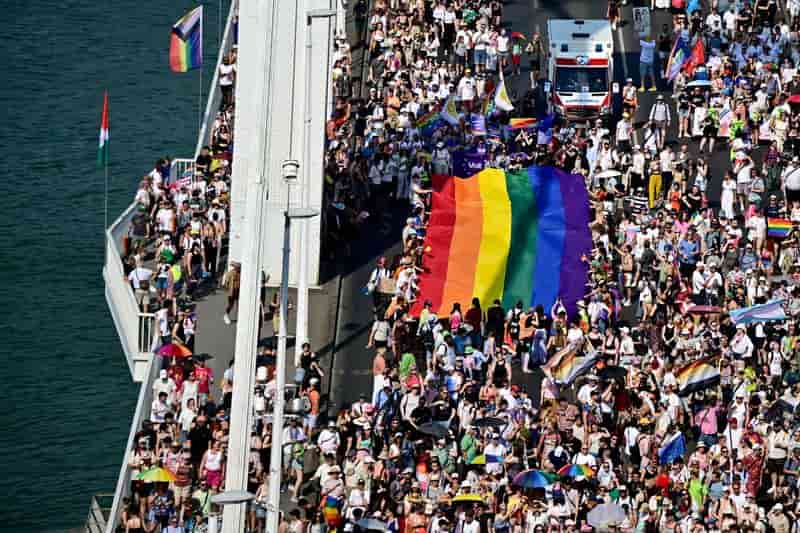
The Pride march signifies a potential shift in LGBTQ+ rights and social acceptance in Hungary following the recent political change, moving away from policies enacted under Viktor Orban's previous government.
Thousands of Hungarians marched in Budapest's annual Pride parade on Saturday, the first since the election defeat of right-wing leader Viktor Orban in April. More than 10,000 people participated, braving record heat and carrying large rainbow and European Union flags.
Last year's march was attempted to be banned by Orban as part of his policies targeting LGBTQ+ rights, and it transformed into a large anti-government demonstration. Following Orban's loss to Peter Magyar's centre-right Tisza party, the ban was lifted, allowing this year's march to proceed.
Participants expressed a significantly more optimistic mood due to the political change. Fanni Fajth, an 18-year-old student, voiced hopes for new rights related to adoption and marriage in the future, stating, "Everyone is just so much more uplifted." She added, "I think it would be wonderful if we just had equal rights finally after all these years."
Orban's government had previously enacted laws that ended gender changes in personal documents, halted adoption by same-sex couples, and banned materials in schools perceived as promoting homosexuality or gender transition. Mate Tarnai, a 51-year-old chemist, noted the "biggest change is actually the change in politics in the country," feeling "more freedom personally as well, and also the atmosphere in the country is much more relaxed than last year." He also hoped for equal rights from Magyar's government.
Magyar, a conservative, has requested patience regarding changes to legislation that curtailed LGBTQ+ community rights. Boglarka Boruzs, 23, an interpreter, stated that a significant change from Orban's rule is that LGBTQ+ individuals can "feel safer and more accepted in everyday life," and that politicians now have the power to "make society understand that it's okay to be gay."