Key facts
- EU envoy Ugo Astuto expressed confidence in a productive outcome for ongoing consultations regarding the EU's new steel tariff scheme.
- The EU plans to reduce tariff-free import quotas and increase tariffs on steel products starting July 1.
The EU's ambassador to South Korea expressed confidence in a resolution to the steel tariff dispute and urged stronger bilateral cooperation amid rising geopolitical challenges, particularly warning about proliferation risks from deepening North Korea-Russia military ties.
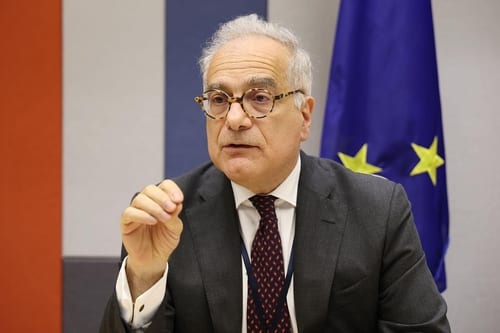
The EU envoy's remarks signal potential progress on a trade dispute impacting South Korean steelmakers while underscoring shared concerns over North Korea's military alignment with Russia, highlighting the interconnectedness of global security and economic challenges.
The European Union's ambassador to South Korea, Ugo Astuto, expressed optimism regarding the resolution of a dispute over the EU's new steel tariff scheme, anticipating a "productive" outcome from ongoing consultations. In an interview with Yonhap News Agency, Astuto also highlighted the growing geopolitical challenges, particularly warning about the proliferation risks stemming from deepening military ties between North Korea and Russia.
Astuto indicated that the intensive dialogue on the EU's planned steel safeguard measures, set to take effect on July 1, was nearing its conclusion. The revised system will reduce tariff-free import quotas for various steel products, with imports exceeding these quotas facing a higher 50 percent tariff. South Korean President Lee Jae Myung had previously urged the EU to consider the impact on domestic steelmakers during a recent summit.
The ambassador defended the EU's measures, stating that the bloc remains one of the world's most open markets, with 70 percent of goods entering tariff-free, and noted South Korea's consistent trade surplus in goods with the EU. He also voiced concerns over the escalating military cooperation between Russia and North Korea, suggesting that Pyongyang's support for Moscow's war in Ukraine and Russia's subsequent empowerment of the North could fuel further proliferation on the Korean Peninsula.
Following the summit, South Korea and the EU released a joint statement condemning the military cooperation and reaffirming the need for North Korea's complete, irreversible, and verifiable denuclearization. Astuto emphasized the interconnectedness of security in the Indo-Pacific and Europe, stressing that the North Korea-Russia nexus poses a risk to all. He called for enhanced cooperation between the two "like-minded democracies" on security, economic security, and supply chain resilience.
To facilitate this, South Korea and the EU agreed to initiate negotiations for a bilateral information security pact. Astuto also identified the green and digital transitions, research, and artificial intelligence as crucial areas for future collaboration, viewing the recent summit as a significant milestone for the strategic partnership.