Key facts
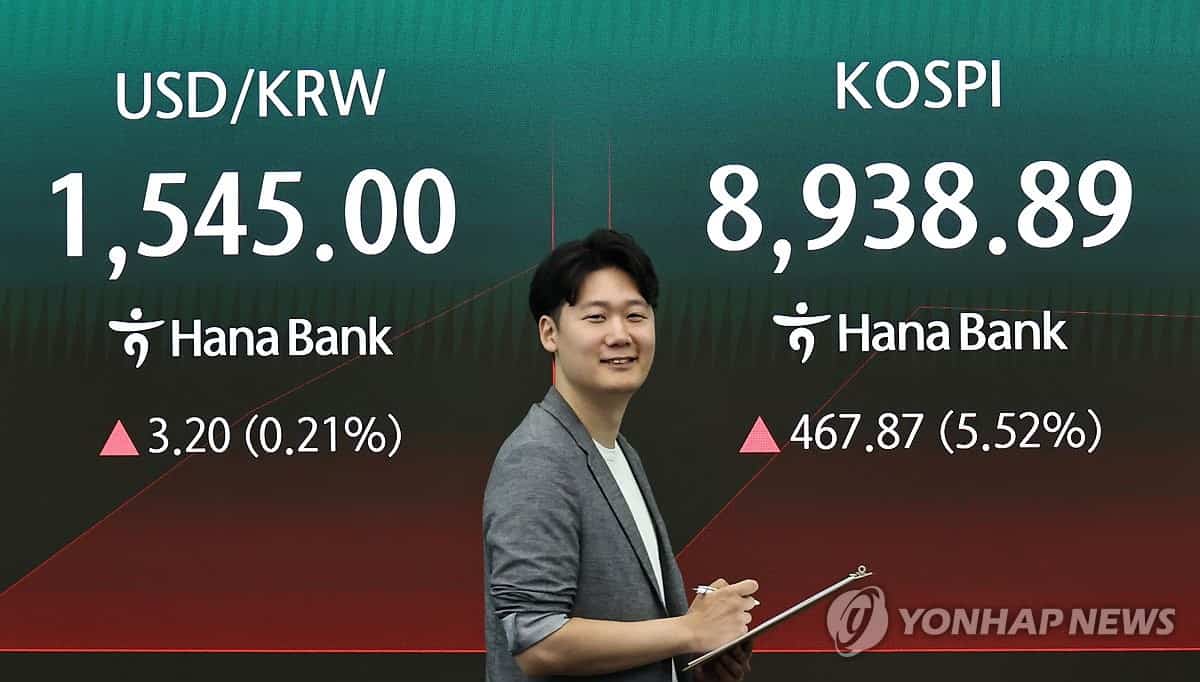
- South Korean stocks surged over 5% on Thursday.
- The KOSPI index briefly surpassed 9,000 points on Thursday.
- Micron's strong earnings and a tech rally drove the surge.
- Foreign investors sold a record 47 trillion won in South Korean stocks in May.
- European shares advanced on Thursday, with the STOXX 600 gaining 0.27%.
- European tech stocks rose 1.7% on Thursday.
- The KRX activated a sell-side sidecar for the KOSPI on Friday.
- The KOSPI slid sharply on Friday.
- Program trading for the KOSPI was suspended for five minutes on Friday.
- The KOSPI fell 5.08 percent before program trading was suspended.
South Korean stocks experienced a significant surge on Thursday, with the KOSPI index climbing over 5% and briefly crossing the 9,000-point threshold. This rally was primarily driven by positive earnings reports and strong future forecasts from U.S. chipmakers, notably Micron and Qualcomm, which reignited the artificial intelligence sector and boosted technology stocks globally. European shares also advanced on Thursday, with the STOXX 600 index gaining 0.27% and European tech stocks rising by 1.7%, mirroring the optimism in the chip sector.
Despite the strong performance on Thursday, a notable shift occurred in market sentiment regarding South Korea. Foreign investors offloaded a record 47 trillion won in South Korean stocks during May, indicating a significant withdrawal of capital. This outflow occurred even as the KOSPI reached new highs. The market's volatility continued into Friday, with the KOSPI experiencing a sharp fall. In response to the rapid decline, South Korea's bourse operator, KRX, activated a sell-side sidecar for the KOSPI index. This measure led to the suspension of program trading for the KOSPI for a period of five minutes after the index had shed 5.08 percent of its value.
The surge in chipmaker stocks and the subsequent AI rally are indicative of the market's current focus on technology and future growth potential. Micron's strong earnings, in particular, provided a significant boost to investor confidence in the semiconductor industry. However, the record outflows by foreign investors in South Korea suggest underlying concerns or a reallocation of assets, potentially driven by macroeconomic factors or a reassessment of risk in the region. The activation of the sell-side sidecar by KRX highlights the rapid and significant price movements experienced by the KOSPI, necessitating intervention to stabilize trading.