Key facts
- IBM's preliminary second-quarter earnings missed analyst estimates.
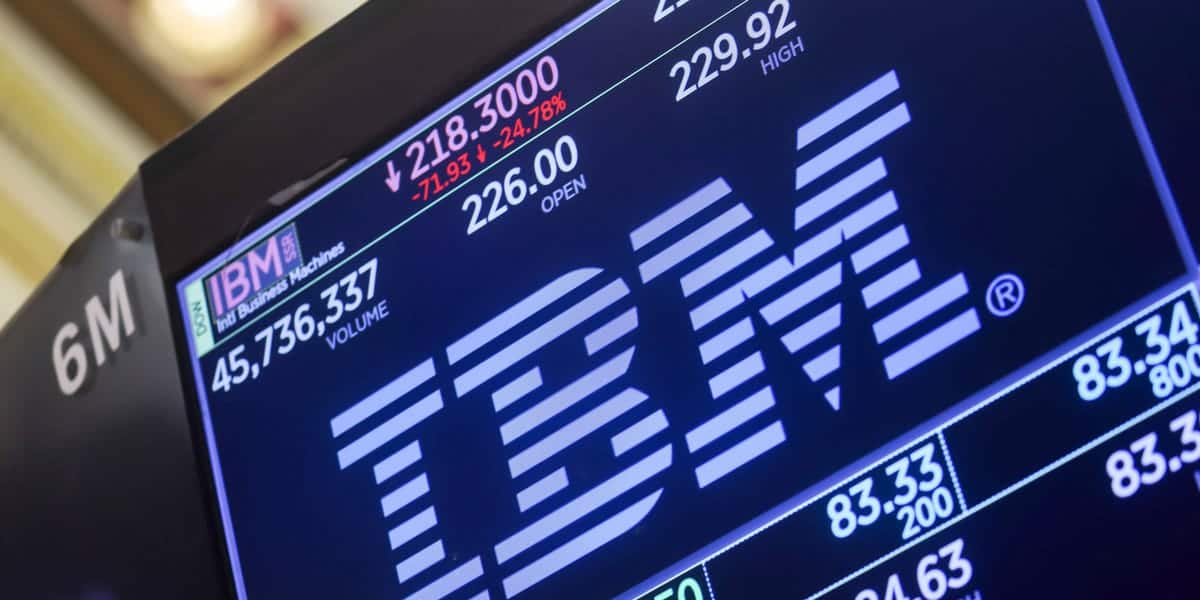
- IBM stock fell 25% following the earnings announcement.
- CEO Arvind Krishna acknowledged IBM's slow reaction to a market shift towards servers and chips.
- Software stocks experienced declines, while Dell remained stable.
- The market is showing a preference for companies involved in data-center-focused endeavors and AI buildouts.
IBM's preliminary second-quarter earnings results were described as disastrous, leading to a significant drop in its stock price. CEO Arvind Krishna admitted that the company was slow to adapt to a market rotation away from software and towards data-center-focused endeavors and chips, a trend that has seen semiconductor makers, particularly memory chip producers, surge.
The stock market reacted swiftly, with IBM shares plummeting 25%, their largest single-day loss. The company's year-to-date performance turned negative, falling 26%.
In contrast, a widely traded ETF of software stocks initially declined before recovering, though it still lagged the broader market. Individual software companies such as ServiceNow, Atlassian, Adobe, and Workday each saw losses exceeding 3%.
Dell, a PC manufacturer increasingly involved in AI, emerged unscathed. Analysts note that Dell's position as a provider of AI servers, bridging chipmakers and hyperscalers, places it favorably in the AI buildout process. According to Bloomberg Intelligence analyst Woo Jin Ho, Dell's server and storage businesses are direct beneficiaries of the current market dynamics highlighted by IBM's earnings.