Key facts
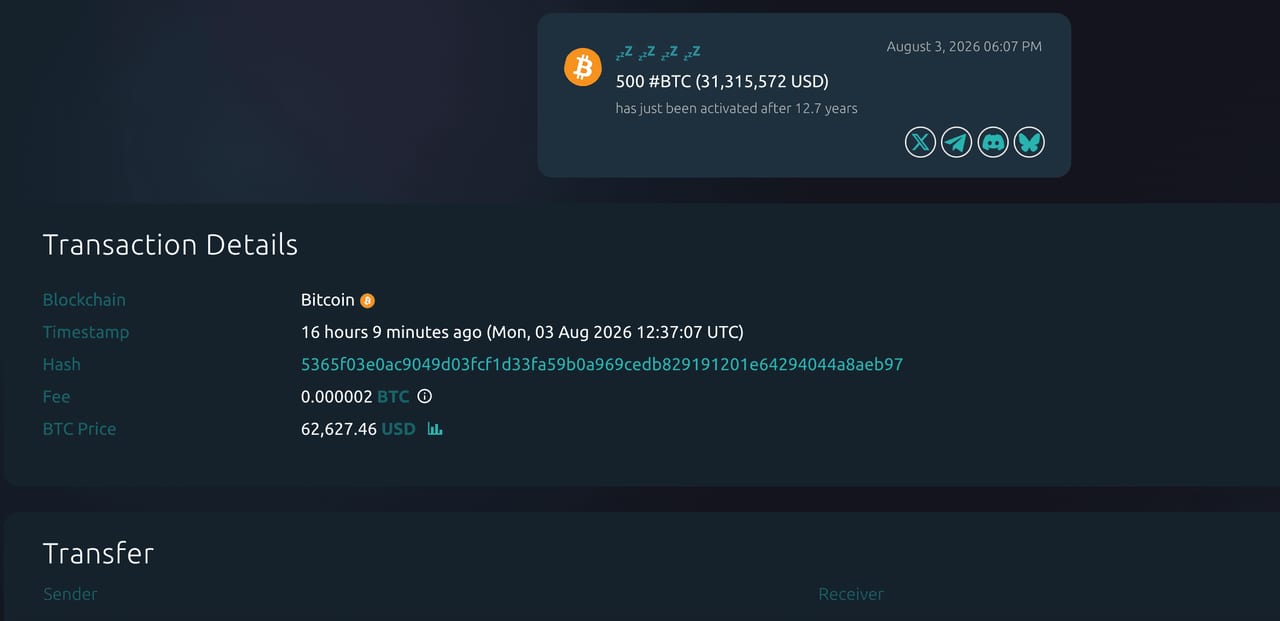
- A Bitcoin wallet, inactive since 2013, moved 500 BTC valued at $31.3 million.
- The movement coincided with a security crisis affecting Coldcard hardware wallets.
- Thousands of BTC have been drained from Coldcard-generated wallets since July 30.
- The total damage from the Coldcard hack is estimated at $130 million.
- On-chain data indicates a significant increase in the movement of long-dormant Bitcoin holdings.
A Bitcoin wallet that had been inactive since 2013 moved its entire holdings of 500 BTC, valued at approximately $31.3 million, on Monday. This significant transaction occurred amidst a widening security crisis involving Coldcard, a popular Bitcoin-only hardware wallet, which has seen attackers drain millions of dollars worth of Bitcoin from user wallets since July 30.
On-chain data indicates that this movement is not an isolated incident. Several other old Bitcoin holdings, some dormant for five to ten years or more, have also been moved in the same narrow window, suggesting a potential migration of funds due to security concerns following the Coldcard hack. Researchers at Galaxy estimate the total damage from the exploit to be around $130 million in BTC.
Data from CryptoQuant tracking spent output age bands reveals a clear spike in the movement of old coins. On August 3, approximately 935 BTC that had been dormant for 10 years or longer were moved, marking the largest single-day total since March 20. Additionally, on July 31, about 6,388 BTC dormant for five to seven years were transacted.
While old coins can move for various reasons such as estate transfers or custodial migrations, the clustering of these large, long-dormant movements in the immediate aftermath of the Coldcard incident has led to the impression that holders are proactively migrating funds for security. Some analysts have also pointed to increased inflows of BTC onto exchanges, indicating a dent in confidence in self-custody safety.