Key facts
- Bitcoin futures carry trades, which involve shorting futures and buying spot ETFs, have yielded less than U.S. Treasuries since February.
- During the 2021 bull market, these trades consistently returned 20% or more.
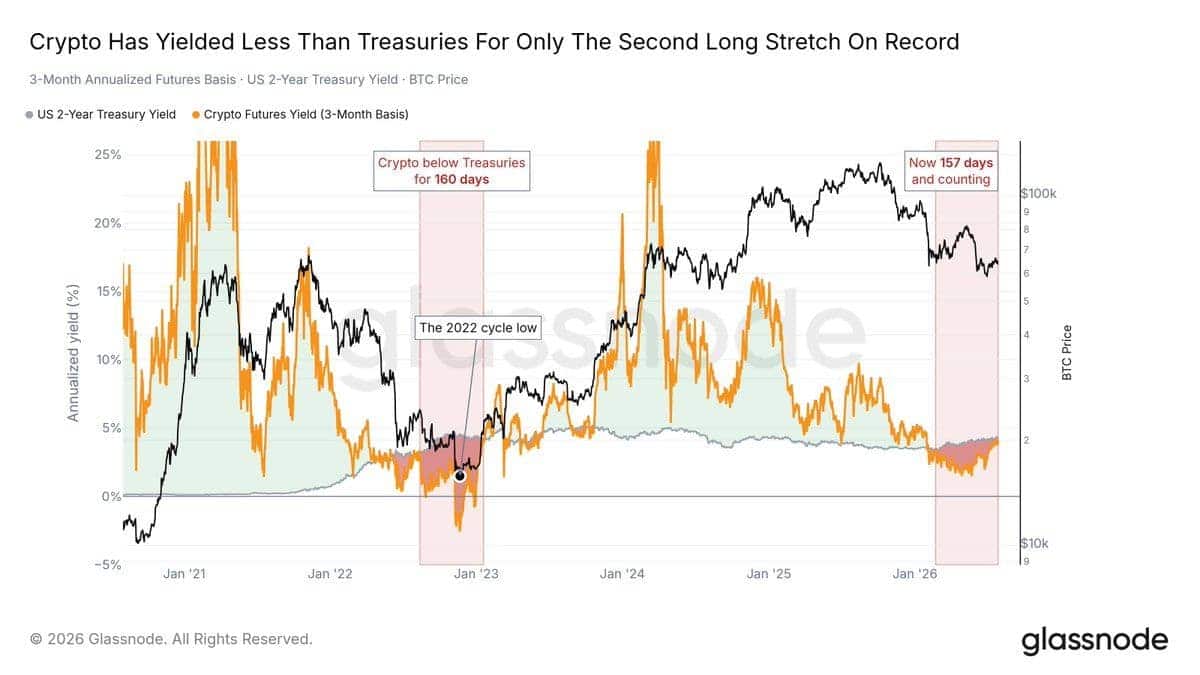
The bitcoin futures carry trade, once yielding over 20% during the 2021 bull market, has consistently paid less than short-term U.S. Treasuries since February. This decline in yield has contributed to a sharp drop in bitcoin futures volumes.
The diminished profitability of the bitcoin futures carry trade reduces a key incentive for traders to deploy capital into the crypto market, contributing to lower trading volumes and signaling a potential shift in market dynamics towards greater efficiency.
The bitcoin futures carry trade, once a lucrative strategy for traders, has seen its yields plummet to levels below those offered by short-term U.S. Treasury notes. During the 2021 bull market, this strategy, which typically involved shorting bitcoin futures while simultaneously buying a spot exchange-traded fund, could yield 20% or more. However, since February, the annualized basis, representing the gap between futures and spot prices, has consistently paid less than the yield on two-year Treasuries.
This shift means that capital deployed into the bitcoin futures carry trade now earns less than it would in government debt. According to data from Glassnode, the three-month futures basis has been yielding less than the two-year Treasury note for 157 consecutive days, a duration comparable only to a period in 2022-2023 that ended at a market cycle low.
The decline in carry returns has contributed to a significant drop in bitcoin futures trading volumes. In July, volume was just over $880 million, a sharp decrease from the $1.47 trillion peak recorded in February. This slump reflects both the broader crypto bear market and the reduced profitability of the carry trade strategy.
Despite the lower yields, the shrinking basis is seen by some as a sign of market maturation. It indicates that price discrepancies between linked markets are diminishing, which can lead to tighter bid-ask spreads, easier hedging, and fewer outsized arbitrage opportunities.