Key facts
- China's crude oil imports fell to an estimated 6.36 million barrels daily in May.
- China's crude oil imports were 8.10 million barrels daily in April.
- China's crude oil imports were 11.40 million barrels daily in February.
- Venezuela's oil exports rose to 1.25 million barrels per day in May.
- Venezuela's oil exports increased 61% year-over-year in May.
- Venezuela's production rose to 1.155 million barrels per day in May.
- CME Group reported a record average daily volume of 33.2 million contracts in May 2026.
- Japan's crude oil imports fell 65.7% year-on-year to 853,329 barrels per day in April.
- LNG feedgas demand is projected to fall by 0.6 BCF/d to 16.2 BCF/d.
- Exports from Guinea's Simandou iron ore project surged in May.
- Demand for Class 8 trucks increased significantly in May.
Global energy markets are experiencing substantial rewiring in May, marked by fluctuating crude oil imports, rising commodity trading volumes, and shifts in supply dynamics. China's crude oil imports saw a significant decline in May, estimated at 6.36 million barrels daily, a drop from 8.10 million barrels in April and substantially lower than 11.40 million barrels daily in February. This slump is attributed, in part, to disruptions stemming from the Iran War, though the country's substantial stockpiles are mitigating the impact. The fall in Chinese imports may be as much as 40%, a trend that is helping to cushion global oil prices and keep them below $100 a barrel, influenced by factors such as strategic petroleum reserve (SPR) drawdowns and evolving demand patterns.
In contrast to China's reduced imports, Venezuela's oil exports surged to 1.25 million barrels per day in May, marking the third consecutive monthly increase. This represents a 61% rise compared to May of the previous year, propelled by increased shipments to the United States and India. Venezuela's production also saw an uptick, reaching 1.155 million barrels per day. Further evidence of market activity comes from CME Group, which reported a record average daily volume of 33.2 million contracts in May 2026, a 15% year-over-year increase. The exchange also set records for 2-year U.S. Treasury futures and experienced an 18% growth in international average daily volume to 10.2 million contracts.
Other regions are also seeing notable shifts. Japan's crude oil imports reached a record low in April, falling 65.7% year-on-year to 853,329 barrels per day. This decline is prompting Japan to increasingly rely on U.S. crude supplies as several Persian Gulf suppliers face disruptions. Additionally, exports from Guinea's Simandou iron ore project surged in May, six months after the initial shipment to China, signaling a significant ramp-up of this high-grade mine with the potential to reshape the global market. China's offshore energy equipment sector is also benefiting from high global fossil fuel prices, with increased investment in offshore energy extraction boosting revenues for companies manufacturing heavy machinery.
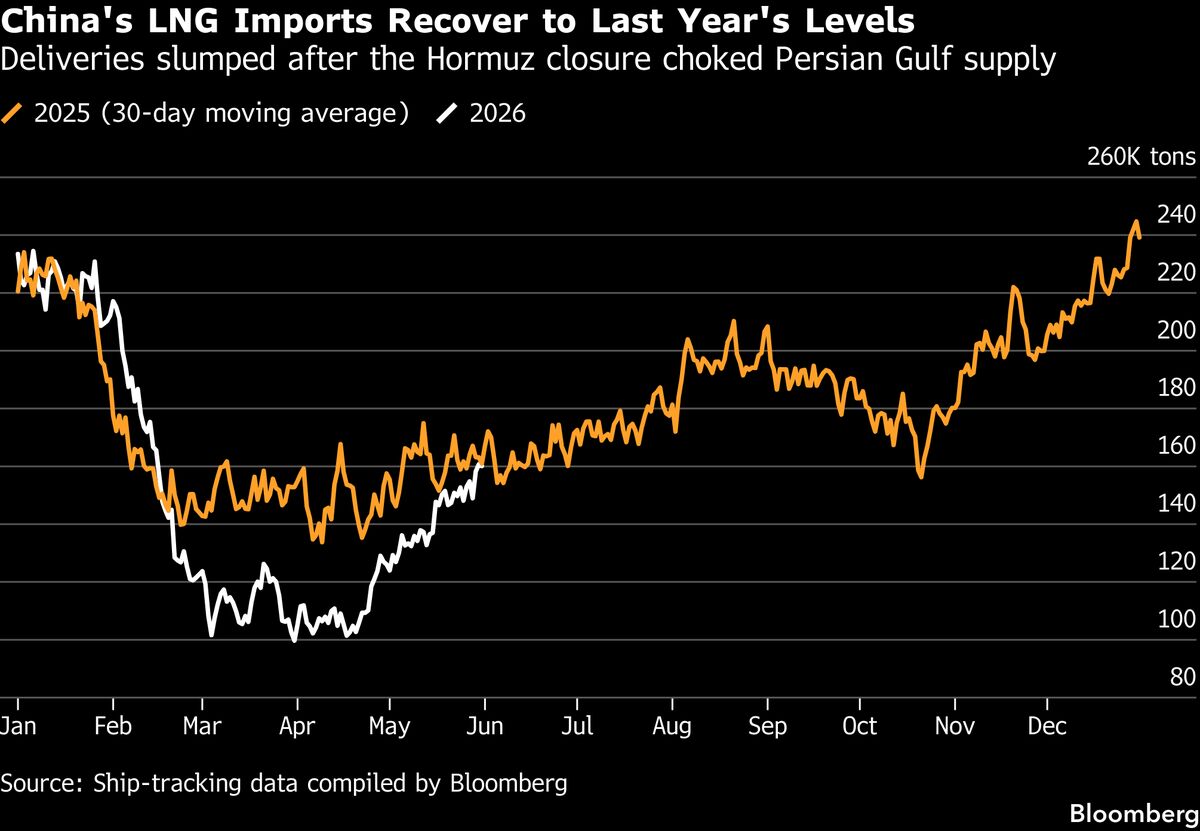
Demand for liquefied natural gas (LNG) feedgas is projected to decrease by 0.6 billion cubic feet per day (BCF/d) to 16.2 BCF/d, although this remains an increase of 2.6 BCF/d compared to 2025 levels. Current volumes are down 1.4 BCF/d from the previous week's peak. Singapore has successfully secured replacement LNG cargoes following disruptions from Qatar, ensuring its continued energy supply. Demand for Class 8 trucks also rose significantly in May, indicating a strengthening market for heavy-duty vehicles. Overall, May data suggests a global energy market being actively rewired, with substantial shifts in supply, demand, and pricing dynamics.