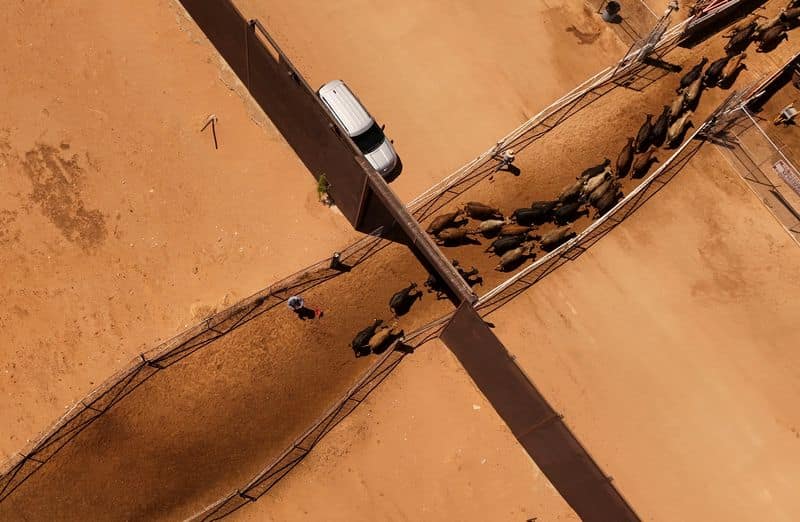
Key facts
- The U.S. Agriculture Department is lifting a ban on Mexican cattle imports.
- The phased reopening of southern ports begins July 7, 2025, starting with Douglas, Arizona.
- The ban was imposed due to the New World Screwworm pest.
- The U.S. has collaborated with Mexico on surveillance and sterile fly dispersal efforts.
- Additional ports in New Mexico and Texas are slated for reopening in the coming weeks.
The U.S. Department of Agriculture (USDA) is set to lift a ban on Mexican cattle imports, with a phased reopening of southern ports beginning as early as July 7, 2025. The decision follows significant progress in controlling the New World Screwworm (NWS) pest in Mexico, which had led to the closure of ports on May 11th.
U.S. Secretary of Agriculture Brooke L. Rollins announced that the Douglas, Arizona port, identified as the lowest risk entry point, will be the first to reopen. This is attributed to its location in Sonora and a history of effective collaboration between USDA's Animal and Plant Health Inspection Service (APHIS) and Mexican authorities. The USDA plans to open additional ports in New Mexico and Texas in the subsequent weeks, with specific dates set for Columbus, NM (July 14), Santa Teresa, NM (July 21), Del Rio, TX (August 18), and Laredo, TX (September 15). Each reopening will be evaluated to ensure no adverse effects arise.
The effort to combat the NWS involved extensive collaboration between U.S. and Mexican experts to increase surveillance, detection, and eradication efforts. Progress includes consistent sterile NWS fly dispersal in Mexico and the distribution of over 100 million flies weekly. The U.S. has also invested $21 million in updating a plant in Mexico to produce sterile flies and plans to open a sterile fly dispersal facility in Texas. Secretary Rollins emphasized the administration's focus on curbing the pest's advancement and protecting American ranchers.
The New World Screwworm is a flesh-eating maggot that can infest livestock and wildlife, causing serious and often fatal damage. The USDA's strategy involves breeding and releasing billions of sterile male flies to control the population. Mexico is also renovating its sterile fruit fly facility, expected to be completed by July 2026, to increase production of sterile flies needed to re-establish a barrier at the Darien Gap.