HomeEverythingEducation
Equities & FundsCrypto & Digital AssetsAI & TechnologyBusiness & CorporateUS Politics & PolicyGeopolitics & Global RiskMacro, Rates & FXCommodities & EnergyEuropean Politics & MarketsAsia-PacificReal Estate & Property
← All Stories

US farmers face persistent losses due to high input costs

Created at 7 Jul · 2:55 PM1 source↑ Market-relevant
IN SHORT

US farmer sentiment declined in June, with high input costs cited as the primary concern limiting financial improvements. Per-acre production costs for major crops are projected to rise again in 2026, leading to potential losses for a fourth or fifth consecutive year, even with federal assistance.

✉Newsletter

PiQ Daily

Pick your topics. Get only what matters, on your cadence.

Key Numbers

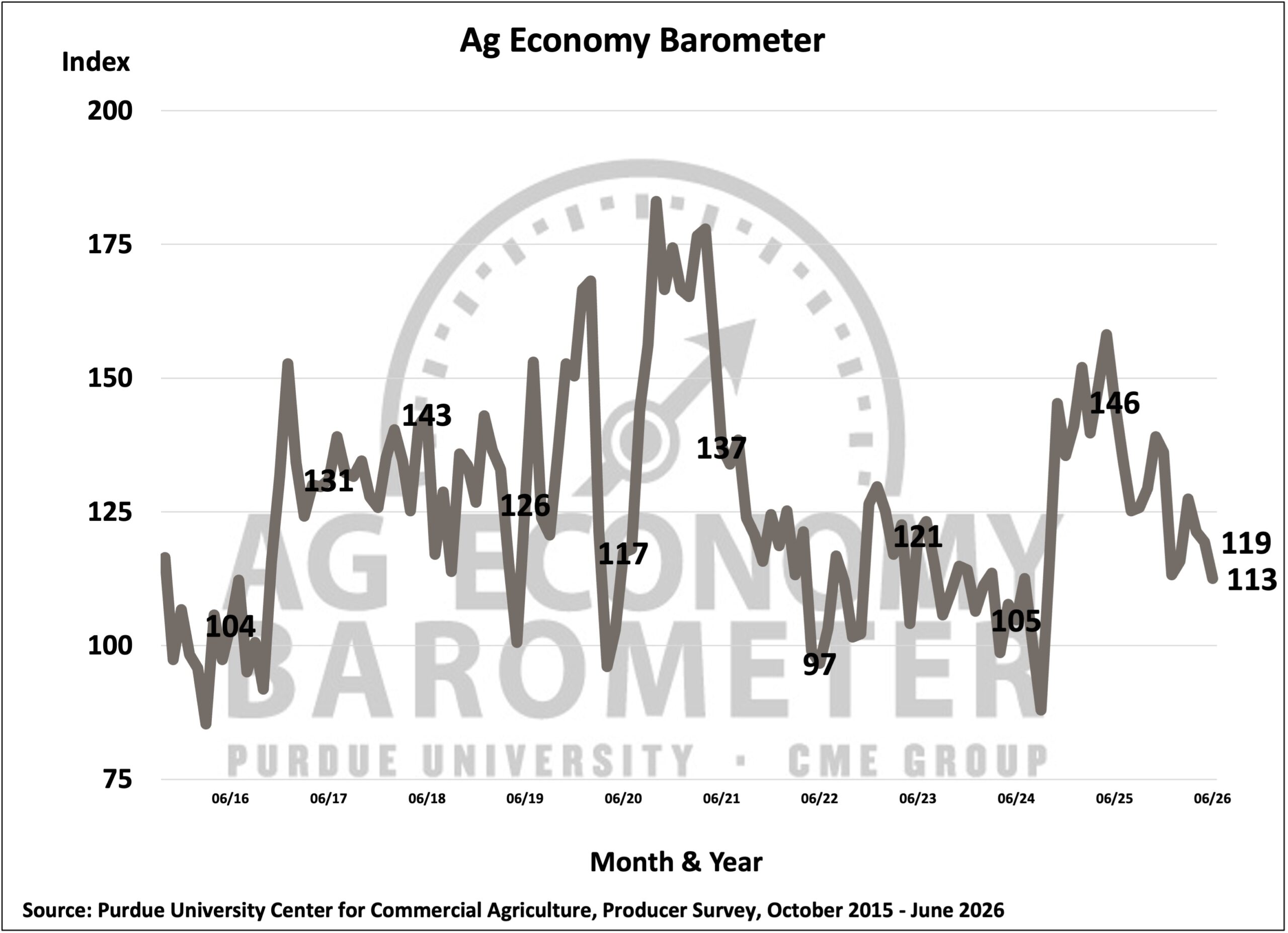
113Ag Economy Barometer points in June
47%farmers citing high input costs as biggest concern
42%respondents indicating high input costs limit financial position
23%farmers citing low crop/livestock prices as concern
12%farmers better off than a year ago
22%farmers expecting to be better off in a year
40Farm Capital Investment Index
42%respondents citing high input costs as primary financial constraint
17%respondents citing low output prices as constraint
14%respondents citing weather risk as constraint
11%respondents citing policy uncertainty as constraint
9%respondents citing labor/equipment concerns
8%respondents citing debt/financial pressure
23%respondents viewing increased production as AI benefit
14%respondents viewing reduced labor as AI benefit
11%respondents viewing reduced risk as AI benefit
52%respondents seeing no meaningful AI benefit
63%respondents finding AI recommendations sometimes difficult
22%respondents finding AI recommendations often difficult
43%respondents expecting agricultural exports to increase
9%respondents expecting agricultural exports to decline
85%respondents agreeing free trade benefits agriculture
124Short-Term Farmland Value Expectations Index
166Long-Term Farmland Value Expectations Index
$1,3082025 forecasted total per-acre costs for rice
$1,1662025 forecasted total per-acre costs for peanuts
$9652026 projected total per-acre costs for cotton
$1,3362026 projected total per-acre costs for rice
$7742026 projected operating costs per acre for rice
$1602026 projected operating costs per acre for wheat
+71%increase in interest expenses since 2020
+37%increase in fertilizer costs since 2020
+32%increase in fuel and oil costs since 2020
+47%increase in labor costs since 2020
+25%increase in chemicals costs since 2020
+27%increase in maintenance costs since 2020
+18%increase in seed costs since 2020
+18%increase in marketing costs since 2020

Who's Involved

Michael Langemeier
Purdue Center for Commercial Agriculture
Joana Colussi
Purdue Center for Commercial Agriculture
Purdue University-CME Group
conducted farmer sentiment survey
USDA-Economic Research Service
provides data on crop production costs
US farmers face persistent losses due to high input costs

↳ Why This Matters

Persistent high input costs and resulting financial pressures threaten the profitability and long-term viability of U.S. farms, impacting agricultural supply chains and potentially leading to increased food prices.

Key facts

  • The Purdue University-CME Group Ag Economy Barometer fell to 113 points in June.
  • High input costs were identified as the primary concern by 47% of farmers.
  • Per-acre production costs for nine principal row crops are projected to rise in 2026.
  • Federal assistance programs provide partial loss coverage but do not restore profitability for many farmers.
  • Many farms are expected to incur losses for the fourth or fifth consecutive year.

Farmer sentiment in the U.S. has declined, with high input costs identified as the primary concern limiting financial improvements. The Purdue University-CME Group Ag Economy Barometer fell to 113 points in June, its lowest level since January, as both current conditions and future expectations indices decreased. Nearly half of surveyed farmers cited elevated input costs as their biggest worry, with 42% indicating these costs are negatively impacting their financial position.

Per-acre production costs for the nine principal row crops are projected to rise again in 2026, continuing a trend that began after 2021. Operating expenses, including interest, fertilizer, fuel, labor, chemicals, and maintenance, have significantly increased since 2020. These inflated costs are driving higher breakeven prices for farmers. Despite federal assistance programs like the Farmer Bridge Assistance (FBA) Program and the Emergency Commodity Assistance Program (ECAP), these payments generally cover only a portion of losses, leaving many farmers potentially operating below breakeven for a fourth or fifth consecutive year.

The survey also revealed insights into farmers' views on artificial intelligence and trade. While 23% saw increased production as the main benefit of AI tools, 52% saw no meaningful benefit. A majority found AI recommendations sometimes or often difficult to follow. Regarding trade, 43% of respondents expected agricultural exports to increase over the next five years, and nearly 85% agreed that free trade benefits agriculture and other American industries.

Farmland value expectations saw a slight decrease in the short-term index, while the long-term index tied its record high. Net farm income, inflation, and alternative investments were cited as key influences on farmland values.

Frequently asked questions

The Ag Economy Barometer is a monthly survey conducted by Purdue University and CME Group that measures farmer sentiment regarding current and future economic conditions in the agricultural sector.

High input costs are the primary constraint, followed by low output prices, weather risk, policy uncertainty, labor and equipment concerns, and debt or financial pressure.

Per-acre production costs for nine principal row crops are projected to increase again in 2026, continuing a trend of elevated expenses.

Federal programs like FBA and ECAP provide important support but generally cover only a share of losses, not fully restoring profitability for many farmers facing persistent challenges.

What Happens Next

01Farmers will continue to face elevated production costs in 2026.
02The impact of federal assistance programs on farm profitability will be closely monitored.
03Future farmer sentiment surveys will track evolving concerns and outlooks.

Get the newsletter.

Pick the topics you actually care about. We'll email when there's news worth your time, on the cadence you choose. Cancel any time from your account.

Cadence
CME Headlines
  • New Product Summary: Initial Listing of the 90% Lean Beef Trim and the 50% Lean Beef Trim Futures and Options Contracts — Effective July 20, 2026
    20 Jul · 3:51 PM
  • WTI Crude Oil futures held flat as logistics normalized.
    6 Jul · 8:56 PM
  • WTI Crude Oil futures held flat as logistics normalized.
    6 Jul · 8:56 PM

How It Developed

Farmer sentiment dropped in June, with the Ag Economy Barometer falling to 113 points.
The Index of Current Conditions and Index of Future Expectations both declined.
High input costs were cited by 47% of farmers as their biggest concern.
% of respondents indicated high input costs are limiting their financial position.
Per-acre production costs for nine principal row crops are projected to increase again in 2026.
Elevated operating expenses, including interest, fertilizer, fuel, and labor, are driving higher breakeven prices.
Federal assistance programs offset some losses but do not fully close the gap between costs and market returns.
Many farms are projected to experience losses for a fourth or fifth consecutive year.

Sources

T1
High input costs weigh on US farmersWorld Grain
T2
High Input-Cost Concerns Continue to Weigh on Farmer Sentimentag.purdue.edu
T2
Input Costs Soar-But Who's to Blame? Experts Weigh Inagrolatam.com
T2
Significant Farm Losses Persist, Despite Federal Assistancefb.org

Related Stories

US airlines' May fuel costs surged 85% to $6.7 billion
7 Jul · 3:43 PM
US manufacturers face soaring electricity bills due to data center demand
7 Jul · 10:04 AM
Canadian farmers plant 6% less wheat as acres shift to oilseeds, feed grains
7 Jul · 2:05 PM
Hengli Petrochemical Profit Doubles Amid Sanctions and Higher Oil Prices
7 Jul · 6:50 AM
Lake Powell Plunges to Historic Lows Amid Deepening US West Water Crisis
7 Jul · 2:10 PM