Key facts
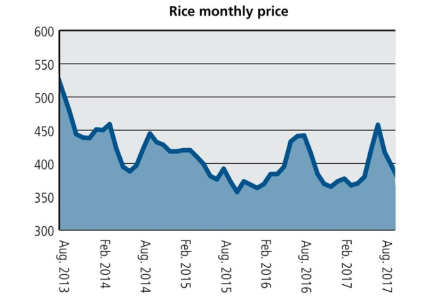
- Global rice prices showed mixed trends in August, with Asian markets facing downward pressure and U.S. and South American markets seeing increases.
- Thai jasmine rice prices surged by 12% in August, reaching a 22-month high, driven by strong demand from China and Iran.
- The FAO All Rice Price Index saw a slight increase of 0.2% in August.
- U.S. rice prices strengthened due to crop concerns and potentially tighter availabilities.
- Iran's significant purchases of Thai jasmine rice, a departure from its usual basmati preference, were a primary driver of the price increase.
Global rice prices experienced a mixed performance in August, with downward pressure in Asia due to slow offshore demand and new crop arrivals, while prices firmed in the United States and parts of South America. The International Grains Council (IGC) reported that export quotations in key Asian origins fell further amid limited fresh buying interest and seasonal pressures. Thai 5% broken grade rice eased by 3% to a near four-month low of $376 fob, and Vietnam also saw weaker offers. However, declines were partially offset by news of potential large-scale imports by the Philippines and further purchases in Bangladesh.
In contrast, milled rice offers in the United States strengthened, with the No. 2, 4% grade rising sharply to $509 fob Gulf, influenced by crop concerns and tighter availabilities. The FAO All Rice Price Index averaged 211 points in August, a marginal 0.2% increase month-on-month. Notably, Thai Hom Mali rice was an exception in the Asian market, posting a significant 12% monthly gain and reaching a 22-month high. This strength was attributed to seasonal tightness and strong sales to Chinese and Iranian buyers.
The USDA specifically highlighted an unusual surge in purchases from Iran, which typically buys more expensive basmati rice. This year, Iran acquired over 100,000 tonnes of jasmine rice, a move that significantly impacted Thai market prices, which had declined to their lowest levels since early in the year. In the Americas, prices remained stable in most South American origins but continued to increase in the United States due to expectations of a smaller crop.