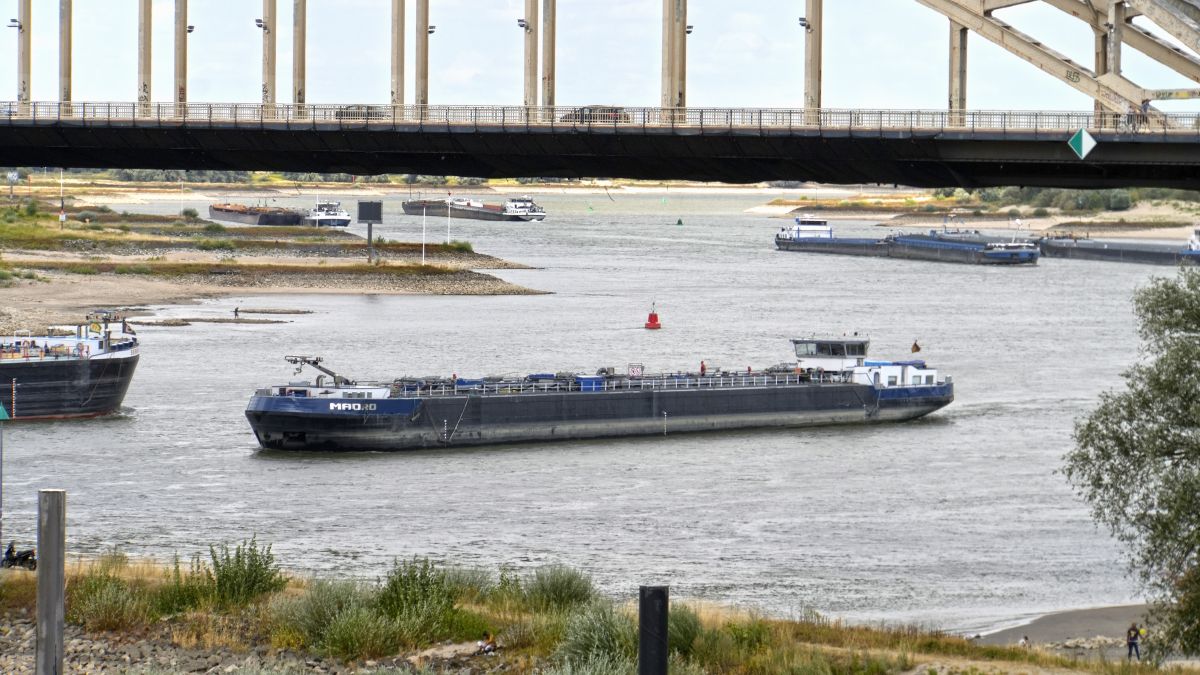
Key facts
- Water levels on the Rhine River have reached a record low, impacting shipping and supply chains.
- The river's water flow is the lowest recorded since 1880 at Kaub, Germany.
- Companies are rerouting freight to rail and road transport due to shipping restrictions.
- The low water levels threaten the supply of essential commodities including fuel, coal, and grains.
- The crisis is expected to persist for weeks or months, exacerbated by heat waves and lack of rain.
Water levels on the Rhine River have dropped to record lows, severely impacting shipping and supply chains across Europe. At Kaub, Germany, a critical shallow point, the water level is the lowest since records began in 1880, with forecasts indicating it could fall further as heat waves persist.
The Rhine is a vital artery for industrial transport, connecting Switzerland to Rotterdam, Europe's busiest port. The current low water levels mean vessels must carry significantly lighter loads, and some loading and unloading points are inaccessible. Shipping broker Riverlake has warned that the river is effectively impassable at Kaub for fully loaded barges.
Companies like specialty chemicals maker Lanxess and Evonik Industries AG are rerouting freight to rail and road transport where possible. BASF is utilizing vessels designed for low-water conditions and land transport when necessary. German utility EnBW estimates the disruption will reduce its earnings by a low double-digit-million-euro figure.
The low water levels threaten the supply of commodities such as diesel, heating oil, coal, grains, and cocoa. Farmers are also facing watering restrictions, and ferries and river cruises have been cancelled or curtailed. While some entities maintain that navigation is still possible, the overall situation is described as highly dynamic and serious, especially as this occurs during summer when water loss is typically higher.
Forecasters predict that it would take weeks of sustained rain to significantly raise the river levels, meaning the crisis could extend into October. Hydrologists attribute the parched conditions to sparse rainfall, unrelenting heat, and reduced runoff from Alpine snow and glaciers. Scientists from the World Weather Attribution group have found that climate change has made such European droughts more likely.