Key facts
- Nigeria announced the discovery of a polymetallic deposit in Kaduna State.
- The deposit contains nickel, copper, gold, platinum group metals, and rare earth elements.
- Steron Mining made the discovery, confirmed by the Nigerian Geological Survey Agency.
- Steron Mining also found 3.3 million metric tonnes of lithium reserves near Abuja.
- Nigeria is implementing reforms to boost mining revenue and local processing.
- Chinese firms are investing in lithium processing facilities in Nigeria.
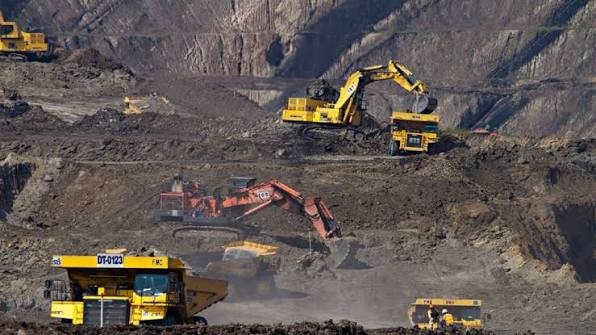
Nigeria has announced a significant discovery of a polymetallic deposit in Kaduna State, identified by Steron Mining and confirmed by the Nigerian Geological Survey Agency. This world-class find includes nickel, copper, gold, platinum group metals, and rare earth elements, positioning it as one of the country's most important critical minerals discoveries in recent years.
Alongside the Kaduna announcement, Steron Mining recently reported the discovery of 3.3 million metric tonnes of lithium reserves near Abuja, with total mineral resources estimated at 94.8 million tonnes. The Nigerian government is actively working to develop the mining sector into a second major source of foreign exchange revenue, aiming to reduce reliance on crude oil.
To achieve this, Abuja has introduced reforms to curb illegal mining, increase government revenues, and encourage local processing and refining of minerals. Applicants for mining licenses are now required to submit plans for local value addition, rather than exporting raw ore. The Mining Cadastre Office has also canceled over 4,700 dormant or illegally acquired titles to prevent speculative hoarding.
Chinese companies are showing significant interest in Nigeria's burgeoning mining sector. Jiuling Lithium Mining Company is supporting a $600 million processing facility, while Canmax Technologies is developing a $200 million lithium processing facility in Nasarawa State, integrating its output into the global EV battery supply chain.
Despite these developments, crude oil remains Nigeria's primary source of foreign exchange. The Nigerian National Petroleum Company (NNPC) Limited aims to increase oil production to 1.8 million barrels per day. The Dangote Refinery, with a capacity of 650,000 barrels per day, has significantly altered the oil sector by ending reliance on imported fuel and positioning Nigeria as a net exporter of refined products.