Key facts
- Kansai Electric Power and Kawasaki Heavy Industries are collaborating on CO2 capture and storage technology.
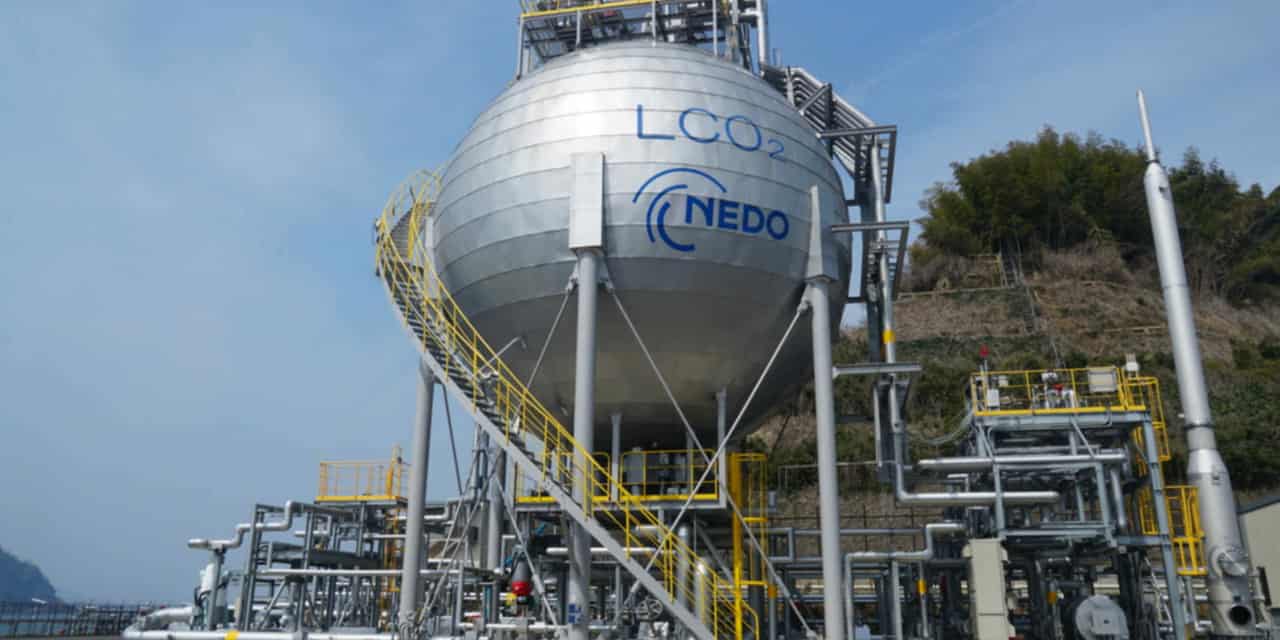
- A pilot-scale CO2 capture facility using solid sorbent has been established at Kansai Electric Power's Maizuru Power Station.
- The technology utilizes a moving-bed mechanism and can capture CO2 at low temperatures.
- The companies plan to transport captured CO2 off-site as early as the current fiscal year.
- This initiative is part of efforts to establish technology for cutting carbon dioxide emissions.
Kansai Electric Power and Kawasaki Heavy Industries are collaborating to establish technology for capturing and storing carbon dioxide, with plans to transport captured CO2 from a coal-fired power plant to a remote location as early as the current fiscal year. This initiative is part of their broader goal to develop technologies capable of cutting carbon dioxide emissions by up to 90%.
Kawasaki Heavy Industries has developed a pilot-scale CO2 capture facility using a solid sorbent at Kansai Electric Power's Maizuru Power Station in Kyoto Prefecture. This post-combustion capture (PCC) facility, which began operations in 2023, is the first in Japan to apply solid sorbent technology to capture CO2 from the exhaust gas of a thermal power plant. The demonstration testing is being conducted with the cooperation of Kansai Electric Power and the Research Institute of Innovative Technology for the Earth (RITE).
The core technology employed is a PCC moving-bed mechanism, featuring three columns for adsorption, desorption, and sorbent drying. This system allows for the continuous capture of CO2 as solid sorbent particles circulate between the columns. A key feature of Kawasaki's technology is its ability to desorb CO2 at a low temperature of 60°C, utilizing the power plant's waste heat, which is significantly lower than conventional methods requiring over 100°C. This reduces costs and enhances energy reuse efficiency. The demonstration facility captures approximately 40 tons of CO2 daily from the power plant's combustion exhaust gas.
Kawasaki aims to collect extensive operational data from this project to scale up its facilities and promote wider implementation of the technology, contributing to carbon neutrality.