All NewsEducationTV
Equities & FundsCrypto & Digital AssetsAI & TechnologyBusiness & CorporateUS Politics & PolicyGeopolitics & Global RiskMacro, Rates & FXCommodities & EnergyEuropean Politics & MarketsAsia-PacificReal Estate & Property
Story archiveAll categories
← All Stories

Philippine rice farmers adopt climate-smart practices to cut methane emissions

Created at 7 Aug · 9:06 PM1 source↑ Market-relevant
IN SHORT

Philippine rice farmers are adopting alternative wetting and drying (AWD) techniques to reduce methane emissions, a major contributor to agricultural greenhouse gases. This climate-smart approach aims to mitigate climate change while supporting food security and farmer livelihoods.

✉Newsletter

PiQ Daily

Pick your topics. Get only what matters, on your cadence.

Key Numbers

49.9%methane contribution to agricultural emissions in 2020
30%potential water savings with AWD
42.5%projected increase in agricultural emissions by 2050
28.3%projected emissions from rice cultivation by 2050
16.9%emissions from soil management practices
15.4%emissions from livestock digestion
13.2%emissions from livestock manure management
211 million tonsCO2 equivalent reduction expected from proposed measures
145,800 hectaresproject area in Upper Pampanga River Integrated Irrigation System

Who's Involved

Merriam Saba
Philippine rice grower adopting alternate wetting and drying
Ostrom Climate
Organization training farmers in AWD and facilitating carbon financing
National Irrigation Administration (NIA)
Philippine agency partnering on water management for rice projects
The Philippines Rice Research Institute (PhilRice)
Institution providing research and infrastructural support
Center for Conservation Innovations Philippines
Partner providing expertise in biodiversity and socioeconomic impact measurement
Philippine rice farmers adopt climate-smart practices to cut methane emissions

↳ Why This Matters

The adoption of climate-smart agricultural practices in the Philippines is critical for mitigating global methane emissions, enhancing food security, and supporting the livelihoods of millions of rice farmers who are on the front lines of climate change.

Key facts

  • Methane from rice cultivation accounted for nearly half of the Philippines' agricultural greenhouse gas emissions in 2020.
  • Alternative wetting and drying (AWD) can reduce water use by 30% and lower irrigation costs without affecting rice yields.
  • Smart agriculture technologies, including mobile applications for farm management, are being implemented.
  • Projects are using carbon financing to incentivize farmers to adopt AWD practices.
  • The Upper Pampanga River Integrated Irrigation System service area is a key region for these climate-smart rice projects.

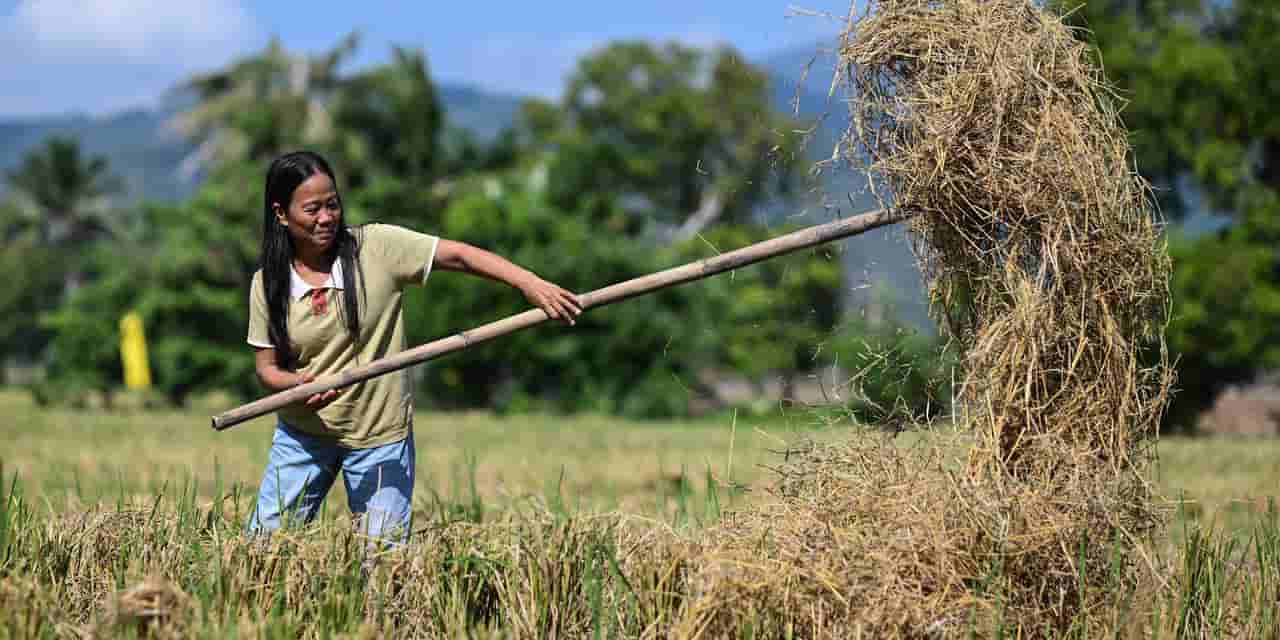
Rice paddies in the Philippines are a significant source of methane emissions, contributing nearly half of the country's agricultural greenhouse gases. To combat this, farmers are increasingly adopting climate-smart practices like alternative wetting and drying (AWD), a method that involves alternating periods of flooding and drying to conserve water and reduce methane production. This technique can save up to 30% in water usage and lower irrigation costs without impacting rice yields.

Beyond AWD, smart agriculture technologies, including information portals and mobile applications for farm management, are being utilized to enhance rice production and decrease nitrous oxide emissions from soil management. These innovations are crucial as agricultural emissions in the Philippines are projected to increase by 42.5% by 2050 if current practices continue, with rice cultivation expected to account for 28.3% of those emissions.

Projects like the Upper Pampanga Rice Climate-Smart Rice project are leveraging demand for nature-based solutions to drive carbon financing to smallholder farmers. Through Payment for Ecosystem Services programs, farmers are trained in AWD, and their practices are monitored and certified for carbon credits. These efforts involve partnerships with entities such as the National Irrigation Administration (NIA) and the Philippines Rice Research Institute (PhilRice) to ensure effective implementation and verification of greenhouse gas reductions.

Frequently asked questions

Methane from rice cultivation was the largest source, contributing 49.9% of all agricultural emissions in 2020.

AWD reduces methane production by preventing the continuous anaerobic conditions in flooded fields that promote methane generation.

AWD can reduce water usage by up to 30% and lower irrigation costs, while maintaining rice yields.

Carbon financing provides payments for ecosystem services, incentivizing farmers to adopt emission-reducing practices like AWD and enabling the certification of carbon credits.

What Happens Next

01Continued monitoring and certification of AWD implementation for carbon credit issuance.
02Expansion of farmer field school programs to train more rice growers in climate-smart techniques.
03Further development and integration of smart agriculture technologies for enhanced rice production.

Get the newsletter.

Pick the topics you actually care about. We'll email when there's news worth your time, on the cadence you choose. Cancel any time from your account.

Cadence
CME Headlines
  • WTI Crude Oil futures closed near 76.90 after choppy session.
    7 Aug · 9:09 PM
  • WTI Crude Oil futures closed near 76.90 after choppy session.
    7 Aug · 9:09 PM
  • Soybean futures slipped as traders prepped for WASDE report.
    7 Aug · 8:41 PM

How It Developed

Rice cultivation is the largest source of greenhouse gas emissions in the Philippines' agriculture sector.
Methane from irrigated rice fields is a significant contributor to these emissions.
Alternative wetting and drying (AWD) is a technique that reduces water use and greenhouse gas emissions.
Smart agriculture technologies are also being used to enhance rice production and reduce emissions.
Projects are leveraging carbon financing to support smallholder rice farmers in adopting AWD.
These initiatives aim to certify carbon credits based on monitored AWD implementation and GHG data.

Sources

T1
Philippine rice growers on front lines of climate change fightNikkei Asia
T2
Farming for the future in the Philippines - Climate Tracker Asiaclimatetracker.asia
T2
Philippines | International Rice Research Instituteirri.org
T2
The Upper Pampanga Rice Climate-Smart Rice Projectostromclimate.com

Related Stories

Asia Heatwave Sparks Energy Crisis Fears and Health Risks
7 Aug · 12:11 AM
Europe's would-be water bombers in race to tackle future wildfires
7 Aug · 5:07 AM
Global EV prices drop below hybrids as low-cost Chinese cars spread
7 Aug · 5:06 PM
Brazil corn output seen dipping 2% in 2025-26 on lower yields
7 Aug · 2:56 PM
Black Sea attacks disrupt grain and oil shipments
7 Aug · 12:56 PM