Key facts
- Two new urea plants with a total annual capacity of 25.4 lakh tonnes are nearing production.
Two new urea plants with a combined annual capacity of 25.4 lakh tonnes are set to begin production soon, aiming to reduce India's import dependence. The Ministry of Chemicals and Fertilizers highlighted this as part of the government's self-reliance objectives, noting that domestic production has surged in recent years.
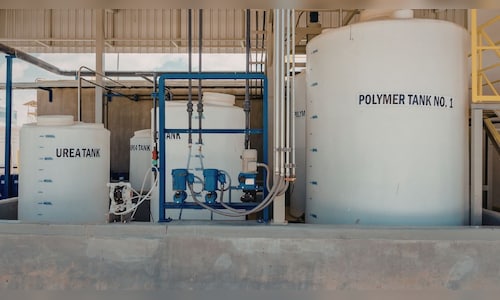
The expansion of domestic urea production capacity is crucial for India's agricultural sector, aiming to ensure fertilizer availability for farmers, protect them from global price volatility, and reduce the country's import bill.
The Indian government announced that two new urea plants, with a combined annual production capacity of 25.4 lakh tonnes, are set to commence operations soon. This development is part of a broader strategy to enhance self-reliance in fertilizer production and reduce dependence on imports, which exceeded 100 lakh tonnes in the 2025-26 fiscal year.
The Ministry of Chemicals and Fertilizers detailed the sector's progress under the Modi government, noting that six large urea plants have been established since 2014, contributing 76.2 lakh tonnes to annual capacity. The ministry emphasized proactive measures taken to ensure fertilizer sufficiency amidst global challenges such as geopolitical conflicts, rising prices, natural gas shortages, and shipping delays.
India's domestic urea production has seen significant growth, reaching an all-time high of 314.07 lakh tonnes in 2023-24, compared to 225 lakh tonnes in 2014-15. Phosphatic and Potassic (P&K) fertilizer manufacturing also reached a historic high of 211.22 lakh tonnes in 2024-25. The government has committed to absorbing international price shocks, ensuring that retail prices for farmers remain heavily subsidized, with a 45-kg bag of urea costing Rs 266.50 against a global market price exceeding Rs 4100.