Key facts
- Wildfires are increasingly impacting French campsites, forcing rapid evacuations and causing significant financial losses.
- The Domaine de La Rive campsite faced an estimated €2 million loss due to a wildfire evacuation.
- 62 campsites in the Nouvelle-Aquitaine region were evacuated, with one destroyed and three damaged by fires.
- The camping industry, a symbol of egalitarian French holidays, is grappling with the realities of a warming climate.
- Solutions being considered include replanting, redesigning layouts, and improving water access for firefighting.
Wildfires are posing an increasing threat to France's camping industry, a tradition deeply ingrained in the country's summer culture and associated with egalitarian ideals. The recent fires in the Nouvelle-Aquitaine region have led to the evacuation of thousands of holidaymakers and significant financial losses for campsite operators.
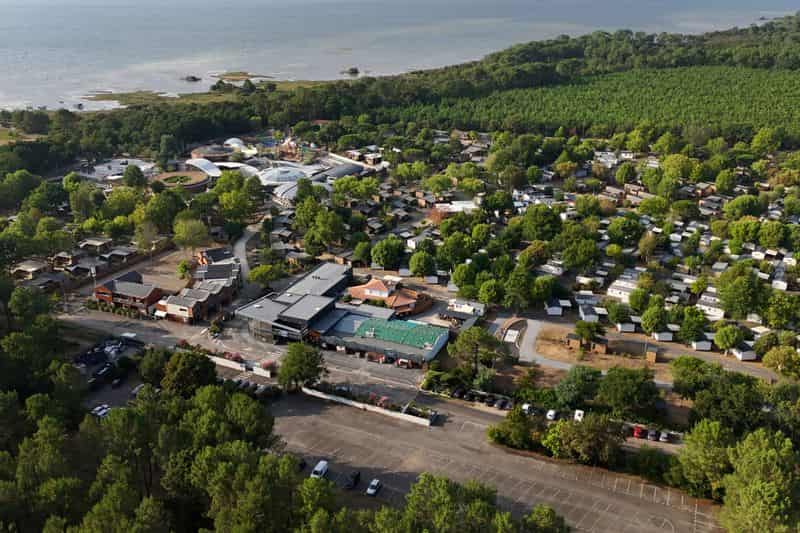
Hadrien Folliot, manager of the Domaine de La Rive campsite, described the urgent evacuation of around 1,200 guests as flames approached, resulting in an estimated €2 million loss. This incident is one of many, with 62 campsites in the affected area being evacuated, one destroyed, and three damaged. The fires have also caused widespread cancellations during a crucial period for the industry, which typically earns 40% of its annual business in August.
Nicolas Dayot, president of the National Federation of Outdoor Lodging, highlighted that campsites, often located in forests or near water, are particularly vulnerable to wildfires exacerbated by climate change. The industry is now facing the necessity of adapting, with considerations including replanting vegetation, redesigning site layouts, relocating some facilities, and improving water access for firefighting.
Sociologist Olivier Sirost noted that French camping, which evolved from British origins and became closely linked to the paid holidays introduced in 1936, has historically represented an affordable way for working families to travel. While the sector has seen professionalization and increased private ownership, leading to a 'gentrification' with more upscale amenities, many sites still offer a more budget-friendly alternative to hotels. However, the environmental realities of a warming climate are forcing a re-evaluation of the industry's future and its traditional connection with nature.