Key facts
- Octopus Energy and CATL have formed a joint venture named 'Swaptopus' to create a battery-swapping network for electric trucks in Europe.
- The network aims to allow electric HGVs to exchange depleted batteries for charged ones within minutes.
- The first battery-swapping mega-hub is scheduled to open in the UK in 2027.
- Over 30 additional sites are planned across Europe by 2035, with the goal of supporting more than 300,000 electric HGVs.
- CATL has prior experience with battery-swapping technology for heavy-duty vehicles in China.
- European truck manufacturers' existing models may require substantial modifications to be compatible with the new swapping system.
Octopus Energy and CATL have launched a joint venture, 'Swaptopus,' aiming to establish a Europe-wide network of battery-swapping stations for electric heavy-duty vehicles (HGVs). The initiative, unveiled at Octopus Energy's Energy Tech Summit in London, seeks to address the long charging times that have hindered the decarbonization of freight transport by allowing electric trucks to swap depleted batteries for fully charged ones within minutes.
The plan involves creating 'mega-hubs' with multiple battery-exchange stations, designed to serve thousands of HGVs daily. The first hub is slated to open in the UK in 2027, with over 30 additional sites planned across Europe by 2035, supporting more than 300,000 electric HGVs. This move is intended to reduce Europe's reliance on oil imports by utilizing domestically produced renewable electricity.
Greg Jackson, CEO of Octopus Energy Group, highlighted that electric trucks already offer lower running costs than diesel, and battery swapping will improve their operational efficiency. CATL's Chairman and CEO, Dr. Robin Zeng, emphasized that battery swapping is a significant part of the future of commercial transport, drawing on CATL's proven technology in China. Oscar Luo, Head of Overseas Investment at CATL, stated that battery swapping is more cost-effective for electric HGVs than ultra-fast charging and can enhance battery longevity, with swaps taking less time than refueling diesel trucks.
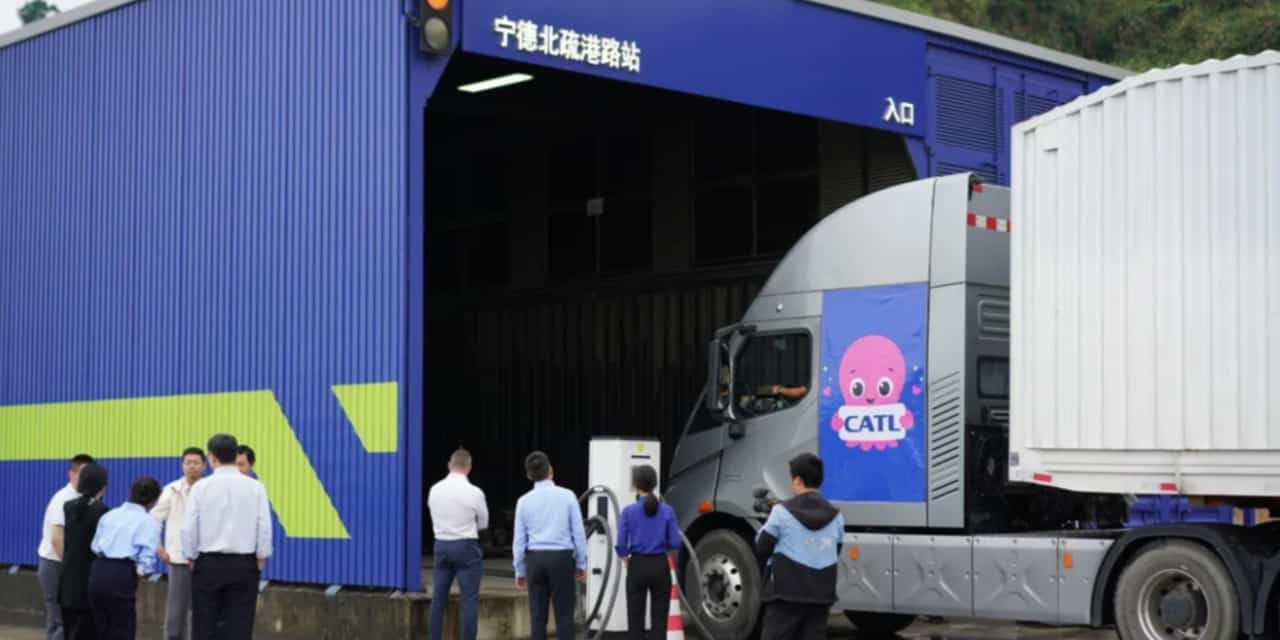
While battery-swapping systems for passenger cars have seen limited adoption in Europe, CATL has substantial experience with its Qiji battery-swapping system for electric HGVs in China, with plans for a nationwide network covering extensive routes and major city clusters. The Qiji system features standardized, swappable battery modules under the chassis, offering flexibility based on route and load requirements.
However, the plan faces potential industry resistance. European truck manufacturers like Volvo, Scania, Mercedes-Benz, MAN, and Renault Trucks currently produce models with fixed batteries, which would require significant re-engineering to adapt to a battery-swapping system. In contrast, Chinese manufacturers, such as Deepway, have vehicles designed around CATL's swappable battery system, potentially giving them an early advantage in Europe as they prepare for homologation. CATL is reportedly in discussions with European OEMs, but adaptation is expected to take time.