Key facts
- US crude oil prices fell amid global supply concerns.
- A New World screwworm infestation was confirmed in Texas.
- The US cattle herd is at its lowest level in 75 years.
- Live cattle futures fell 0.8%, feeder cattle futures rallied over 3%.
- Weekly beef export sales dropped 62% week-over-week to 4,900 metric tons.
- No further screwworm infestations have been detected around the confirmed case.
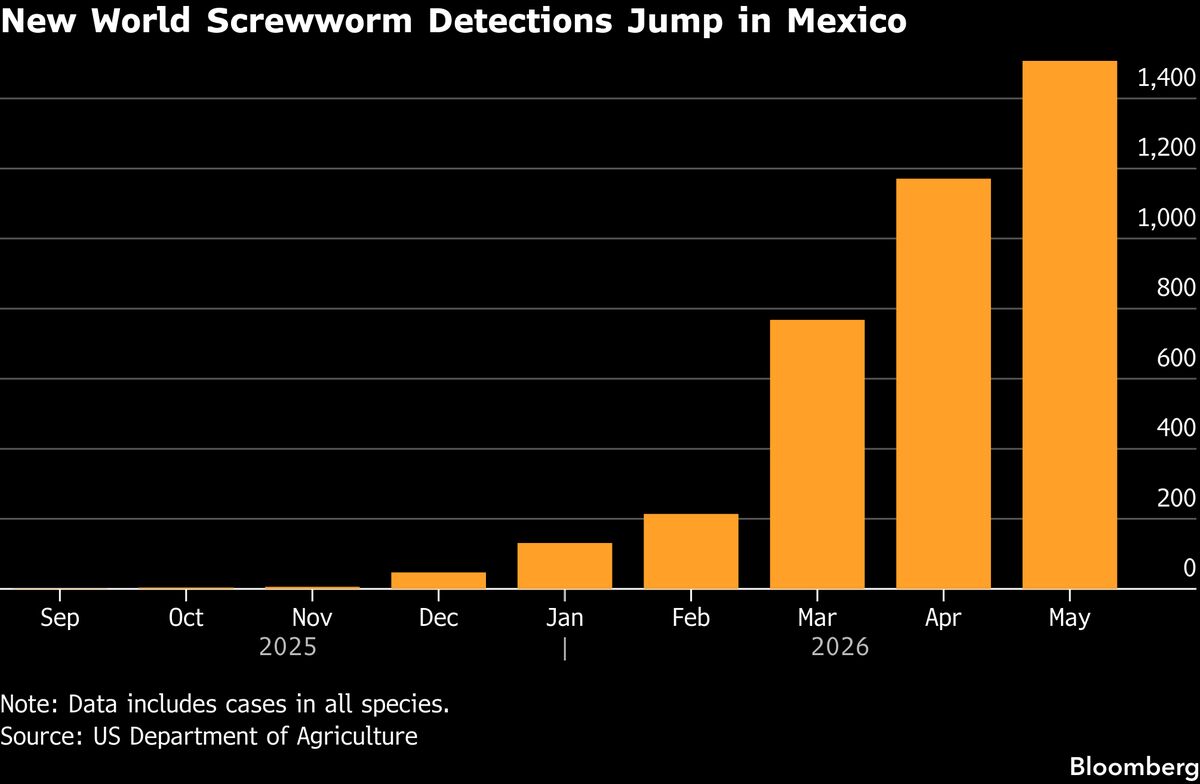
US crude oil prices have fallen amid increasing global supply concerns, with the market closely monitoring OPEC+ production decisions and refinery margins. In a separate development, a deadly New World screwworm infestation has been confirmed in a calf in Zavala County, Texas, marking the parasite's return to the U.S. after 60 years. This discovery poses a significant threat to the nation's cattle herd, which is already at its lowest level in 75 years. The U.S. Department of Agriculture confirmed the case, believed to have originated from Mexico, and has launched an emergency response including halting animal movement and releasing sterile flies. The government's plan does not include culling affected animals, opting instead for quarantine and treatment. Live cattle futures fell about 0.8% on Thursday morning following the news. Feeder cattle futures initially dropped on the Chicago Mercantile Exchange as traders worried the infestation could reduce consumers' appetite for beef, but quickly turned higher, rallying by more than 3%. The detection threatens Texas' livestock industry, which could face up to $1.8 billion in estimated economic losses if screwworm spreads widely. U.S. cattle supplies dwindled after a persistent drought hiked feeding costs and forced ranchers to slash their herds. The decline has left meatpackers, such as JBS, Cargill and Tyson Foods, struggling to find enough animals to process in their beef plants. The Meat Institute urged USDA to consider allowing 'low-risk' shipments of livestock for slaughter after the agency said it had frozen animal movement in an area around the case. U.S. ports of entry will remain closed to Mexican livestock until further notice. The infestation signals screwworm flies arrived in the U.S. anyway and will expand in wildlife populations. Federal and state officials have fanned out in South Texas following the first confirmation of screwworm on a U.S. farm in decades. U.S. Agriculture Secretary Brooke Rollins stated on Thursday that no other infestations of cattle or other animals had been detected around the confirmed case. The USDA is producing sterile flies, but the facility will not be operational until late 2027. Rollins expressed confidence in containing the incursion and noted screwworm is not a food safety threat. August Live Cattle futures staged a sharp outside sweeping reversal to close higher after initially opening lower, reclaiming key short-term technical levels including the 10-day and 100-day moving averages. The sudden market turnaround followed a USDA confirmation of a New World screwworm case in La Pryor, Texas, which resulted in an indefinite closure of the livestock border with Mexico. While traders assess potential supply chain impacts from the biosecurity event, weekly export data highlighted slowing international demand, as beef export sales dropped 62% week-over-week to 4,900 metric tons, reflecting a clear price-rationing effect at current elevated levels.