Key facts
- Argentina's Vaca Muerta shale formation is experiencing rapid development and job creation in the energy sector.
- Workers in Vaca Muerta earn significantly higher salaries than in other sectors or regions of Argentina.
- The energy sector is projected to generate substantial export dollars, boosting Argentina's trade balance.
- President Javier Milei's economic policies, including austerity and reduced import tariffs, have led to job losses in manufacturing and construction.
- The RIGI program and other incentives are attracting significant investment to the Vaca Muerta region.
- Concerns exist about the long-term economic benefits of Vaca Muerta and the uneven distribution of economic recovery across Argentina.
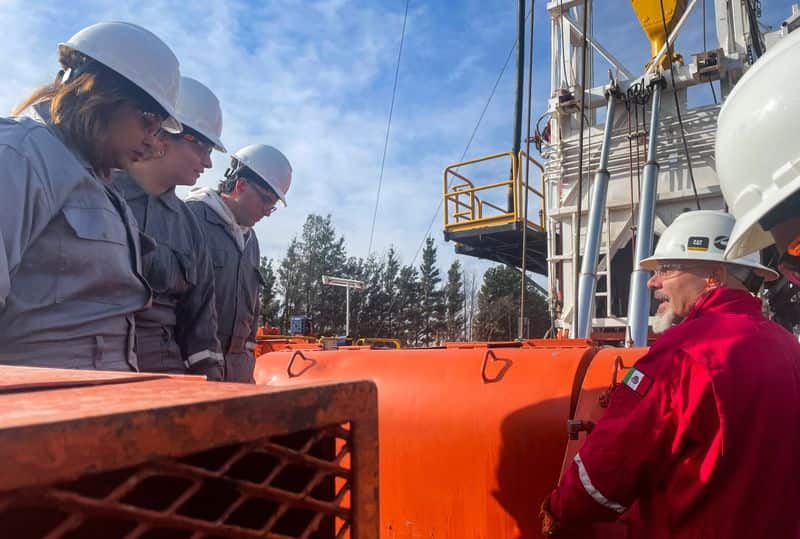
Argentina's Vaca Muerta shale formation is a significant driver of economic activity, offering high-paying jobs and substantial export revenue, a stark contrast to broader economic challenges across the country. Ramiro Ramirez, a mechanic, exemplifies this shift, finding lucrative employment operating gas compressors in the region, a stark improvement from his previous salary as a cook.
Vaca Muerta, home to one of the world's largest shale oil and gas reserves, is projected by state-run energy company YPF to generate $50 billion in export dollars by 2031, potentially rivaling the agricultural sector. Argentina has already seen its largest energy trade surplus in nearly two decades in 2024, with record exports of $11.1 billion last year.
President Javier Milei's administration views Vaca Muerta as a key to economic recovery, focusing on capital-intensive sectors. However, economists caution that this growth is not evenly distributed. While workers in Neuquen province, where Vaca Muerta is located, earn the country's highest average private-sector salaries, many other regions are experiencing job losses in manufacturing and construction due to Milei's austerity measures, reduced import tariffs, and suspended infrastructure projects.
IMF Managing Director Kristalina Georgieva has acknowledged Milei's success in reducing inflation but pointed to the struggles in other sectors, emphasizing the need for improved conditions for business and individual lending. Economists like Lucas Pussetto of Austral University agree on Vaca Muerta's priority but question if its development alone is sufficient for the national economy.
Milei has framed job losses in some sectors as an unavoidable consequence of opening the economy and increasing competition. The Economy Ministry stated that initial recovery differences between sectors are expected, with the goal of extending growth to other areas and creating more formal jobs.
The development of Vaca Muerta is supported by initiatives like the RIGI program, which offers tax breaks and regulatory stability, attracting approximately $25 billion in approved energy investments. The sector has also benefited from the liberalization of oil and gas prices and eased import restrictions, facilitating technology purchases. Future infrastructure projects, including an oil export pipeline and LNG export facilities, are expected to further accelerate production.
However, some experts, like former undersecretary of hydrocarbons Juan Jose Carbajales, question the long-term benefits of the RIGI, suggesting that dividends may not return to Argentina. Economist Guido Zack of the Fundar think-tank highlights that the RIGI only mandates 20% local hiring and that the shale boom may obscure job losses from the closure of conventional oil fields. Fundar reports that 28,000 businesses have closed under Milei's administration.
The Vaca Muerta sector faces a significant labor demand, requiring an estimated 30,000 to 43,000 additional workers in the coming years. In response, the industry, led by YPF, established the Vaca Muerta Institute to train workers, attracting over 17,000 applicants. The average monthly salary in Neuquen's oil and gas sector is $5,600, substantially higher than the $1,800 average in Buenos Aires.
Continued rapid development of Vaca Muerta is contingent on factors such as sustained high oil prices, adequate pipeline infrastructure, road networks, and financing. The town of Añelo itself has experienced a population boom, leading to saturated services and pleas from the mayor for new migrants to postpone their arrival.