Key facts
- South Korea and the U.S. launched the Korea-U.S. Shipbuilding Partnership Center (KUSPC) in Washington.
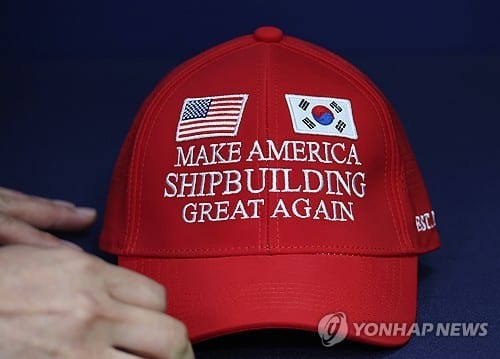
- The center aims to advance the 'Make American Shipbuilding Great Again' (MASGA) initiative.
- South Korea committed $150 billion to invest in the U.S. shipbuilding sector.
- The partnership will focus on joint R&D, technology sharing, and workforce training.
- Fifteen MOUs were signed covering industry growth, supply chains, workforce training, and technology development.
South Korea and the United States officially launched the Korea-U.S. Shipbuilding Partnership Center (KUSPC) in Washington, D.C., on Thursday, July 23, 2026. This initiative is designed to facilitate a significant $150 billion investment commitment from South Korea aimed at revitalizing the American shipbuilding industry under the "Make American Shipbuilding Great Again" (MASGA) initiative.
South Korea's Industry Minister Kim Jung-kwan emphasized the center as a symbol of his country's commitment to supporting U.S. maritime power and strengthening the bilateral alliance. He stated that Korea is ready to partner with the U.S. to build naval vessels and LNG carriers in America, highlighting the center's role in promoting joint research and development, technology sharing, and workforce development.
U.S. Commerce Secretary Howard Lutnick stressed the importance of tangible outcomes, stating that the center's true value lies in its ability to produce ships, not just discussions. He pledged the Department of Commerce's commitment to removing regulatory obstacles for Korean companies investing in the U.S.
New U.S. Ambassador to South Korea Michelle Steel described the cooperation as an expansion of the bilateral alliance into a vital new territory for American industry. South Korea's Ambassador to the U.S. Kang Kyung-wha hailed the launch as a major milestone and the beginning of a resilient joint maritime industrial ecosystem.
In conjunction with the center's opening, the two allies signed 15 Memoranda of Understanding (MOUs) covering areas such as promoting industry growth, strengthening supply chains, workforce training, and joint technology development. The Defense Acquisition Program Administration also indicated its intent to explore cooperation in the naval shipbuilding sector.