Key facts
- Saab secured a $1.04 billion order for two GlobalEye surveillance aircraft from a Middle Eastern country.
- Deliveries of the aircraft are scheduled for 2030.
- NATO is jointly acquiring up to 10 Saab GlobalEyes to replace its E-3 Sentry fleet.
- France has also finalized a deal for two GlobalEye aircraft.
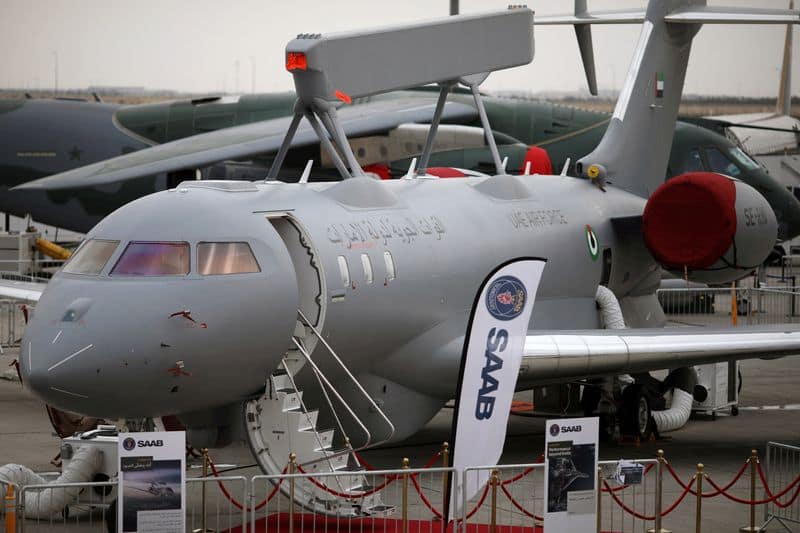
- The GlobalEye is designed for airborne, maritime, and ground surveillance.
Saab has secured a significant order for two of its GlobalEye surveillance aircraft from an unnamed country in the Middle East, valued at 10.1 billion Swedish crowns (approximately $1.04 billion). Deliveries for this order are slated for 2030.
In parallel, NATO announced a joint procurement of up to 10 Saab GlobalEyes to replace its aging E-3 Sentry surveillance planes as part of the Allied Future Surveillance and Control (iAFSC) project. NATO Secretary General Mark Rutte stated that the first units could be supplied to the alliance by 2030, with operations from Swedish bases expected by 2027. Swedish Prime Minister Ulf Kristersson expressed pride in Sweden's role in this procurement.
Saab CEO Micael Johansson indicated that the GlobalEye's affordability, capabilities, and rapid delivery timeline were key factors in NATO's selection. He also noted that Saab is increasing production capacity at its Gothenburg facility to meet demand. The GlobalEye is designed to provide airborne, maritime, and ground surveillance through its integrated Erieye ER radar system.
This follows France's finalized deal for two GlobalEye aircraft, valued at 12.3 billion Swedish Kroner ($1.3 billion), with an option for two more. Germany and Poland have also expressed interest in acquiring the surveillance aircraft.