Key facts
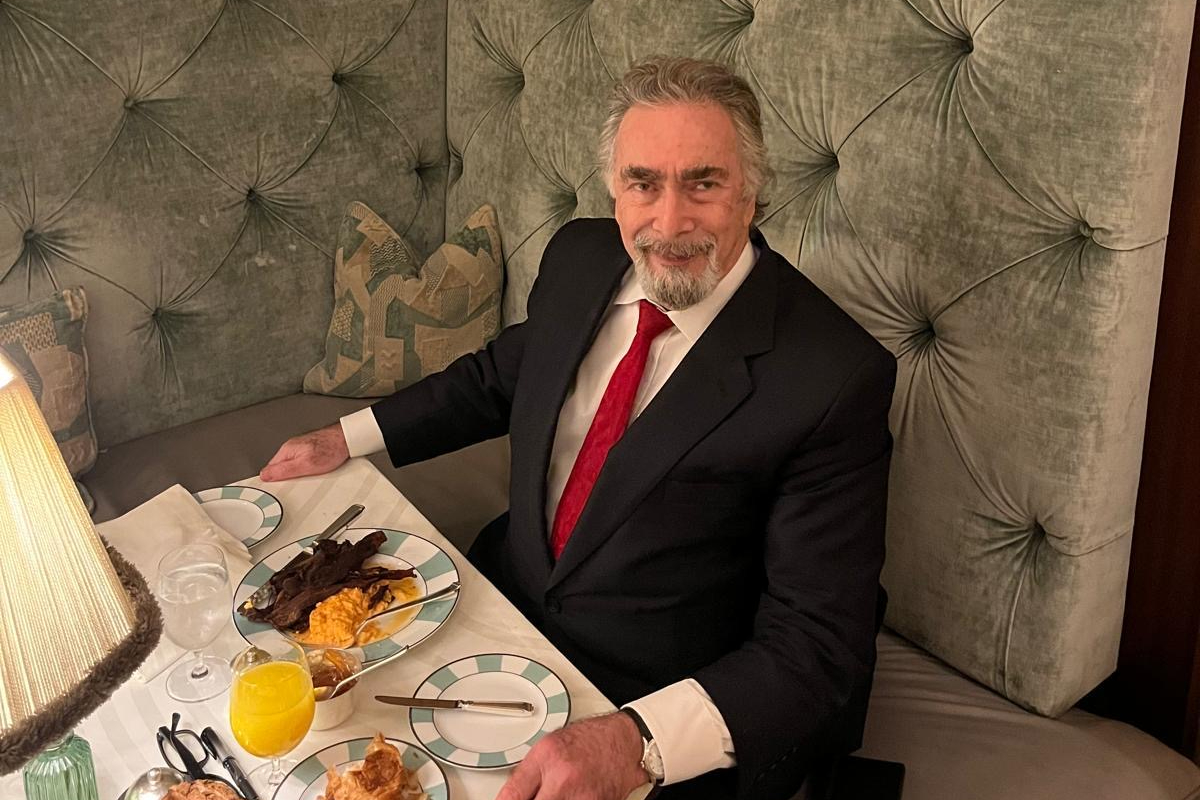
- Peter Rosengard dines at Claridge's three times a day, inviting guests to sell life insurance.
- He has eaten over 10,000 portions of eggs and bacon at the hotel.
- Rosengard has booked his preferred table at Claridge's until his 100th birthday.
- He encourages guests to eat their scrambled eggs and bacon with their hands.
- Rosengard founded The Comedy Store and managed the band Curiosity Killed the Cat.
- He claims to have sold the largest life insurance deal in Guinness World Records history.
Peter Rosengard, a life insurance salesman, has cultivated a unique daily routine centered around Claridge's hotel in Mayfair, London. He dines at the hotel three times a day, at 7:30 am, 8:30 am, and 9:30 am, inviting different guests each time to discuss life insurance. Rosengard considers this his most successful idea, noting that few people refuse an invitation to Claridge's.
He has secured his preferred corner table in the Reading Room for every day until his 100th birthday, having already consumed over 10,000 portions of eggs and bacon. Rosengard's method involves ordering scrambled eggs and bacon for himself and his guest, and he encourages them to eat the meal with their hands, using the bacon as a utensil for the eggs. He claims this is how the late Queen ate, though this is unverified.
Rosengard's career is marked by several notable achievements. He holds the Guinness World Record for selling the largest life insurance deal, valued at £100 million to David Geffen. He also founded The Comedy Store in 1979 and managed the pop band Curiosity Killed the Cat. Despite his success, Rosengard is candid about his motivations, stating that while he never considered other professions, he has turned life insurance sales into an adventure and built his own celebrity status.
He recounts anecdotes from his life, including gifting King Charles a functioning antique Victorian lavatory as a birthday present. Rosengard, who is 79 years old, expresses a desire to live until 130 and die "running at full tilt and fully burnt out," believing most people only use 10-30% of their potential. He contrasts this with the modern concept of 'work-life balance,' stating he has never felt he has 'worked' as he has never been employed by anyone.