Key facts
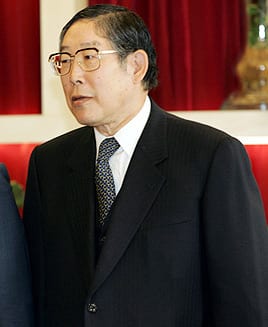
- Hiroshi Okuda, former president and chairman of Toyota Motor Corporation, has died at age 93.
- He is credited with leading Toyota's global expansion and fast-tracking the development of the hybrid Prius.
- Okuda served as president from 1995 to 1999 and chairman from 1999 to 2006.
- He was the first leader from outside the founding Toyoda family in 28 years when appointed president.
- Okuda also held significant leadership positions in Japanese business federations.
Hiroshi Okuda, the transformative leader who modernized Toyota Motor Corporation and was instrumental in launching the groundbreaking Prius hybrid vehicle, has died at the age of 93. Okuda served as Toyota's president from 1995 to 1999 and as chairman from 1999 to 2006.
Appointed president in August 1995, Okuda inherited a company he felt was suffering from "large-corporation disease." He implemented swift changes, including launching the "Netz" sales channel to boost domestic market share and expanding manufacturing facilities in the United States, Europe, and Asia. His tenure also saw the bolstering of the "Lexus" luxury brand.
Okuda is particularly remembered for his role in fast-tracking the development of the world's first mass-produced hybrid vehicle, the Prius, which debuted in 1997. He pushed engineers to accelerate the launch, aiming to establish "environment" as a key automotive keyword for the 21st century. The Prius became a cornerstone of the eco-car market and a significant factor in Toyota's eventual rise to become the world's top automaker.
Beyond Toyota, Okuda was a dominant figure in Japan's business landscape. He became chairman of the employers' federation Nikkeiren in 1999 and, following its merger with Keidanren in 2002, served as the first chairman of the unified Japan Business Federation. In this capacity, he advocated for corporate responsibility and was involved in policy-making alongside government leaders, including then-Prime Minister Junichiro Koizumi.
Okuda began his career at Toyota Motor Sales Co. in 1955 and retired from his role as a senior adviser in 2018, cementing his legacy as a pivotal reformer in Japan's post-bubble economy.