Key facts
- Toyota Motor reported a 17% year-on-year decrease in new vehicle sales in China for the January-June period.
- Honda's sales in China for July fell 14.7% year-on-year, contributing to a 23.16% cumulative decline from January to July.
- Honda's operating profit for the second quarter of 2025 dropped by 49.6%, with net profit falling 50.2%.
- US tariffs impacted Honda's quarterly profits by ¥125 billion.
- Honda's first-half EV sales in China reached 4,990 units, significantly lower than domestic competitors.
- Chinese automakers are rapidly expanding their global presence with new electric vehicle models and manufacturing facilities.
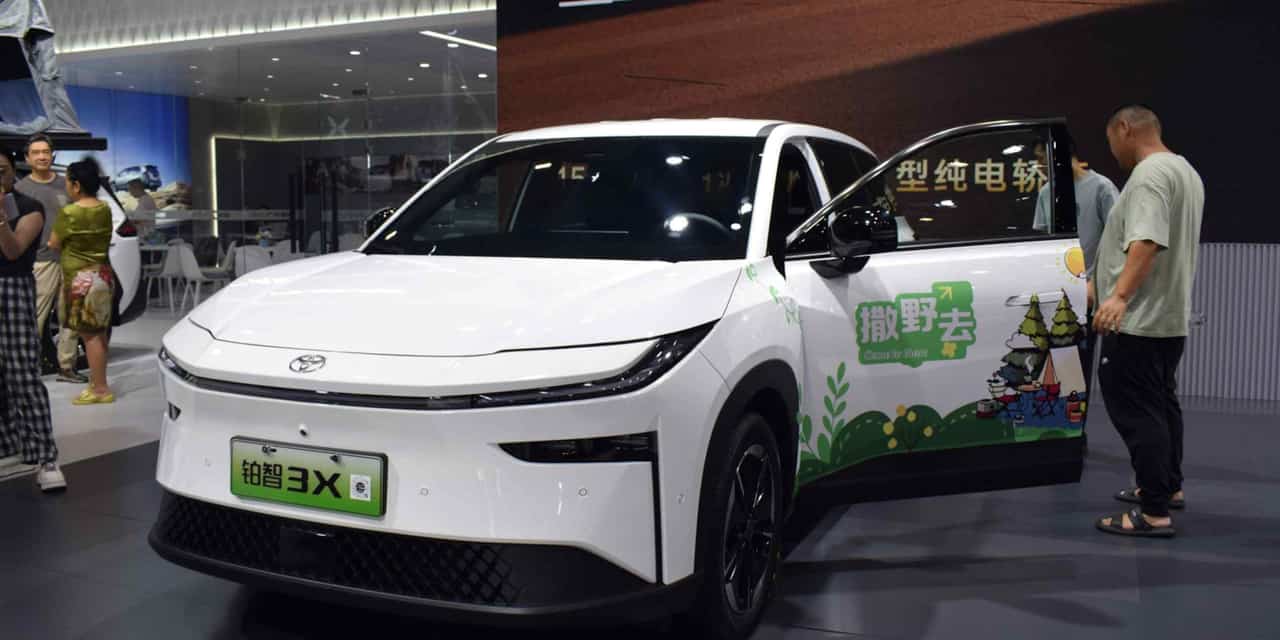
Toyota Motor's vehicle sales in China declined by 17% in the first half of 2025 compared to the previous year, as consumers increasingly opt for electric vehicles and other electrified models amidst high crude oil prices. The Japanese automaker's struggles reflect a broader trend impacting foreign car manufacturers in the world's largest auto market.
Honda is experiencing a particularly severe downturn, with its China sales collapsing for seven consecutive months. In July, sales plummeted 14.7% year-on-year, leading to a cumulative decline of 23.16% for the January-July period. This sharp drop contrasts with its peak sales of 1.62 million vehicles annually in 2020. The company's financial results for the second quarter of 2025 reflect this crisis, with operating profit nosediving 49.6% to ¥244.2 billion and net profit cratering 50.2% to ¥196.7 billion. US tariffs further impacted quarterly profits by ¥125 billion.
Honda's electrification strategy in China appears to be faltering against agile domestic rivals. In the first half of 2025, its EV sales stood at 4,990 units, the lowest among Japanese original equipment manufacturers, while the overall China NEV market grew by 33.3%. The company's premium pricing for its EV models, such as the Accord PHEV and flagship S7/P7, clashes with market expectations, especially when compared to more affordable offerings from Chinese brands like BYD, Geely, and Leapmotor, which are providing stripped-down ADAS versions at sub-100,000 RMB.
Strategic missteps, including a perceived tech-price paradox and an autonomy adoption gap, are contributing to Honda's challenges. While Honda treats advanced features like NOA assist as optional, Chinese brands are integrating them as standard in more affordable vehicles. The situation is dire for some of Honda's joint ventures in China, with executives warning of being "at the edge of survival."
This downturn for Japanese automakers is occurring as Chinese manufacturers accelerate their global expansion. China's NEV exports surged 75.2% in the first half of 2025 to 1.06 million units. Companies like SAIC and Changan are establishing new trading firms and overseas plants, targeting markets in ASEAN and beyond. A leader from a Sony-Honda joint venture acknowledged that Japanese automakers are "very afraid" of Chinese EVs and risk becoming followers without faster innovation.