All NewsEducationTV
Equities & FundsCrypto & Digital AssetsAI & TechnologyBusiness & CorporateUS Politics & PolicyGeopolitics & Global RiskMacro, Rates & FXCommodities & EnergyEuropean Politics & MarketsAsia-PacificReal Estate & Property
Story archiveAll categories
← All Stories

Taiwanese tech suppliers eye space economy for growth

Created at 6 Aug · 2:36 AM1 source↑ Market-relevant
IN SHORT

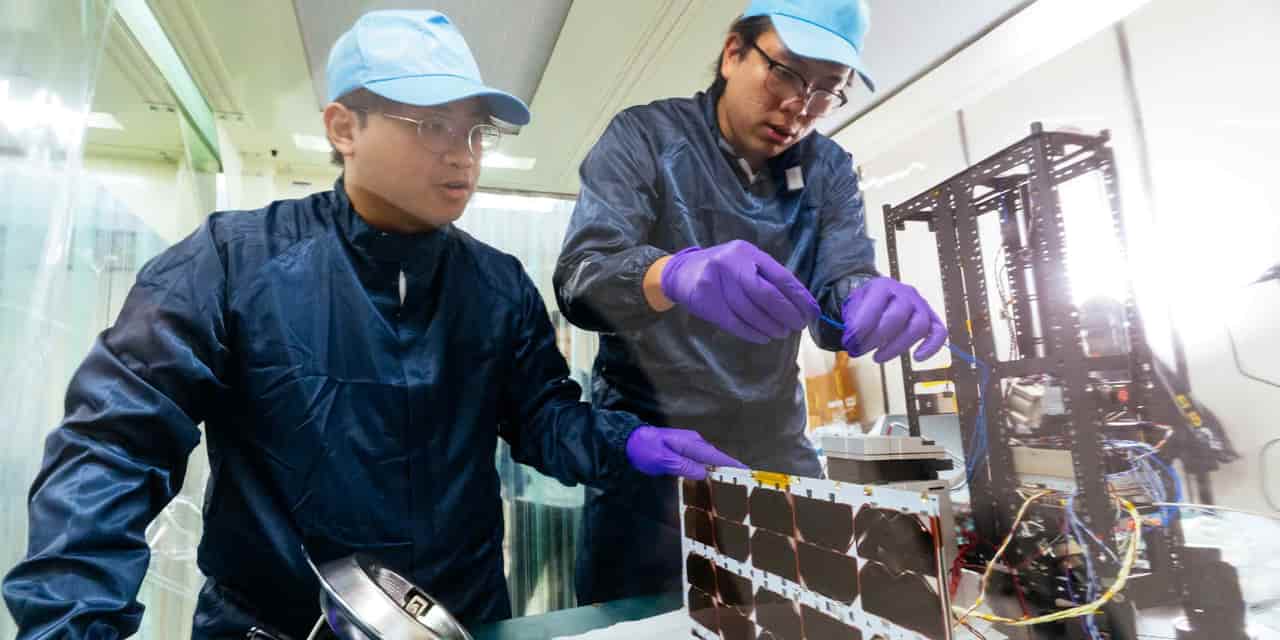
Taiwanese tech suppliers are increasingly looking to the space economy for new growth opportunities, moving beyond the saturated consumer electronics market. Companies are focusing on satellite development, space computers, and optics, leveraging their manufacturing expertise.

✉Newsletter

PiQ Daily

Pick your topics. Get only what matters, on your cadence.

Key Numbers

20+Taiwanese companies at Satellite Expo
5 yearstimeframe for expo participation doubling
$9 billionTaiwan space industry output last year
30 yearsTaiwan-US collaboration on satellite development

Who's Involved

Pyras Technology
Taiwanese company assembling CubeSats
Taiwan Space Agency (TASA)
Agency coordinating Taiwan's space program
Dr. Wu
Director General of the Taiwan Space Agency
National Applied Research Laboratories of the National Science and Technology Co
Oversight body for Taiwan's science ministry
Ministry of Economic Affairs (MOEA)
Leading LEO satellite manufacturing efforts
Ministry of Digital Affairs (MODA)
Advancing satellite communications infrastructure
Taiwanese tech suppliers eye space economy for growth

↳ Why This Matters

Taiwan's pivot to the space economy signifies a strategic diversification for its tech sector, aiming to capitalize on a rapidly growing global market and enhance national security and strategic resilience.

Key facts

  • Taiwanese tech suppliers are seeking growth in the space economy.
  • Companies are investing in satellites, space computers, and optics.
  • Taiwan's space industry output reached approximately $9 billion last year.
  • The Taiwan Space Agency (TASA) was established in 2023 to coordinate space efforts.
  • Taiwan is collaborating with U.S. companies on low Earth orbit commercial satellites.

Taiwanese technology suppliers are increasingly turning to the space economy as a new avenue for growth, moving beyond the competitive consumer electronics sector. Companies are investing in areas such as satellites, space computers, and optics, leveraging their established manufacturing and precision electronics expertise.

This strategic shift is evidenced by Taiwan's growing presence at international events like the Satellite Expo, where the number of participating Taiwanese companies has doubled over the past five years. The nation's space-related industry generated approximately $9 billion in output last year, with a notable pivot from ground-based technologies towards satellite development and production.

Taiwan's progress in the space sector is underpinned by decades of international collaboration, particularly with the United States. Over the last 30 years, collaborations have evolved from early projects to the current development of low Earth orbit (LEO) commercial satellites alongside American firms. This partnership leverages U.S. strengths in space science and technology with Taiwan's manufacturing capabilities.

Key to this expansion is the Taiwan Space Agency (TASA), established in 2023 through a restructuring of the National Space Organization (NSPO). TASA operates under the National Science and Technology Council (NSTC) and has an expanded mandate encompassing policy coordination, private-sector engagement, and international cooperation. The Ministry of Economic Affairs (MOEA) is spearheading LEO satellite manufacturing, while the Ministry of Digital Affairs (MODA) is advancing crucial satellite communications infrastructure, demonstrating a coordinated, cross-governmental approach to space development.

Frequently asked questions

Taiwanese tech suppliers are seeking new growth opportunities beyond the crowded consumer electronics market and recognizing the strategic importance of space for national security and economic resilience.

The focus is on satellite development and production, including CubeSats, low Earth orbit (LEO) commercial satellites, space computers, and optics.

TASA, established in 2023, coordinates Taiwan's space program, focusing on policy development, private-sector engagement, and international cooperation.

The space-related industry generated approximately $9 billion in output last year, with a growing emphasis on satellite technology.

What Happens Next

01Taiwan aims to play a significant role in shaping the future of space innovation.
02Continued collaboration and investment are expected to drive Taiwan's presence in the global space industry.

Get the newsletter.

Pick the topics you actually care about. We'll email when there's news worth your time, on the cadence you choose. Cancel any time from your account.

Cadence

How It Developed

Taiwanese tech suppliers are exploring the space economy for growth.
Companies are pivoting from consumer electronics to space-related investments.
Focus areas include satellites, space computers, and optics.
Taiwan's participation in the Satellite Expo has doubled in five years.
Taiwan's space industry generated approximately $9 billion in output last year.
The focus is shifting from ground-based technologies to satellite development.
Taiwan has collaborated with the U.S. on satellite development for 30 years.
Taiwan is developing low Earth orbit (LEO) commercial satellites.

Sources

T1
For Taiwan's tech suppliers, space economy could be next growth sparkNikkei Asia
T2
Stepping Through the Door: Strategic Developments in Taiwan's Space ...chinaobservers.eu
T2
Taiwan's Growing Role in the Global Space Economy - WJLAwjla.com

Related Stories

Japan to air new TV drama episodes in Thailand in overseas content push
5 Aug · 9:11 PM
Chinese optical stocks slump on report of proposed US import ban
5 Aug · 5:36 AM
China Signals Cautious Economic Support Amid Stumbling Growth
5 Aug · 3:06 PM
Hong Kong urged to be ‘super partner’ in businesses’ overseas expansion push
5 Aug · 2:46 PM
Chinese investors favor Hang Seng Index amid AI uncertainty
5 Aug · 5:26 AM