Key facts
- Hong Kong must remain an outward-looking economy and a free port to thrive, according to trade promotion body leaders.
- Leaders warned against repeating pandemic-era restrictions and emphasized safeguarding core freedoms and unimpeded capital flows.
- Chief Executive John Lee affirmed Hong Kong's commitment to zero tariffs and international cooperation for innovation.
- The city's innovation cluster ranks second globally, and it is Asia's most digitally competitive economy.
- Hong Kong will host the International Organisation for Mediation headquarters.
- First-quarter 2025 GDP grew 3.1%, with merchandise exports up 14.7%.
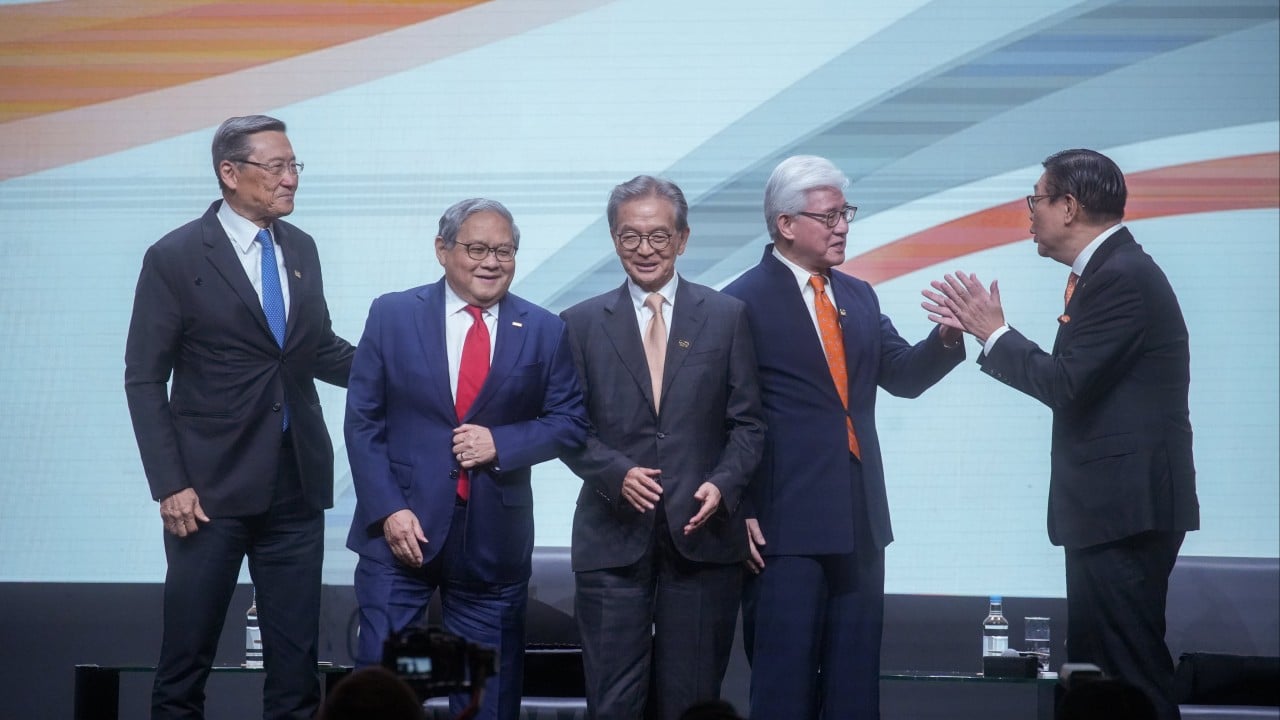
Hong Kong's trade leaders have emphasized the critical need for the city to maintain its outward-looking economy and free port status to ensure future prosperity. Speaking at a panel discussion marking the 60th anniversary of the Hong Kong Trade Development Council (HKTDC), current and former chairmen stressed the importance of international cooperation and avoiding past mistakes.
Frederick Ma Si-hang, chairman of the HKTDC, highlighted the ongoing necessity of Hong Kong's outward-looking approach, with former chairman Victor Fung Kwok-king echoing this sentiment and emphasizing the council's vital role. Peter Woo Kwong-ching, another former chairman, issued a stark warning against repeating the pandemic-era restrictions, urging the government to safeguard the city's core freedoms, including the free flow of goods, people, capital, and information.
Chief Executive John Lee reinforced this commitment at the Boao Forum for Asia's International Science, Technology and Innovation Forum, stating that Hong Kong would not alter its successful model of zero tariffs and unimpeded capital flows. He underscored that innovation thrives on international cooperation, with an open and free exchange of knowledge, talent, and ideas.
These principles are seen as foundational to Hong Kong's identity amid geopolitical challenges. The city has consciously rejected retaliatory measures against punitive tariffs imposed by the United States. Statistics indicate Hong Kong's strength, with the Shenzhen-Hong Kong-Guangzhou cluster ranking second globally in innovation and Hong Kong itself being Asia's most digitally competitive economy and a leading startup hub. Initiatives like InnoHK and the Hetao Shenzhen-Hong Kong Science and Technology Innovation Co-operation Zone are fostering this growth.
Further solidifying its global standing, Hong Kong will host the headquarters of the International Organisation for Mediation (IOMed), an intergovernmental body dedicated to dispute resolution. This move, personally endorsed by Chinese Foreign Minister Wang Yi, leverages Hong Kong's common law system and bilingual environment to attract legal talent and corporate headquarters.
Economically, Hong Kong demonstrated resilience with first-quarter 2025 GDP growth reaching 3.1% year-on-year, driven by a significant surge in merchandise exports. For the full year 2025, economic growth was 3.5%, the equity market rose 28%, and tourism increased by 12%. However, research suggests that to sustain this growth through 2030, the city must adapt to shifting supply chains, China's AI-driven manufacturing, and its aging population, while continuing financial policy reform and promoting its advantages for mainland corporations.