Key facts
- Geely's Lotus electric vehicles will be shipped to Canada starting in July.
- This shipment is part of an agreement between Prime Minister Mark Carney and Chinese President Xi Jinping.
- The agreement allows up to 49,000 Chinese EVs to enter Canada annually at a reduced tariff rate.
- Other Chinese brands, including Chery and BYD, are in the process of coordinating with Canadian government agencies.
- Canada aims to increase its exports to China by 50% by 2030, with potential for a 200% increase.
- China reduced tariffs on some Canadian products in March, but significant duties remain on canola oil and pork.
Geely Holding Group's Lotus brand electric vehicles are set to arrive in Canada in July, marking the first sale of Chinese-owned and manufactured vehicles under a bilateral agreement. China's ambassador to Canada, Wang Di, stated that the vehicles will be delivered under a deal between Canadian Prime Minister Mark Carney and Chinese President Xi Jinping, which permits up to 49,000 Chinese EVs annually to enter Canada with reduced tariffs. This initiative is part of Canada's strategy to diversify trade away from the United States.
Wang Di indicated that other Chinese EV manufacturers, including Chery and BYD, are also in the process of completing necessary procedures to enter the Canadian market, with BYD anticipating sales to commence next year. Tesla, a U.S.-based company, has already imported Chinese-made vehicles into Canada. Beyond vehicle imports, Canada is seeking to attract joint ventures and investments in its EV supply chain, though Chinese EV makers are prioritizing sales and market demand assessment first.
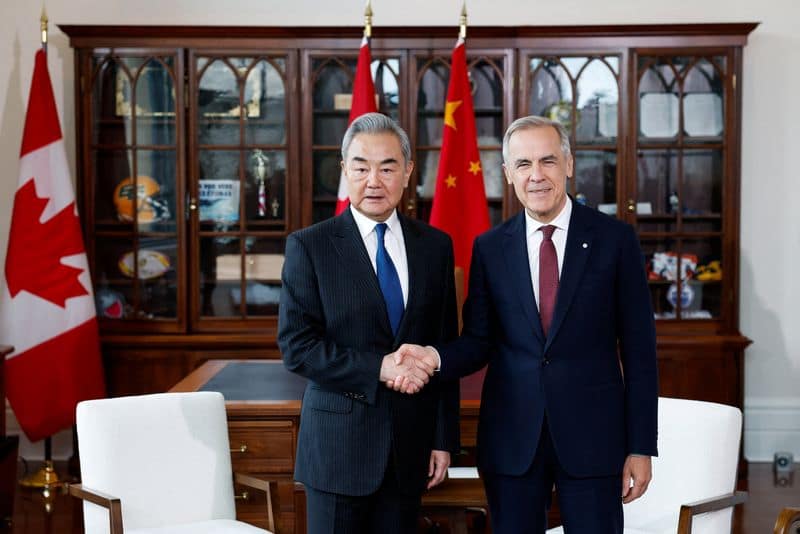
The agreement has drawn criticism from some U.S. officials and lawmakers. Concurrently, Canada is pursuing an ambitious trade expansion with China, aiming to increase exports by 50% by 2030, a target China's Foreign Minister Wang Yi suggested could potentially reach 200%. Specific areas of focus include increasing crude oil and liquefied natural gas exports from Canada, as well as expanding Canada's agricultural exports, which currently represent only 2% of China's imports. While China has reduced tariffs on some Canadian products, duties on canola oil and pork remain, and tariff relief on other goods expires at the end of the year, creating uncertainty for Canadian exporters.