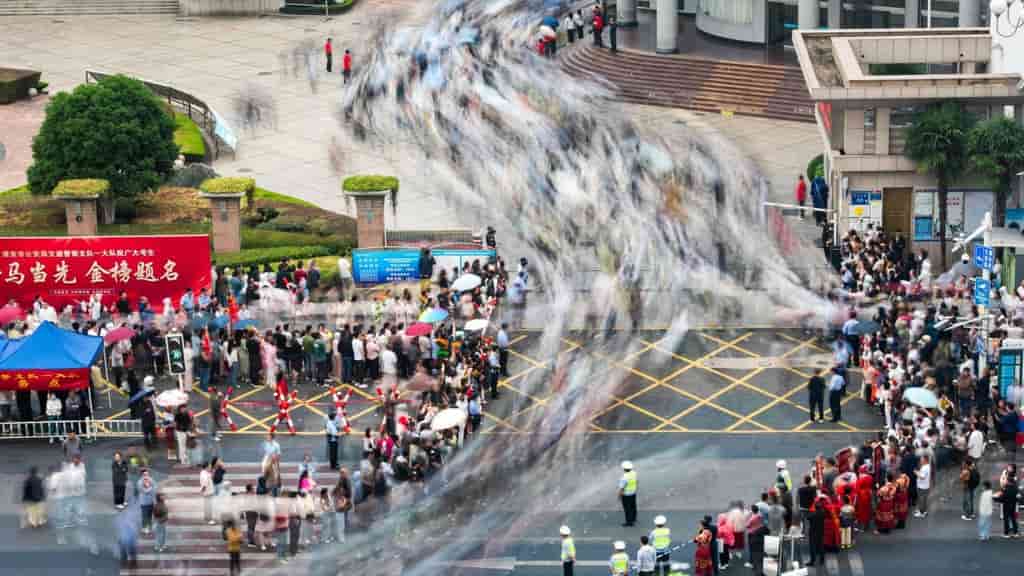
The release of China's National Higher Education Entrance Examination (Gaokao) results this week highlights the country's evolving political economy, particularly how educational planning aligns with national industrial policy and labor market demands. Candidates and their families face consequential choices with imperfect information as they submit university and major preferences, which are influenced by historical admission marks and educated guesses about future employment.
The Gaokao system functions as a self-adjusting mechanism. The number of spaces offered in university faculties is determined by the state, influenced by both retroactive and prospective processes. Retroactively, programs with poor employment outcomes are downsized or closed; between 2021 and 2025, over 12,000 such programs, particularly in humanities and management, were canceled. Prospectively, the education ministry expands quotas for majors aligned with national industrial policy, such as semiconductors and embodied intelligence.
This dynamic leads to fluctuating admission marks for different majors, creating a system of auctions where Gaokao results serve as bids. The outcome is a significant emphasis on STEM fields, with more than half of Chinese university graduates holding STEM degrees and roughly one in three bachelor's degrees being in engineering. This contrasts with industrialized economies like South Korea and Germany, where STEM degrees constitute a smaller percentage of graduates.