Key facts
- China's industrial output increased 4.5% year-on-year in May, surpassing forecasts.
- Retail sales contracted 0.6% in May, the first monthly decline since December 2022.
- Fixed-asset investment fell 4.1% in the first five months of 2026.
- Property investment declined 16.2% in the first five months of 2026.
- The national jobless rate eased to 5.1% in May.
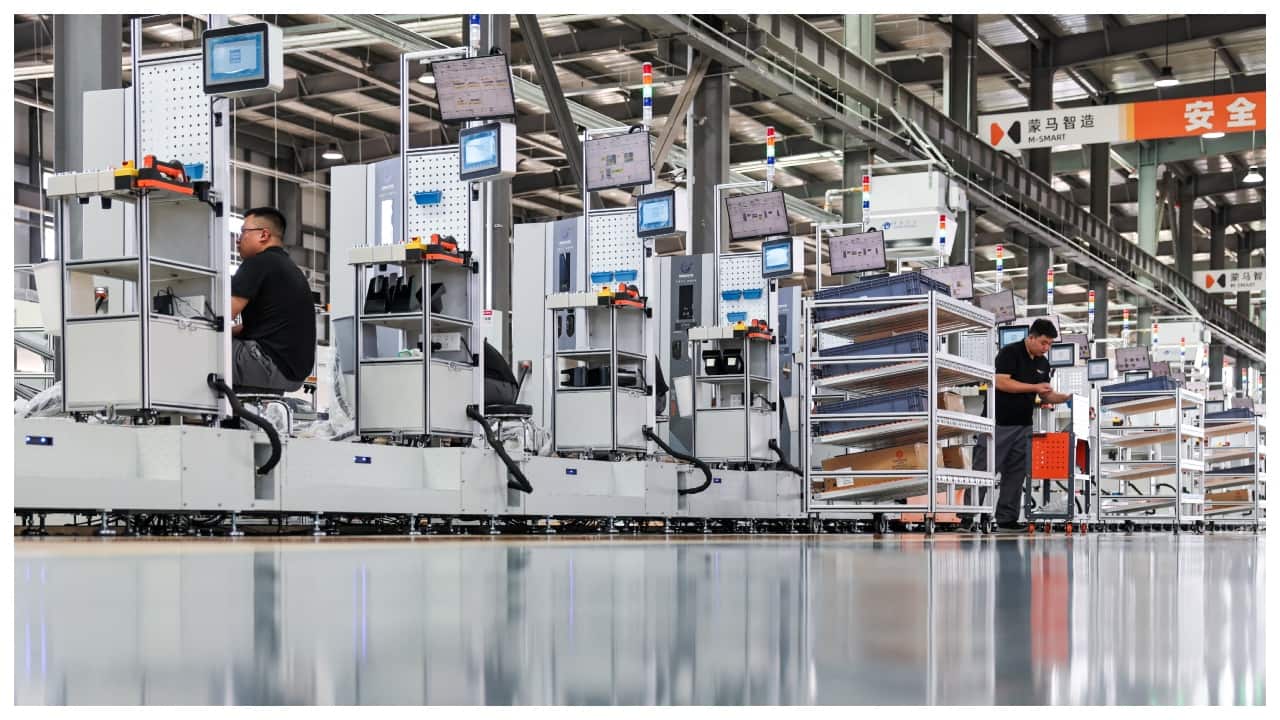
China's economy displayed a bifurcated performance in May, with industrial production showing strength while domestic consumption and investment faltered. Industrial output increased by 4.5% year-on-year, surpassing the 4.3% forecast and improving from April's 4.1% growth, partly aided by global AI investment offsetting export hits.
However, retail sales, a key indicator of consumer spending, fell 0.6% in May, reversing April's modest gain and marking the first monthly contraction since December 2022. This weakness in consumption is linked to softening demand, particularly in the auto sector, and the fading impact of government stimulus schemes.
Fixed-asset investment also underperformed, declining 4.1% in the first five months of 2026, a steeper fall than the 1.6% contraction in the prior period and worse than economists' expectations of a 2% decline. Property investment continued its downward trend, falling 16.2% in the first five months.
Price data further illustrated the economic imbalances, with factory-gate inflation reaching its highest level since July 2022, while consumer inflation remained stagnant, indicating that demand has not kept pace with production. The labor market showed some improvement, with the national jobless rate easing to 5.1% from 5.2% in April, though concerns about graduate employment and AI displacement persist.