Key facts
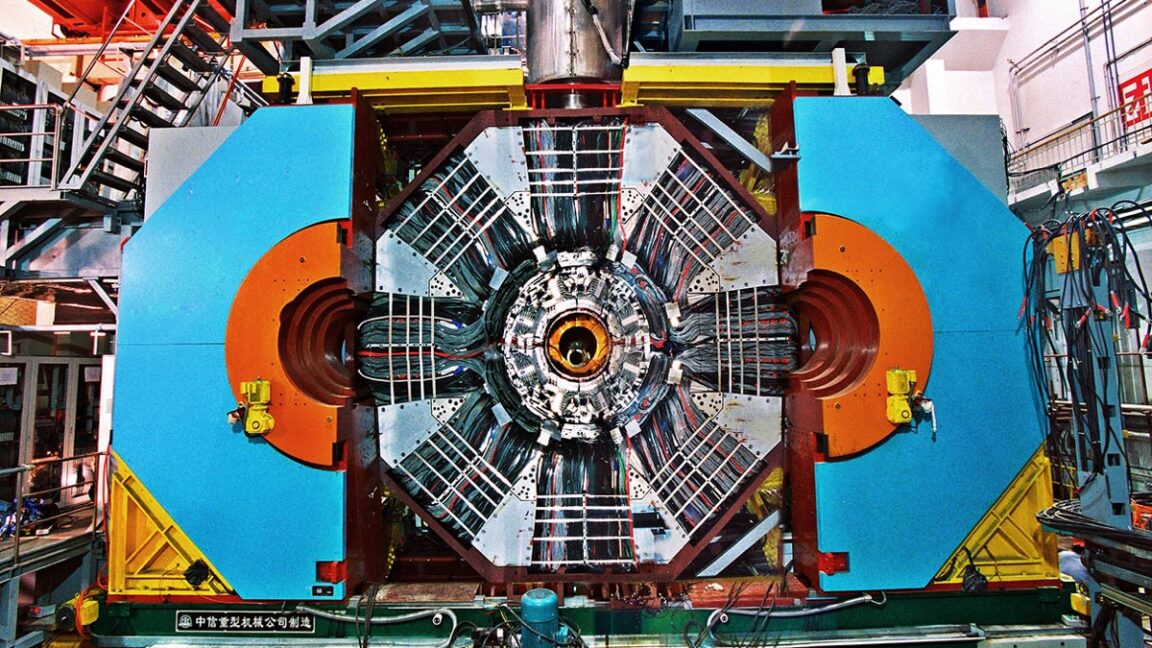
- Physicists at the Beijing Spectrometer III experiment have found new evidence for glueballs.
- Glueballs are theoretical composite particles made entirely of gluons.
- These findings could help explain the origin of mass in protons and neutrons.
- The findings were presented at a recent conference.
- China is developing 'glueball' technology for space debris removal.
- A SpaceX rocket stage was filmed re-entering Earth's atmosphere.
Physicists operating the Beijing Spectrometer III experiment in China have presented compelling new evidence for the existence of glueballs. These particles, predicted by quantum chromodynamics, are composed entirely of gluons, the force carriers of the strong nuclear force. The experimental results suggest that glueballs may be observable and could play a role in understanding the origin of mass in protons and neutrons. This research was presented at a recent conference.
In a separate development, China is reported to be developing a novel technology referred to as 'glueball' for the purpose of space debris removal. This technological application of the term 'glueball' is distinct from the particle physics discovery. Concurrently, a discarded stage of a SpaceX rocket was captured on video as it re-entered Earth's atmosphere, highlighting ongoing activities in space exploration and the persistent issue of space debris.