Key facts
- Nvidia announced new AI data center deals with SK Hynix, Naver, LG Group, and Doosan Group.
- SK Hynix will develop advanced memory chips for Nvidia.
- SK Telecom plans to build an AI cloud service with Nvidia.
- Nvidia is collaborating with LG on humanoid robots and future data centers.
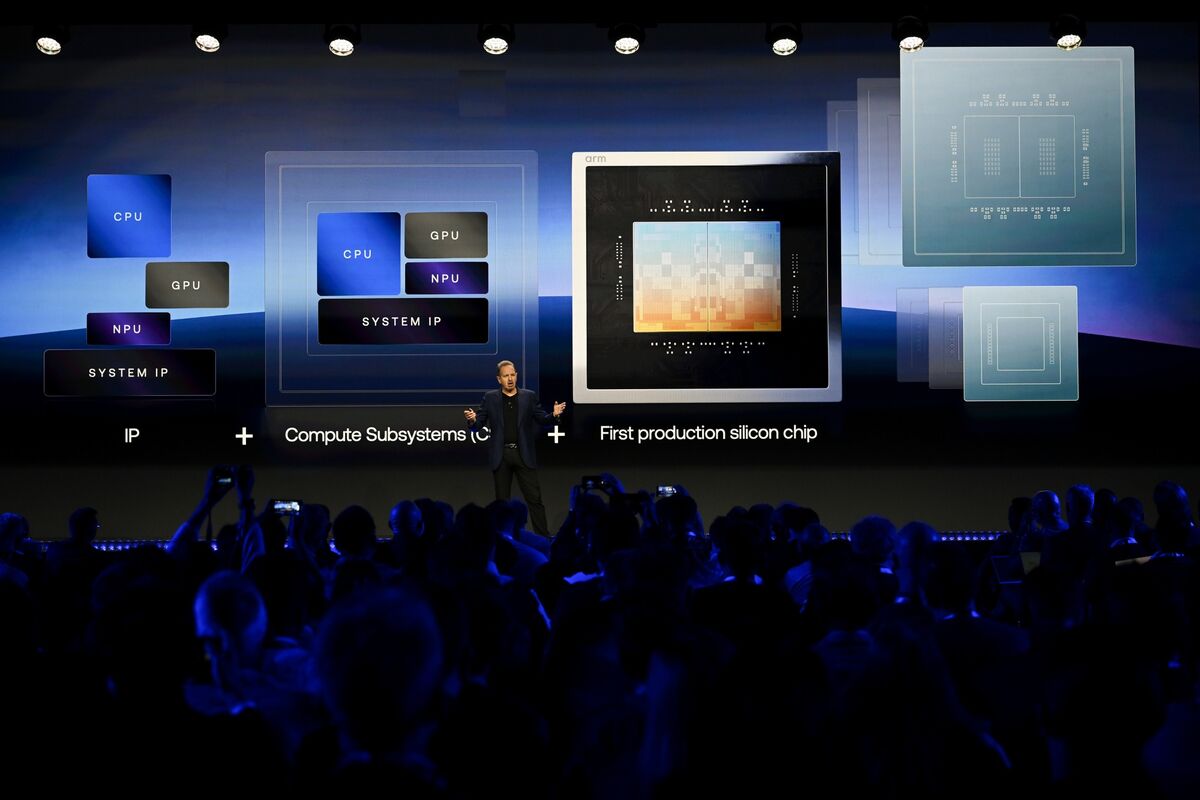
- Nvidia launched new Arm-based AI PC and data center chips.
- Arm Holdings' stock surged over 14% following Nvidia's AI chip announcements.
- Samsung, SK Hynix, and Micron are certified to supply HBM4 memory for Nvidia's AI accelerators.
- Deliveries of HBM4 memory from these suppliers are expected to start in Q3 2026.
- Micron Technology's market capitalization reached $1 trillion due to AI chip collaborations.
- Nvidia is expanding its AI hardware offerings to laptops.
- AI PC shipments are projected to reach 77.8 million units by 2025.
- Nvidia CEO Jensen Huang presented new AI infrastructure at Computex in Taiwan.
Nvidia is making significant moves to expand its artificial intelligence hardware and partnerships across the globe. During a visit to South Korea, CEO Jensen Huang announced new AI data center deals with major tech companies including SK Hynix, Naver, LG Group, and Doosan Group. These collaborations will focus on developing advanced memory chips, AI cloud infrastructure, and even humanoid robots. SK Hynix is set to develop advanced memory chips, and SK Telecom plans to build an AI cloud service. Nvidia is also partnering with LG on humanoid robots and future data center developments.
Nvidia's expansion includes new AI chips based on Arm architecture. The company unveiled the RTX Spark AI PC chip and the Vera data center processor, both utilizing Arm architecture, with planned launches in fall and Q3 2026, respectively. This announcement led to a surge in Arm Holdings' stock, which jumped over 14%. Furthermore, Nvidia confirmed that Samsung, SK Hynix, and Micron have been certified to supply High Bandwidth Memory 4 (HBM4) for its AI accelerators, including the Vera Rubin platform, with deliveries expected to begin in Q3 2026. SK Hynix is anticipated to supply the largest volume of HBM4. Micron Technology's market capitalization has reached $1 trillion, partly due to its collaboration with Nvidia on specialized HBM chips for AI systems, leading to long-term, higher-margin deals.
The company is also broadening its AI hardware reach into laptops, directly challenging established players like Apple, Intel, and AMD. This strategic push into personal computers is projected to see AI PC shipments reach 77.8 million units by 2025. Nvidia's CEO Jensen Huang also presented new AI infrastructure and hardware innovations at Computex in Taiwan. Beyond hardware, Nvidia's influence extends to software and other tech sectors. Adobe is re-engineering its Photoshop and Premiere software to leverage Nvidia's AI superchip, potentially doubling performance for creative workflows. Nvidia's CEO also commented on Marvell, predicting it could be the next $1 trillion company, which fueled a stock rally for Marvell. Optimism was also expressed regarding software companies, quantum computing, and Dell's role in the AI ecosystem.
In the broader AI landscape, emerging market funds are diversifying their portfolios after significant gains in companies like SK Hynix, TSMC, and Samsung. Meanwhile, Amazon is reportedly investing $50 billion in its own chip development, positioning itself as a potential competitor to Nvidia. Apple is also reportedly considering using Nvidia's Blackwell B200 chips for its next-generation Siri, integrating Google's Gemini AI model to enhance its chatbot capabilities. Cerebras, another AI infrastructure player, stated it works with all major players except Nvidia, aiming for openness in the market. Broadcom's CEO indicated a prioritization of organic AI growth over acquisitions.
Additional developments include Air Liquide's $233 million investment in South Korea to supply gases for SK Hynix's AI chip packaging and testing facility. LG Group is reportedly set to adopt 10,000 Nvidia GPUs. Nvidia also launched its DSX platform to aid in the design and management of AI factories.