Key facts
- China has launched an underwater AI data center off the coast of Shanghai.
- The data center uses ocean cooling and offshore wind power.
- This is part of a national strategy to synchronize AI development with power infrastructure.
- Chinese AI robotics startup Anyverse Dynamics raised over $200 million in angel funding.
- Envision Group and HongShan Capital participated in Anyverse Dynamics' funding round.
- Anyverse Dynamics secured a $73.2 million overseas order from Envision Group.
- The overseas order is for AI robots to be deployed in Europe and Asia.
- Researchers from Tsinghua and Peking Universities studied AI's impact on jobs.
- AI is reducing middle management roles and freezing entry-level hiring.
- The trend promotes human-machine collaboration and redefines business models.
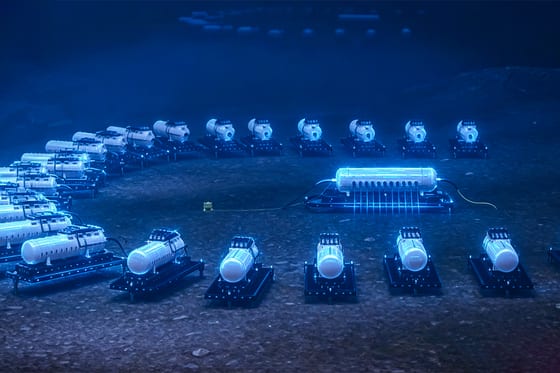
China is making significant strides in artificial intelligence development, marked by innovative infrastructure projects and substantial private investment. Off the coast of Shanghai, a novel underwater AI data center has been launched, utilizing ocean cooling and offshore wind power. This initiative is part of a broader national strategy aimed at synchronizing AI development with power infrastructure and optimizing energy consumption. The facility represents a forward-thinking approach to data processing and AI deployment.
In the realm of AI robotics, Anyverse Dynamics, a Chinese startup, has successfully raised over $200 million in angel funding. Key investors in this funding round include Envision Group and HongShan Capital. In addition to this significant capital injection, Anyverse Dynamics has secured a $73.2 million overseas order from Envision Group for AI robots. These robots are slated for deployment in Europe and Asia, indicating a growing international demand for Chinese AI robotics solutions.
Beyond infrastructure and investment, AI's impact on the labor market is also being closely examined. Researchers from Tsinghua University and Peking University have published findings suggesting that AI is actively reshaping corporate jobs. Their research indicates a trend towards the reduction of middle management roles and a freeze on entry-level hiring, rather than widespread mass layoffs. This restructuring is seen as a move to promote greater human-machine collaboration and to redefine existing business models.
The implications of these developments point towards a future where AI is deeply integrated into China's economic and technological landscape, from energy-efficient data centers to advanced robotics and a transformed workforce.