Key facts
- Amazon and QuEra plan to deliver a quantum computer capable of executing one million quantum operations over hundreds of logical qubits by 2028.
- The Libra system will utilize QuEra's neutral atom quantum computing technology, which uses lasers to trap and manipulate atoms.
- Quantinuum's Helios trapped ion quantum computer has 98 qubits with very low error rates for single-qubit (0.00003) and two-qubit (0.0008) gate operations.
- Helios's capabilities are described as essentially impossible to simulate using classical computers.
- The definition of "useful" quantum computing depends on the number of logical qubits required, ranging from hundreds for simple chemical models to tens of thousands for breaking encryption.
Amazon and QuEra have announced a significant acceleration in quantum computing development, promising a "Megaquop-scale" device capable of executing one million quantum operations over hundreds of logical qubits by 2028. This timeline is considerably sooner than the five- to 10-year estimates common in the field for achieving useful, error-corrected quantum computation.
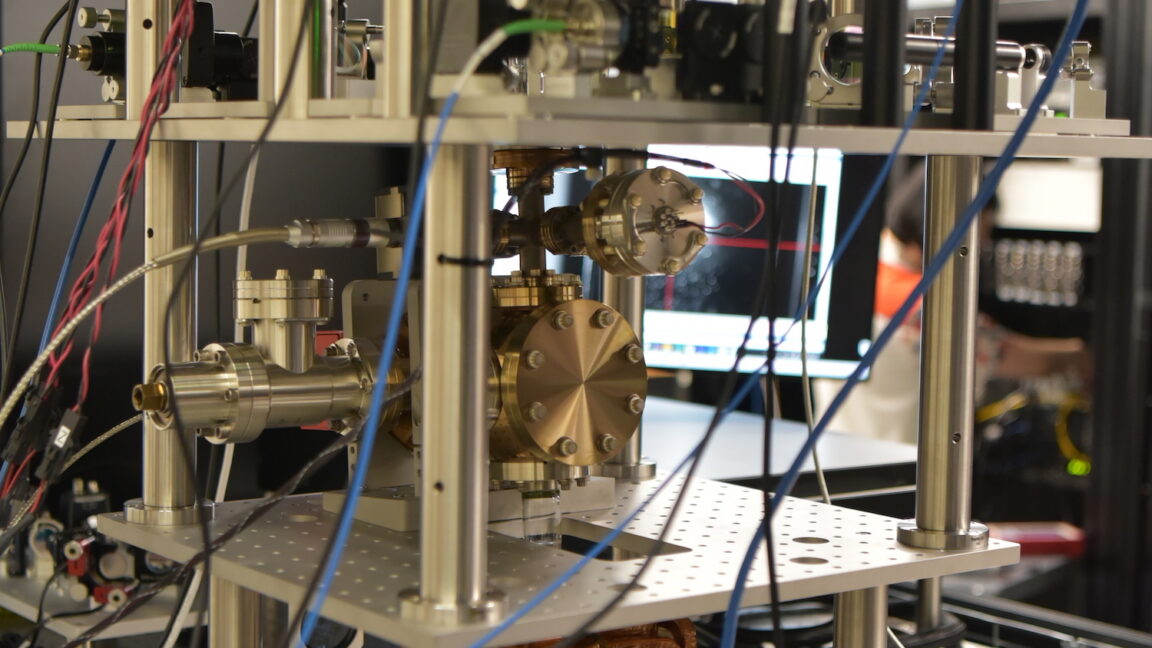
The Libra system, to be provided by QuEra, will leverage neutral atom quantum computing. This technology uses lasers to cool and trap atoms, storing qubits in nuclear spins. QuEra's academic partners have demonstrated grids of up to 3,000 qubits, but challenges remain in maintaining qubit quality and speed.
Quantinuum, meanwhile, has provided further technical details on its Helios quantum computer, which uses trapped ion technology. Helios boasts extremely high-quality qubits with single-qubit gate error rates of 0.00003 and two-qubit gate error rates of 0.0008. With 98 qubits, the machine's complexity is such that simulating its behavior on classical supercomputers would take an estimated 10 million years.
The definition of "useful" quantum computing is tied to the number of logical qubits required, with estimates ranging from hundreds for modeling simple chemicals to tens of thousands for complex algorithms like breaking encryption. The progress in both neutral atom and trapped ion technologies suggests a potential for achieving these benchmarks sooner than previously anticipated.