HomeEverything
Equities & FundsCrypto & Digital AssetsAI & TechnologyBusiness & CorporateUS Politics & PolicyGeopolitics & Global RiskMacro, Rates & FXCommodities & EnergyEuropean Politics & MarketsAsia-PacificReal Estate & Property
← All Stories

UK debate intensifies over pavement robots

Created at 1 Jul · 5:06 AM1 source↑ Market-relevant
IN SHORT

A debate is underway in the UK regarding the regulation of delivery robots on pavements. Proponents cite benefits for vulnerable people and job creation, while critics raise concerns about safety and accessibility for pedestrians.

✉Newsletter

PiQ Daily

Pick your topics. Get only what matters, on your cadence.

Key Numbers

93 per centCambridgeshire residents' approval of local pavement robots
200-year-oldage of UK law restricting robot use
25 per centStarship Technologies customers with a disability or living with one

Who's Involved

Rory Daniels
head of emerging technology and innovation at TechUK
Living Streets
organisation calling for protection of pedestrians
Catherine Woodhead
chief executive of Living Streets
Starship Technologies
maker of robots trialled in the UK
City AM
publication suggesting a robot lane solution
UK debate intensifies over pavement robots

↳ Why This Matters

The debate over delivery robots highlights a tension between technological advancement and public safety, with potential implications for urban accessibility, job creation, and the future of logistics. Clear regulation is needed to balance innovation with the needs of all citizens, particularly vulnerable groups.

Key facts

  • Delivery robots are increasingly common on UK pavements, with trials in multiple cities.
  • Supporters emphasize benefits for vulnerable populations, job creation, and cost reduction for businesses.
  • Opponents highlight safety and accessibility issues for pedestrians, particularly those with mobility or visibility impairments.
  • A lack of clear national regulation creates legal uncertainty and leaves decisions to local authorities.
  • Some US and Canadian cities have banned delivery robots due to safety and obstruction concerns.

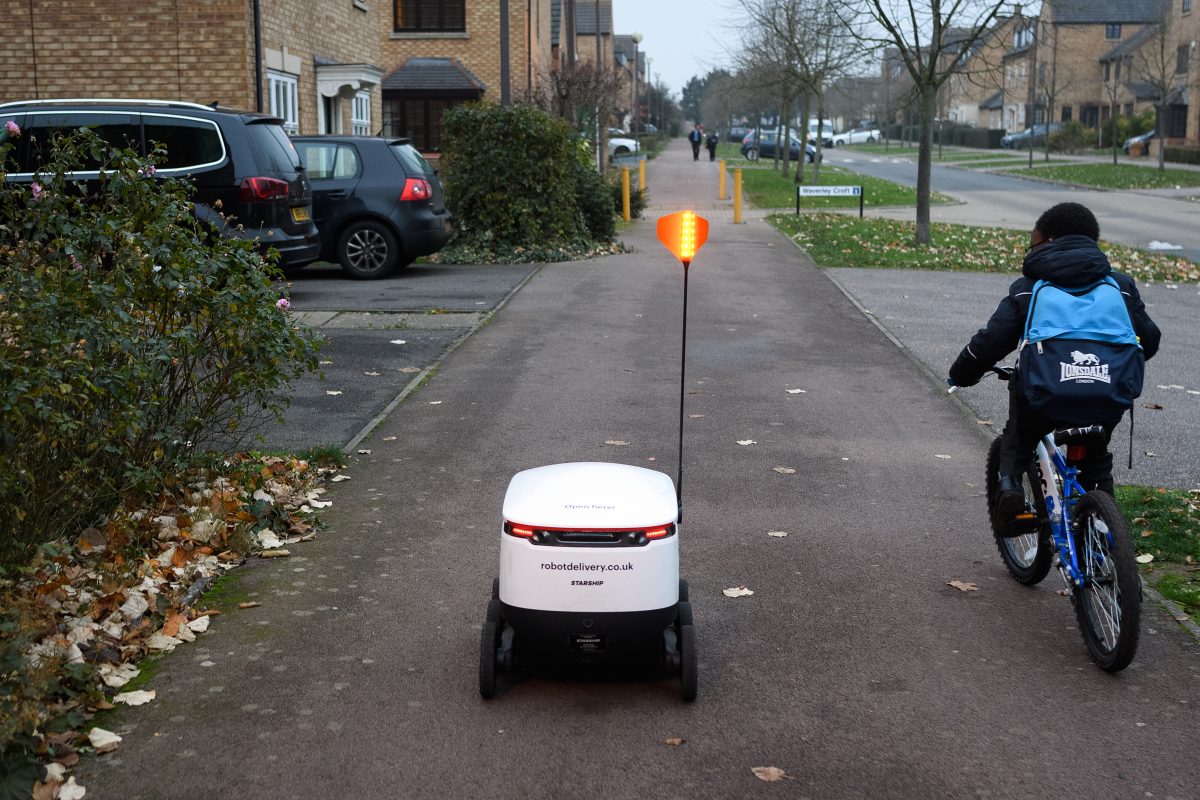
The UK is grappling with how to regulate delivery robots operating on its pavements, a technology that has become increasingly visible in cities across the country.

Proponents, such as Rory Daniels of TechUK, argue that these robots represent a significant step forward in mobility technology, offering crucial support to vulnerable and home-bound individuals by facilitating low-emission deliveries of shopping and medicine. They also point to the creation of high-quality jobs in manufacturing, maintenance, and deployment, as well as benefits for independent businesses and restaurants seeking to lower costs and reach new customers.

However, critics, including Catherine Woodhead, chief executive of Living Streets, raise serious concerns about the safety and accessibility of pavements for pedestrians. They argue that robots pose a danger to older and disabled people, as well as parents with buggies, by adding another obstacle to already cluttered pavements. Reports from the US and Canada, where similar robots have been banned, cite incidents of robots injuring people and dogs, and obstructing pathways.

The current legal landscape in the UK is described as a "grey area," with a 200-year-old law intended for horse-drawn carriages failing to adequately address modern delivery robots. This lack of clear national regulation leaves local authorities to make unilateral decisions, creates investment uncertainty for operators, and leaves the public without guaranteed protection. A survey by Cambridgeshire County Council, however, indicated strong public support, with 93% of residents liking or loving their local pavement robots.

Starship Technologies, a key player in the market, notes that 25% of its regular customers have a disability or live with someone who does, suggesting that the services are indeed beneficial to those who need them most. Yet, the sheer number of robots on pathways remains a concern for those with mobility issues.

The government is reportedly considering categorizing delivery robots similarly to e-scooters, a move that critics believe will still leave significant regulatory gaps regarding issues like the number of robots, their speed, and their design. In response to the complexities, City AM has proposed the creation of a dedicated "robot lane" on pavements, which could also potentially be used by slow walkers, as a way to mitigate some of the current problems.

Frequently asked questions

Proponents cite support for vulnerable and home-bound individuals, low-emission deliveries, job creation in manufacturing and maintenance, and cost reductions for businesses.

Critics worry about pavement safety and accessibility for pedestrians, especially those with mobility or visibility impairments, and potential obstruction of public spaces.

The legal status is unclear, with a 200-year-old law for carriages being outdated. This creates a grey area, leaving decisions to local authorities.

Yes, delivery robots have been banned in some cities in the US and Canada due to concerns about injuring people and dogs, and clogging pavements.

What Happens Next

01The UK government is considering new regulations for delivery robots.
02Further trials of delivery robots are expected to continue across UK cities.

Get the newsletter.

Pick the topics you actually care about. We'll email when there's news worth your time, on the cadence you choose. Cancel any time from your account.

Cadence

How It Developed

Delivery robots are common in UK cities like Milton Keynes, Bristol, and Leeds.
Proponents highlight benefits such as support for vulnerable individuals and job creation.
Critics raise concerns about pavement safety and accessibility for those with impairments.
The UK lacks a national regulatory framework for delivery robots, leading to uncertainty.
Cambridgeshire County Council survey shows 93% of residents like local robots.
Critics argue robots injure people and dogs and clog pavements, citing US and Canadian bans.
Living Streets calls for a halt to pavement robots, disputing emission reduction claims.
Starship Technologies reports 25% of its customers have a disability or live with one.

Sources

T1
The Debate: Should delivery robots be allowed on pavements?City AM

Related Stories

AI stocks face volatility but no immediate crash
30 Jun · 1:20 PM
Tesla begins testing pedal- and steering wheel-free Cybercab in Austin
30 Jun · 3:41 PM
UBTech Launches Lifelike Humanoid Robots for Consumer Market
30 Jun · 3:55 PM
AI's real risk: Unauthorized access to sensitive data, not job losses
30 Jun · 5:35 PM
Europe's Green Deal Faces Summer Test Amid Heatwaves and Polarized Climate Politics
30 Jun · 2:55 PM