Key facts
- Katalyst Space Technologies is attempting to rescue NASA's Swift telescope.
- The Swift observatory is losing altitude and risks crashing back to Earth.
- Katalyst's Link spacecraft will use robotic arms to attach to Swift and boost its orbit.
- NASA awarded Katalyst a $30 million contract for the mission.
- The launch is scheduled for June 27 using a Northrop Grumman Pegasus XL rocket.
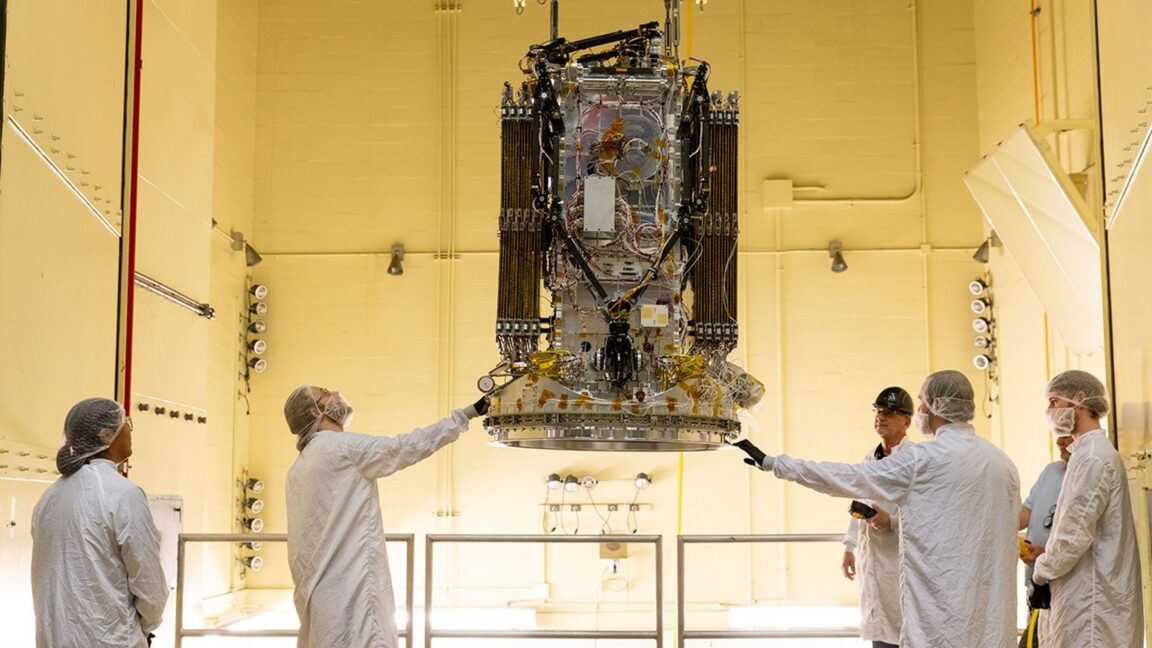
Katalyst Space Technologies, a startup founded in 2020, is undertaking an ambitious mission to rescue NASA's Swift observatory, a $500 million astronomy mission at risk of crashing back to Earth. NASA awarded Katalyst a $30 million contract to build, test, and launch a small satellite, named Link, equipped with robotic arms to latch onto Swift and boost its orbit.
The Swift observatory, launched in November 2004 to detect gamma-ray bursts, is currently flying in low-Earth orbit. Due to a lack of thrusters and increased atmospheric drag from recent solar activity, its altitude has decayed from an initial 363 miles to approximately 225 miles. NASA engineers estimate Swift will fall below 186 miles this fall, likely in October, making a rescue impossible.
Katalyst's Link servicing spacecraft has been completed and undergone rigorous testing at NASA's Goddard Space Flight Center. The satellite will be launched on Northrop Grumman's Pegasus XL rocket, an air-launched vehicle, from a location over the remote equatorial Pacific Ocean near Kwajalein Atoll. The launch is scheduled for June 27, a remarkably tight turnaround for a mission that would typically take several years.
NASA expedited the process by bypassing its usual lengthy solicitation procedures, instead directly approaching three companies already on contract for technology development. Katalyst's ability to present a technically and programmatically plausible solution within the tight constraints led to their selection. Despite the risks, officials express optimism about meeting the challenges ahead.