Key facts
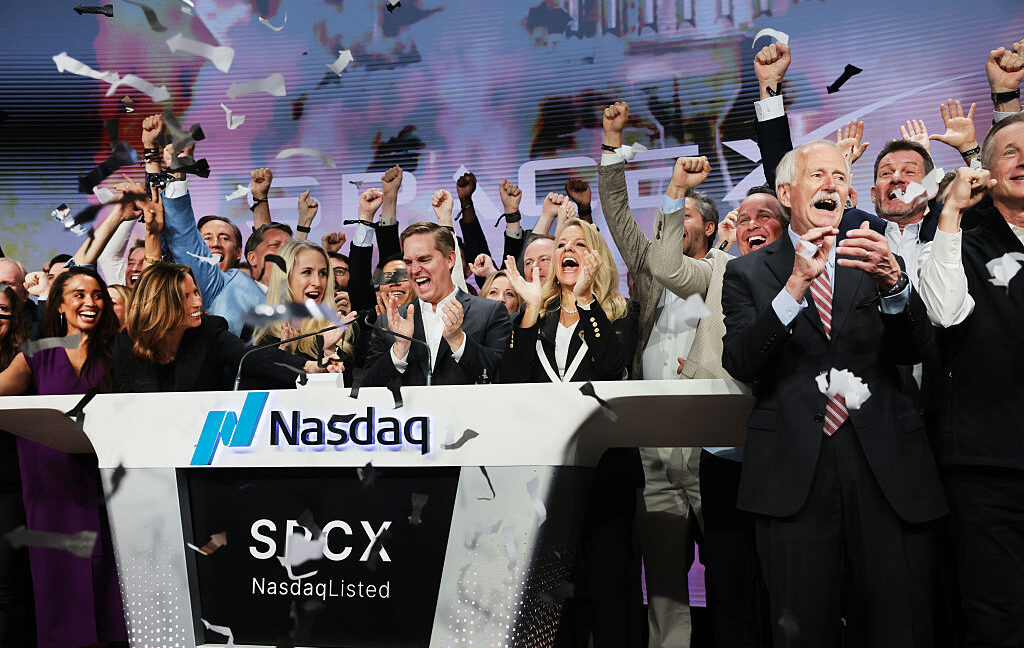
- SpaceX began trading on the NASDAQ exchange on Friday.
- The company's initial valuation was nearly $1.8 trillion.
- Elon Musk's stake is valued at over $700 billion.
SpaceX became a public company on Friday, trading on NASDAQ at $135 a share and valuing the company at nearly $1.8 trillion. Founder Elon Musk's stake is worth over $700 billion. The company's valuation is largely attributed to its AI services potential, rather than its space-enabled solutions or Starlink.
SpaceX's transition to a public company, with a valuation heavily weighted towards its AI capabilities, signals a significant shift in how space-focused enterprises are perceived and funded, potentially influencing future investments in both the space and AI sectors.
Space Exploration Technologies, known as SpaceX, commenced trading on the NASDAQ exchange on Friday, nearly 25 years after its founding. The company opened at $135 per share, establishing a market valuation of close to $1.8 trillion. By the close of trading, its shares had risen to $160.95, marking an increase of over 19 percent.
This public debut positions SpaceX founder Elon Musk as the world's first trillionaire on paper, with his personal holdings valued at more than $700 billion. The company's stock options plan has also resulted in thousands of current and former employees becoming millionaires.
SpaceX's substantial valuation has sparked debate, with some questioning if it represents 'fool's gold' or a genuine opportunity to invest in a dominant space company. The company's S-1 filing indicated that its value is not primarily derived from space-enabled solutions or its Starlink Internet constellation, which comprise less than 7 percent of its total addressable market.
Instead, SpaceX and Musk view the majority of the company's value in its potential to provide AI services, particularly for enterprise applications from space. This perspective suggests that investors will likely prioritize the company's focus on AI development and deployment.