HomeEverything
Equities & FundsCrypto & Digital AssetsAI & TechnologyBusiness & CorporateUS Politics & PolicyGeopolitics & Global RiskMacro, Rates & FXCommodities & EnergyEuropean Politics & MarketsAsia-PacificReal Estate & Property
← All Stories

Spacecraft launched to rescue NASA's Swift Observatory from Earth re-entry

Created at 3 Jul · 1:20 PM2 sources↑ Market-relevant2 events
IN SHORT

A robotic spacecraft named LINK, built by Katalyst Space Technologies, has been launched to rescue NASA's Swift Observatory, which is losing altitude and risks falling to Earth. The mission aims to grapple the observatory and boost its orbit, potentially extending its operational life.

✉Newsletter

PiQ Daily

Pick your topics. Get only what matters, on your cadence.

Key Numbers

3arms on the rescue spacecraft
1month for LINK to rendezvous with SWIFT
2004year Swift Observatory was launched
$30 millionNASA contract for the LINK vehicle
360 kmSwift's current orbit altitude
600 kmtarget orbit altitude for SWIFT
240 kmplanned orbit boost for SWIFT
9months for LINK's production schedule
500 millioncost of the Swift Observatory
90%chance of SWIFT falling out of orbit without intervention

Who's Involved

Katalyst Space Technologies
Developer and builder of the LINK rescue spacecraft
NASA
Owner of the Swift Observatory and contractor for the rescue mission
Northrop Grumman
Provider of the Pegasus rocket used for the launch
Ghonhee Lee
CEO of Katalyst Space Technologies
Neil Gehrels Swift Observatory
NASA satellite observatory targeted for rescue
Spacecraft launched to rescue NASA's Swift Observatory from Earth re-entry

↳ Why This Matters

This mission represents a significant advancement in orbital servicing capabilities, potentially enabling the extension of valuable scientific assets like the Swift Observatory and demonstrating technologies relevant to space superiority amid geopolitical competition.

Key facts

  • A robotic spacecraft named LINK has launched to rescue NASA's Swift Observatory.
  • The Swift Observatory is losing altitude and faces re-entry into Earth's atmosphere.
  • Katalyst Space Technologies built the LINK spacecraft under a $30 million NASA contract.
  • The mission aims to grapple the observatory and boost its orbit by approximately 240 kilometers.
  • The rescue operation is considered a demonstration of new orbital grappling technology with potential military applications.

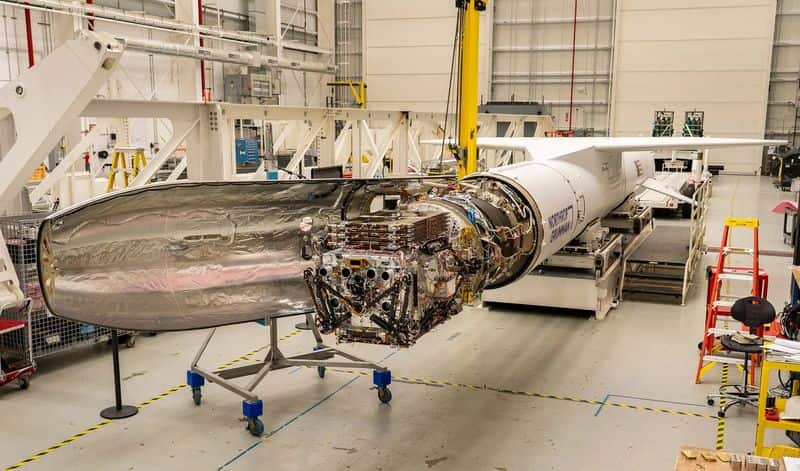
A robotic spacecraft named LINK, developed by Katalyst Space Technologies, has been launched from the Marshall Islands on a mission to rescue NASA's Neil Gehrels Swift Observatory. The observatory, launched in 2004, is losing altitude due to atmospheric drag and risks burning up in Earth's atmosphere as soon as later this year. The $500 million observatory has no onboard propulsion and would otherwise drift out of orbit.

Katalyst was awarded a $30 million NASA contract to design, build, and test the LINK vehicle within an accelerated nine-month schedule. The half-ton spacecraft is equipped with three robotic arms designed to grapple the Swift Observatory and tow it to a higher, sustainable orbit, potentially extending its mission by years. The mission is considered a demonstration of new orbital grappling technology, with implications for space superiority and potential dual-use military applications, amid U.S.-China space rivalry.

The launch, carried by a Northrop Grumman Pegasus rocket released from a jetliner, experienced delays due to weather and a technical issue. LINK is expected to reach the vicinity of SWIFT by late July and spend an additional week maneuvering to capture it. Once secured, it will take approximately 60 days to tow the observatory to an altitude of about 600 km, doubling its current height. Katalyst CEO Ghonhee Lee highlighted the rapid development as a key achievement, envisioning future applications for satellite maintenance and in-space construction services.

Frequently asked questions

The LINK spacecraft is designed to grapple NASA's Swift Observatory, which is losing altitude, and tow it to a higher orbit to extend its operational life.

The Swift Observatory is losing altitude due to atmospheric drag, exacerbated by recent solar storms, and risks burning up in Earth's atmosphere.

Katalyst Space Technologies built the LINK spacecraft under a $30 million NASA contract.

The mission demonstrates new orbital grappling technology that has potential dual-use military applications and is being closely watched in the context of U.S.-China space rivalry.

What Happens Next

01LINK spacecraft will attempt to capture the Swift telescope in approximately one month.
02SWIFT could resume astronomical observations by September if the mission is successful.

Get the newsletter.

Pick the topics you actually care about. We'll email when there's news worth your time, on the cadence you choose. Cancel any time from your account.

Cadence

How It Developed

A three-armed spacecraft named LINK was launched to rescue NASA's Swift Observatory.
The Swift Observatory is losing altitude and risks falling to Earth.
Katalyst Space Technologies designed, constructed, and tested the LINK vehicle.
A Northrop Grumman Pegasus rocket carrying LINK was released from a jetliner over the Pacific.
The mission was delayed by weather and a technical snag.
LINK is expected to rendezvous with SWIFT in late July.
LINK will use its robot arms to grab SWIFT.
The mission aims to tow SWIFT to a higher orbit, doubling its altitude.

Sources

T1
Misión espacial busca salvar telescopio de la NASA que podría caer a la TierraAP News
T1
Space startup Katalyst launches orbital rescue mission for aging NASA observatoryReuters

Related Stories

SpaceX nears 1000th launch as Indian startup eyes first orbital flight
3 Jul · 2:05 PM
Amazon aims for initial Leo satellite internet service this year
2 Jul · 7:09 PM
NASA's Artemis IV Moon mission faces delays as New Glenn rocket development lags
2 Jul · 4:55 PM
China's satellite engine smashes record, leaves US rival far behind
3 Jul · 2:05 PM
Tesla launches six-seat Model Y L in US to boost sales
2 Jul · 7:19 PM