Key facts
- Blue Origin's New Glenn rocket experienced a catastrophic explosion in late May.
- NASA's Artemis IV mission requires a new variant of the New Glenn rocket, the 9x4, for lunar lander delivery.
- Blue Origin is reportedly targeting a late 2027 or early 2028 debut for the 9x4 variant.
- Industry experts are skeptical about the 9x4's readiness, with some predicting delays into the 2030s.
- The delays could jeopardize NASA's goal of landing astronauts on the Moon this decade.
A recent live discussion hosted by Ars Technica explored the ramifications of the catastrophic explosion of Blue Origin's New Glenn rocket in late May, with experts expressing significant doubts about the timeline for future launches and their impact on NASA's ambitious Artemis program.
Ars Technica Space Editor Eric Berger, alongside Quilty Space research director Caleb Henry and Main Engine Cut Off podcast host Anthony Colangelo, delved into the implications of the failure for NASA's goal of landing humans on the Moon as part of the Artemis IV mission. Both Blue Origin and SpaceX are developing lunar landers and the necessary rocket infrastructure to support this objective.
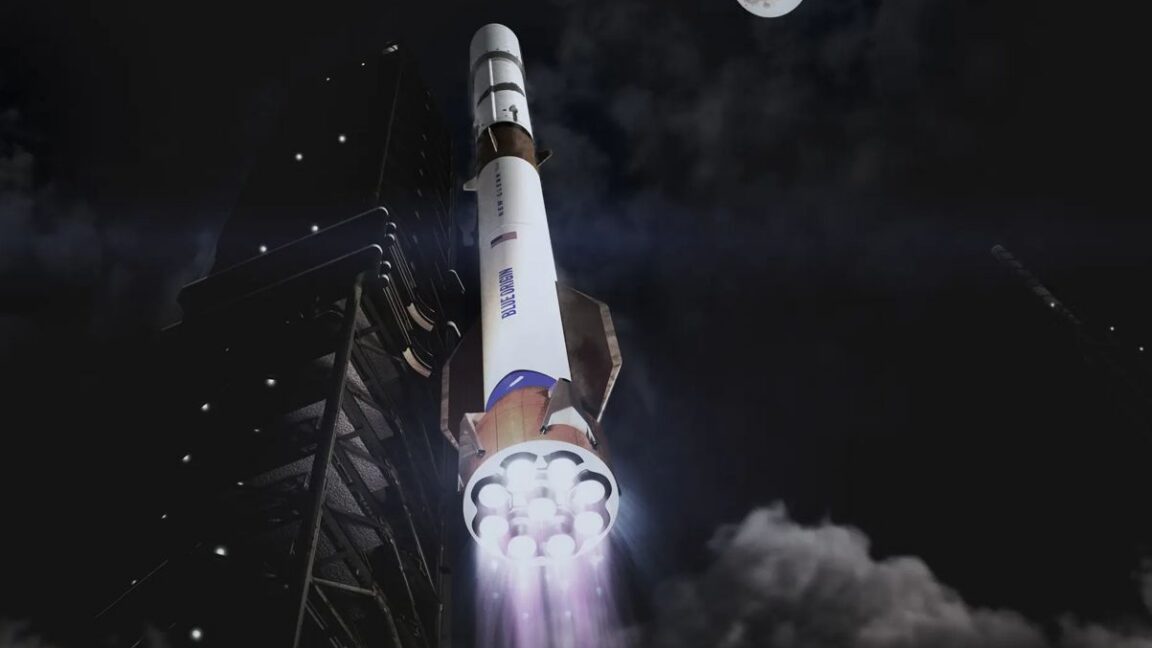
Berger highlighted that Blue Origin's current 'architecture' for a crewed lunar mission would necessitate four launches of a more powerful variant of the New Glenn rocket, designated the 9x4, which features nine first-stage engines and four upper-stage engines. This is a significant upgrade from the '7x2' variant that exploded approximately a month prior. While Blue Origin has not officially set a debut date for the 9x4, some sources indicate a target of late 2027 or early 2028.
However, Caleb Henry voiced considerable skepticism regarding this timeline, particularly in the wake of the destruction of Launch Complex 36A. He noted the historical difficulty in meeting rocket development deadlines, referencing Blue Origin's mid-2018 shift from a three-stage to a two-stage New Glenn vehicle, which was intended to accelerate its launch path but had yet to achieve its first flight. Henry suggested that adding more engines to the 9x4 variant would likely increase complexity rather than simplify development, estimating a minimum delay of at least a year and a half beyond any stated targets.
Anthony Colangelo echoed these concerns, stating that he would not be surprised if the 9x4 variant's development slipped into the 2030s. This potential delay raises serious questions about how NASA will transport astronauts to the Moon within the current decade, if at all.