Key facts
- NASA Administrator Isaacman expressed confidence in Blue Origin's progress following a launch anomaly.
- Blue Origin aims to launch its New Glenn rocket again before the end of the year.
- NASA is exploring alternative launch vehicles and landers for its Artemis missions.
- The investigation into the anomaly suggests an issue with the first stage's aft section.
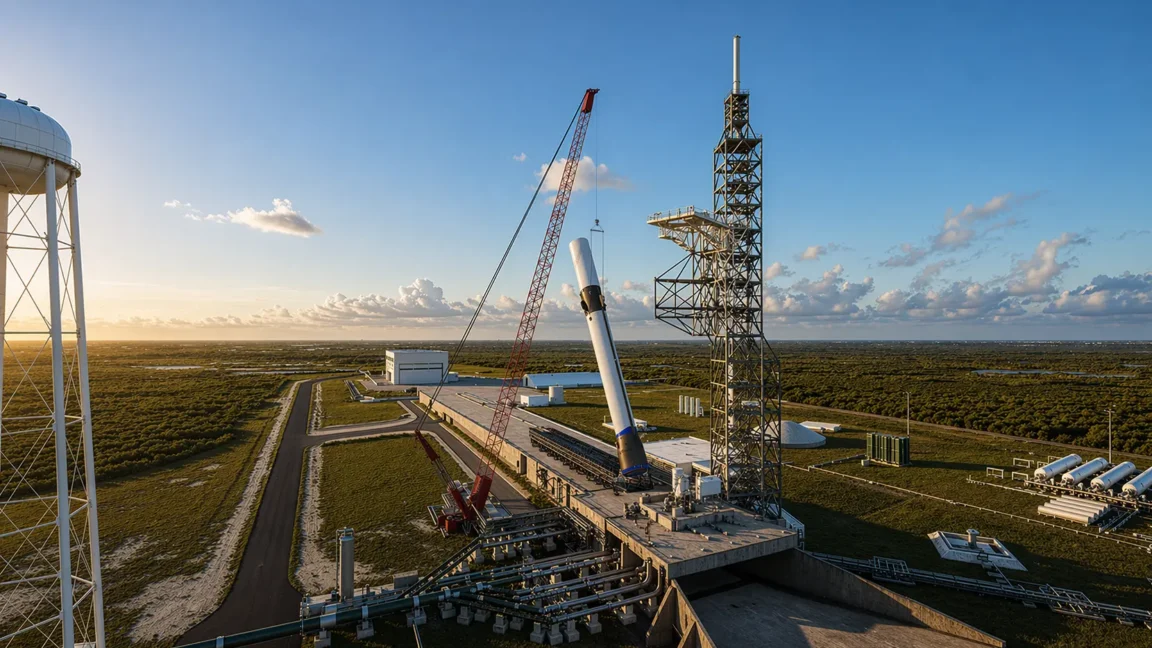
- Blue Origin will utilize a crane for rocket launches to speed up its return to flight.
NASA Administrator Isaacman has lauded the progress Blue Origin is making in recovering from a recent launch failure, stating that the company is committed to returning its New Glenn rocket to flight before the end of the year. "Plan A is very much still to launch the Mk. 1 on New Glenn," Isaacman said, noting that this plan "is looking a lot better today than it was weeks ago."
Despite the optimism, Isaacman acknowledged that prudence requires NASA to explore alternative launch vehicles for its Endurance mission and Blue Origin's lander for Artemis III. Potential alternatives include SpaceX's Falcon Heavy or United Launch Alliance's Vulcan rockets. NASA is receiving daily updates on Blue Origin's recovery efforts.
Isaacman indicated that NASA would begin to grow concerned if launch delays extended to mid-2027, as this would impact the Artemis III mission and uncrewed landers. Meanwhile, Blue Origin is actively investigating the anomaly, with early analysis pointing to an issue in the aft section of the first stage. The company lost its launch site's lightning tower and transporter-erector during the incident. To expedite its return to flight, Blue Origin plans to use a crane to place the rocket stages onto the launch mount, bypassing the lengthy reconstruction of a new transporter-erector.