Key facts
- South Korea is developing plans for an underwater data center.
- The project aims to address space and cooling challenges for AI infrastructure.
- Ulsan will host a "Carbon-Zero Underwater Data Center Standard Model Development Project."
- The initiative has secured 40 billion won ($29 million) in government funding.
- Seawater will be used for cooling, leveraging Ulsan's offshore waters.
- The goal is to achieve a PUE of 1.2 at a depth of 20 meters.
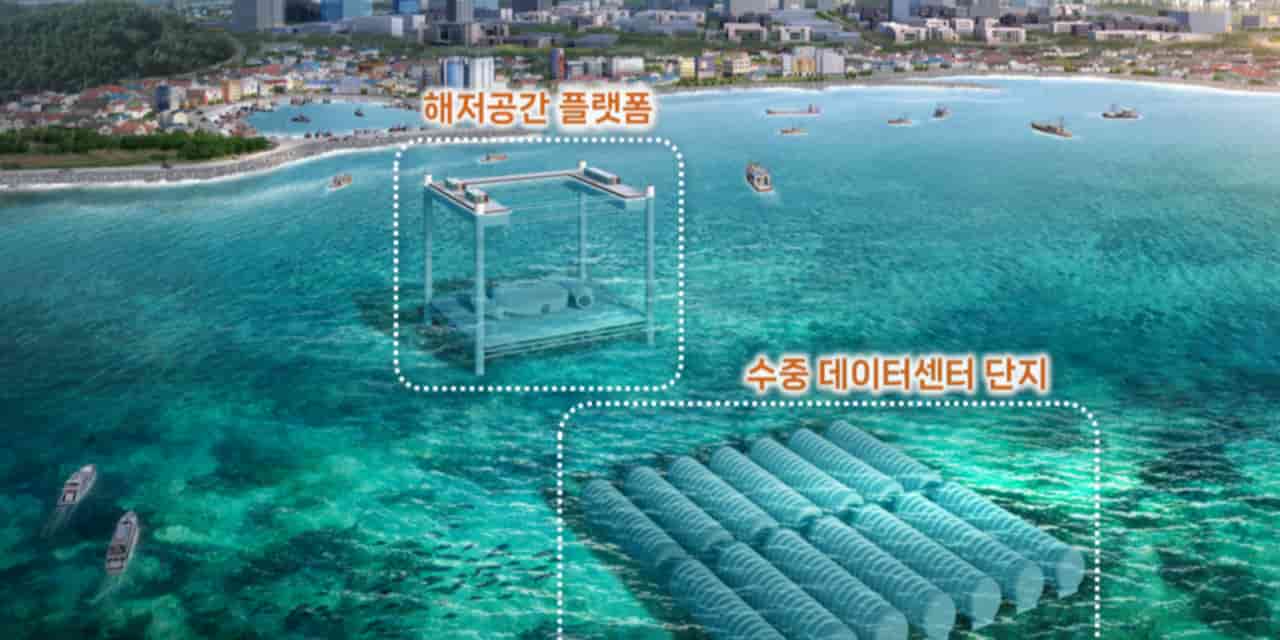
South Korea is advancing plans for an underwater data center, a novel approach to accommodate the growing demand for artificial intelligence infrastructure in a nation with limited land. The city of Ulsan has been chosen as the site for a "Carbon-Zero Underwater Data Center Standard Model Development Project," led by the Ministry of Oceans and Fisheries.
The initiative has secured 40 billion won ($29 million) in central government funding over the next five years, with a total investment of 51.1 billion won planned by 2030. This project aims to tackle the significant power consumption and heat generation issues faced by conventional onshore data centers, exacerbated by the expansion of AI and big data industries.
The core of the project involves a seawater cooling system that will utilize the offshore waters of Ulsan, which maintain an average annual temperature of 13.3°C. By combining advanced pressure vessel design with ultra-high-efficiency hybrid cooling technology, the goal is to achieve a power usage effectiveness (PUE) of 1.2 at a depth of 20 meters. Servers and power distribution equipment will be developed in modular, standardized configurations to ensure cost-effectiveness and scalability.
To facilitate this ambitious project, Ulsan has established cooperation agreements with 12 industry, academic, and research organizations, including the Korea Institute of Ocean Science and Technology (KIOST), Ulsan National Institute of Science and Technology (UNIST), POSCO, GS Engineering & Construction, and SK Telecom. The project timeline includes site analysis and basic design starting this year, with performance testing facility installation and demonstration slated for completion by 2030. Following this, a large-scale commercial underwater data center complex is planned to begin construction from 2031.