Key facts
- NASA's Deep Space Network (DSN) effectively managed communications for the Artemis II mission.
- New processes and coordination were implemented for Artemis II following strain during Artemis I.
- The DSN experienced overload during Artemis I, impacting science mission data downlinks.
- A critical 70-meter antenna at the Goldstone Deep Space Communications Complex remains offline due to damage.
- NASA is developing new infrastructure to handle increasing demand on the DSN.
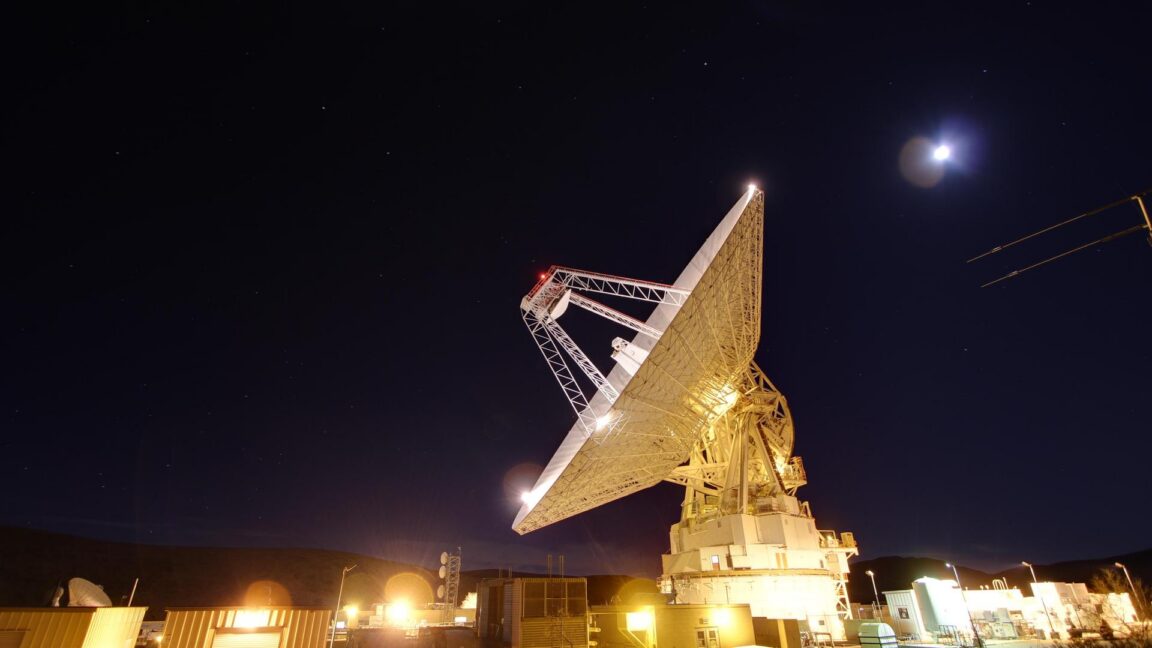
NASA's Deep Space Network (DSN), a global array of deep space communications antennas, successfully supported the Artemis II mission, which launched on April 1. This performance marks an improvement from the near-breaking point experienced during the Artemis I mission nearly four years prior. During Artemis I, the DSN struggled to keep up with the demands of 40 robotic science missions alongside the extraordinary needs of the Orion space capsule, leading to reduced or delayed data downlinks from missions like the James Webb Space Telescope and Mars rovers.
For Artemis II, NASA implemented new coordination and scheduling processes, focusing on managing the increased data appetite from the four-person crewed Orion capsule. Although Artemis II was shorter than Artemis I, the mission's data requirements were higher. The reduced number of CubeSats carried on Artemis II also helped alleviate network strain. Greg Heckler, deputy program manager for capability development in NASA’s Space Communications and Navigation Program, stated that the new processes "worked well" and that the science division provided "positive feedback."
Despite the improved performance, limitations and high demand continue to cause "asset contention" among NASA's missions. A key issue is the ongoing offline status of one of the DSN's three 70-meter antennas at the Goldstone Deep Space Communications Complex in California. This antenna was damaged in September when it "over-rotated" while tracking the Juno spacecraft, causing a significant water flood and rendering it inoperable. Investigators cited inadequate training, insufficient procedures, and a faulty hydraulic limit system as causes. Repairs are estimated to cost between $4.1 million and $4.6 million.
NASA is actively working to address the growing demand on the DSN. This includes developing new infrastructure like the Lunar Exploration Ground Sites (LEGS) for Moon missions and exploring data relay satellites. The agency is also re-evaluating capacity needs for older missions, some of which are exceeding their documented usage. A feasibility study is now strictly required before onboarding new missions to ensure sufficient capacity.